Custom Side Plate Design for WWE Championship Belts

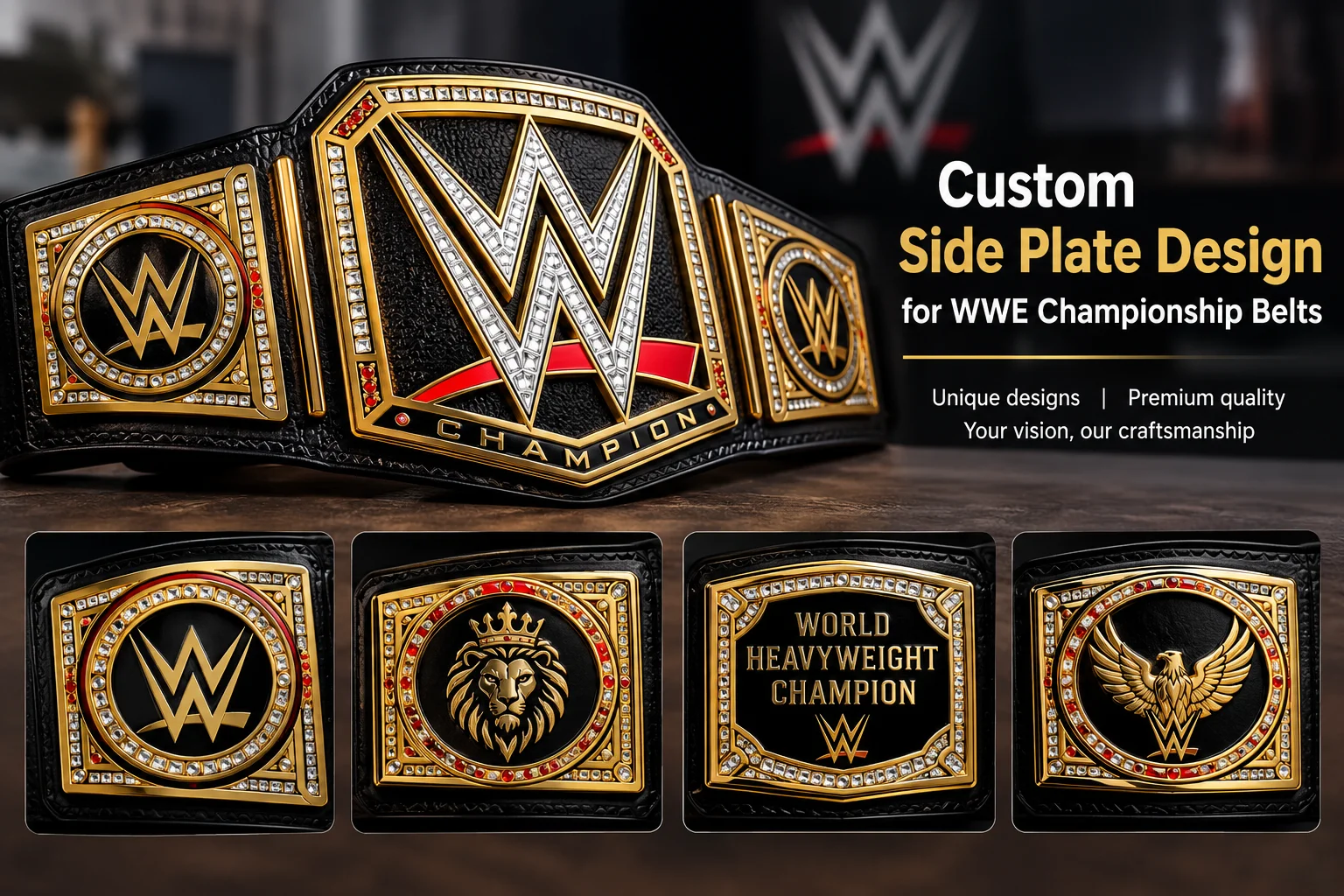
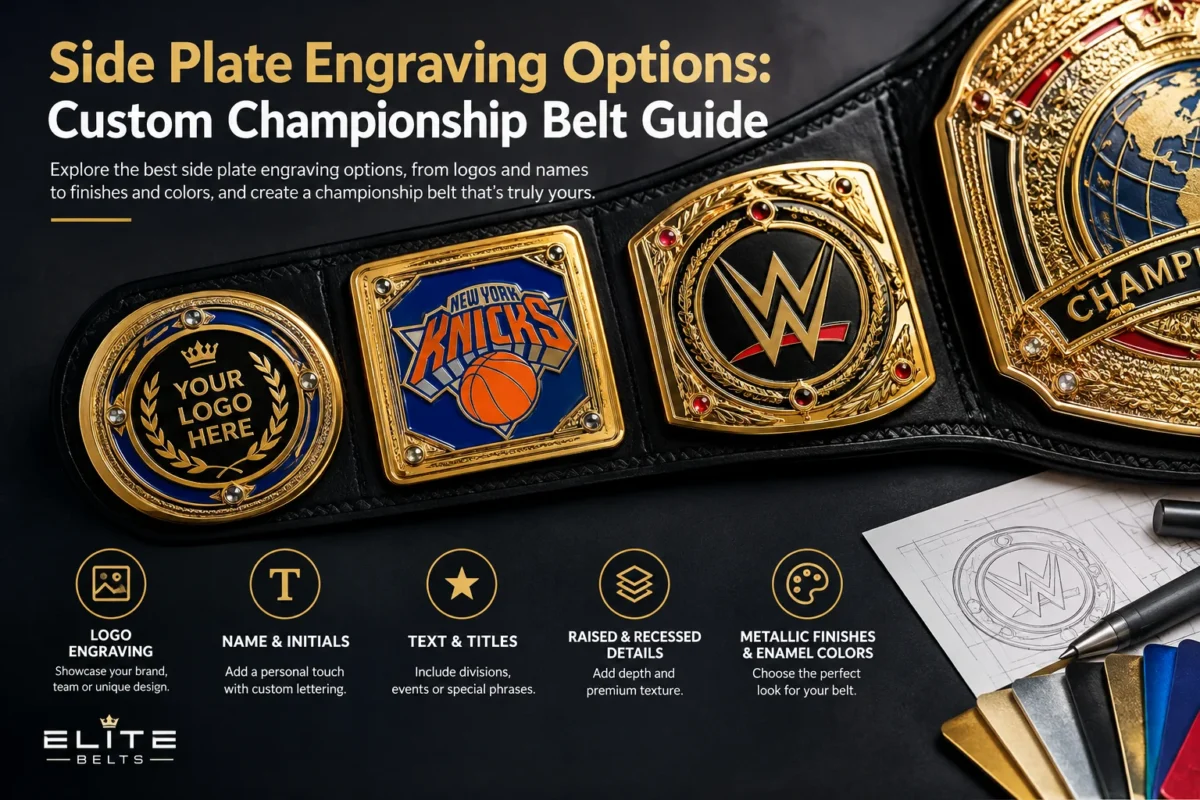
A championship belt is more than a center plate and a leather strap. The smaller plates positioned around the main centerpiece can completely change the personality of a belt. For WWE-inspired championship belts, custom side plate design gives you an extra space to add logos, wrestler names, symbols, numbers, achievements, or personal artwork.
Side plates may look small compared with the center plate, but they play an important role in the overall design. A well-planned side plate can make a championship belt feel more complete and connected to its theme. A poorly planned design can make the belt look crowded, unbalanced, or difficult to read.
Whether you are designing a WWE-style championship belt for a wrestling promotion, collector’s piece, fantasy league, event, or personal award, the side plates should be planned as part of the complete belt rather than treated as an afterthought.
This guide explains how to approach custom side plate design, what artwork works well, how to choose the right style, and what to consider before sending your design for production.
What Is a Custom Side Plate Design?
A custom side plate design is artwork created specifically for the smaller plates attached to the left and right sides of a championship belt.
Unlike a standard stock side plate, a custom plate can be created around your own requirements. The artwork may include:
- Wrestling logos
- Brand or promotion symbols
- Wrestler names
- Initials
- Numbers
- Flags
- Championship-related symbols
- Personal emblems
- Team logos
- Event graphics
- Roman numerals
- Years or important dates
- Decorative patterns
- Custom lettering
The design can also be coordinated with the center plate. For example, if the center plate has a large wrestling logo with a particular border style, the side plates can repeat some of those shapes, textures, or finishes to create a consistent appearance.
The goal is not simply to fill the available space. The side plate should look like it belongs on that specific championship belt.
Why Side Plates Matter on a WWE-Style Championship Belt
On a WWE-inspired belt, the center plate normally attracts the most attention. It carries the primary championship identity, title name, or major logo.
Side plates provide supporting visual information.
Think of the belt as one composition. The center plate establishes the main theme, while the side plates can reinforce it.
For a wrestler-themed belt, one side could feature a wrestler’s initials while the opposite side uses a signature symbol or personal logo. For a wrestling promotion, both plates could feature related branding elements. For a fantasy championship, the side plates might show the league logo, season year, or winner’s identity.
This approach gives the belt more personality without competing too heavily with the center plate.
There are many directions you can take when creating side plates for a WWE-style championship belt. The best choice depends on what the belt represents and how much information you want the plates to communicate.
1. Wrestler Name or Initials
A wrestler’s name or initials are among the simplest customization options.
Instead of placing a long name across a small plate, consider using initials or a short version of the name. Large, readable lettering usually works better than trying to fit too much text into a limited area.
For example, a side plate could feature:
J.C.
or a short stage name surrounded by a decorative border.
Raised lettering, engraved text, or contrasting enamel can make the initials easier to see.
2. Personal Wrestling Logo
If the wrestler has a recognizable logo, it can become the main element of the side plate.
A good logo-based design normally has a strong silhouette and clear shapes. Very thin lines or tiny details can become difficult to reproduce when the artwork is converted into a physical metal plate.
For this reason, a professional custom belt design may require some adjustment before manufacturing.
The original logo can still be preserved while simplifying details that would not translate well into metal.
3. Signature Symbol
A wrestler-themed championship belt does not always need a name.
A recognizable symbol can sometimes create a stronger design. This could be a fictional wrestling emblem, animal symbol, crown, star, shield, lightning shape, or another graphic associated with the belt’s theme.
The important thing is to make the symbol large enough to remain recognizable.
4. Championship or Wrestling Symbols
Traditional championship imagery can also work well on side plates.
Examples include:
- Crowns
- Stars
- Shields
- Eagles
- Wrestling figures
- Laurel patterns
- Championship trophies
- Stars and banners
- Crossed elements
- Decorative flourishes
These elements can be used to support the center plate without copying its entire design.
5. Number and Year Designs
Numbers can be especially useful when the belt represents a specific event, season, or championship reign.
A side plate could feature a year such as 2026, a championship number, or another meaningful number.
However, numbers should have enough visual space around them. If the design is surrounded by too many decorative elements, the number can lose its impact.
Matching the Side Plates With the Center Plate
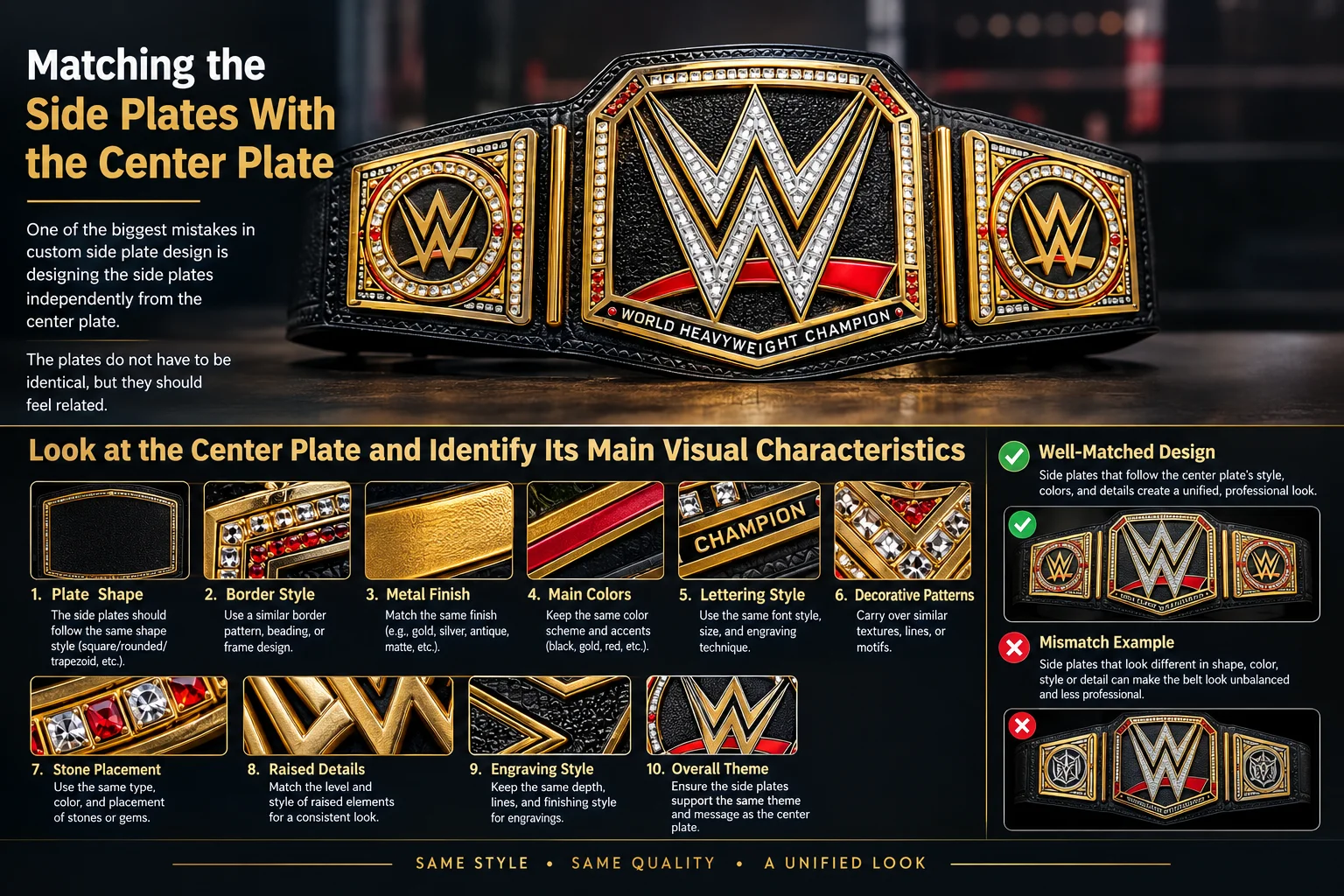
One of the biggest mistakes in custom side plate design is designing the side plates independently from the center plate.
The plates do not have to be identical, but they should feel related.
Look at the center plate and identify its main visual characteristics:
- Plate shape
- Border style
- Metal finish
- Main colors
- Lettering style
- Decorative patterns
- Stone placement
- Raised details
- Engraving style
- Overall theme
Then carry one or two of those characteristics into the side plates.
For example, a center plate with a large raised logo and a detailed gold border may look better with side plates that use a similar border and raised-metal treatment.
You do not need to duplicate the center plate. You are creating visual consistency.
Should Both Side Plates Be the Same?
Not necessarily.
There are three common approaches.
Matching Side Plates
Both plates use the same artwork.
This creates a symmetrical and traditional appearance. It is useful when the belt has a strong overall brand identity and does not need separate information on each side.
Mirrored Side Plates
The two plates use related artwork with a left-and-right orientation.
This works particularly well with symbols, animals, wings, shields, or decorative patterns.
Different Side Plates
Each side plate has its own design.
For a wrestler-themed belt, one plate might display initials while the other contains a personal symbol. For a wrestling organization, one plate might feature the promotion’s logo and the other an event or championship emblem.
Different designs can make a belt more personal, but they still need to share the same visual language.
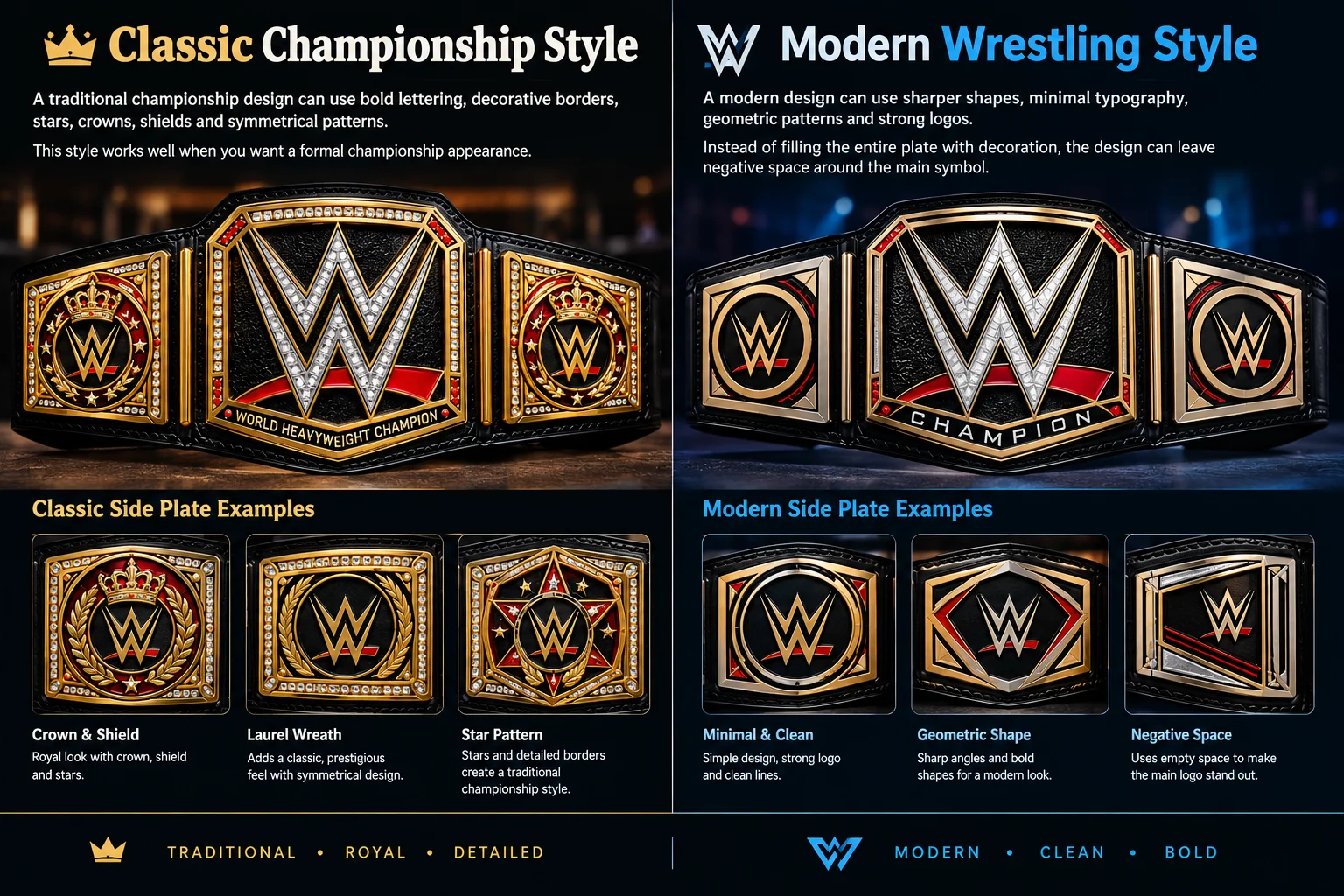
Choosing the Right Shape for WWE-Inspired Side Plates
The shape of the side plate should work with the belt itself.
Common options include round, square, rectangular, shield-style, and other custom shapes.
A round side plate can provide a classic championship appearance, while a square or angular plate may create a more modern wrestling aesthetic.
The shape also affects how your artwork should be arranged.
A circular plate may work well with:
- Circular logos
- Initials
- Portrait-style symbols
- Ring-shaped borders
- Central emblems
An angular plate may work better with:
- Shields
- Block lettering
- Geometric logos
- Aggressive wrestling graphics
- Sharp decorative elements
Before finalizing your artwork, make sure you know the actual plate dimensions and usable design area.
Designing Artwork That Works on Metal
A design that looks excellent on a computer screen may need adjustments before it becomes a physical metal side plate.
This is especially important for detailed WWE-style artwork.
Keep Important Details Clear
Small details can disappear when artwork is manufactured.
Avoid placing too many tiny elements into one small area. Instead, focus on the features that need to remain visible.
Give Text Enough Space
Letters should not be packed tightly together.
The font should match the personality of the belt while remaining readable. Bold lettering is often easier to reproduce than extremely thin decorative fonts.
Consider Raised and Recessed Areas
A side plate can have different levels of depth. Some elements may be raised while others are recessed or engraved.
This creates shadows and highlights that make the plate more three-dimensional.
Your artwork should clearly distinguish the major areas that need to stand out.
Think About the Edge
The outer border of a side plate is part of the design.
A strong border can separate the artwork from the rest of the belt and make the plate appear more finished. However, an overly complicated border can take attention away from the main symbol.
Color and Finish in Custom Side Plate Design
Metal finish can dramatically change the appearance of a side plate.
Depending on the design, a custom plate may use finishes such as gold, silver, or other metallic treatments, along with enamel or painted details.
The important thing is to create enough contrast.
For example, if the background and raised logo are too similar in tone, the details may become difficult to see. A contrasting finish can help separate the foreground from the background.
Color should also coordinate with the center plate and strap.
A belt with a gold center plate, black strap, and red details will generally look more cohesive when those visual elements are carried into the side plates in a controlled way.
You do not need to use every color from the center plate. Select the most important ones and use them deliberately.
What to Send a Manufacturer for a Custom Side Plate
When ordering a custom side plate, providing clear information can make the design process much easier.
Ideally, prepare:
- Your logo or artwork
- Preferred side plate shape
- Approximate size or belt model
- Text or name
- Preferred colors
- Metal finish
- Reference images
- Instructions for left and right plates
- Any required symbols
- Notes about raised, engraved, or colored areas
If you already have a championship belt, photographs can also help. Front-facing photos and measurements provide useful context for understanding how the new plates should fit visually.
Most importantly, explain what each part of the artwork represents.
A manufacturer can then understand which elements are essential and which can be adjusted for production.
Review the Design Before Production
Never judge a custom side plate only from the original flat artwork.
A physical championship plate is three-dimensional, so the final appearance can be different from a simple 2D graphic.
A 3D preview can help you check:
- Overall proportions
- Logo placement
- Text size
- Border thickness
- Raised areas
- Engraving
- Color placement
- Left/right orientation
- Relationship with the center plate
This stage is especially important for detailed WWE-style championship designs.
Take your time before approving the final artwork. A small adjustment to spacing or proportions can make a noticeable difference once the design becomes a physical metal plate
Choosing the Right Material for Custom Side Plates
Once the artwork is finalized, the next consideration is the physical construction of the side plates. Material affects the plate’s weight, appearance, durability, and the level of detail that can be achieved.
Metal side plates are commonly chosen for championship belts because they provide the solid, substantial appearance associated with wrestling titles.
Depending on the design and manufacturing process, a side plate may include different surface treatments, raised sections, recessed details, engraving, and colored enamel.
When choosing a material or finish, consider how it will work with the rest of the belt. The side plates should not look like separate accessories attached to the championship belt. Their finish should complement the center plate and strap.
Gold Finish
Gold-colored finishes create a traditional championship appearance and can work particularly well with bold wrestling logos, crowns, shields, and large lettering.
A gold finish does not mean every part of the plate needs to be gold. Contrasting darker or colored areas can help the raised details stand out.
Silver Finish
Silver-colored plates can create a cleaner and more modern appearance. They can work well with monochrome logos, geometric artwork, and designs that rely heavily on engraving or raised metal details.
Mixed Finishes
Using more than one finish can add depth to a custom side plate.
For example, the outer border could have one metallic finish while the central logo uses another treatment. The contrast helps separate different parts of the artwork.
The key is moderation. Too many finishes can make a relatively small plate look visually busy.
Adding Enamel and Color Details
Color can make a major difference when the side plate is based on a wrestling logo or character-inspired design.
Enamel-style detailing can be used to highlight specific areas such as:
- Logo backgrounds
- Lettering
- Stars
- Stripes
- Shields
- Team colors
- Decorative sections
The best results usually come from giving each color a clear purpose.
If the artwork contains many tiny colored sections, the final plate may lose visual clarity. Larger, clearly separated color areas are generally easier to understand.
For a WWE-inspired championship belt, consider using the colors of the belt’s overall theme rather than trying to reproduce every color found in a reference image.
Raised, Engraved, and Recessed Details
Depth is one of the features that can make a custom side plate look much more like a professional championship component.
A flat printed design cannot create the same physical effect as raised metal or engraved details.
Raised Details
Important elements such as logos, letters, or symbols can be raised above the surrounding surface.
When light hits these areas, the edges create highlights and shadows.
Engraved Details
Engraving creates recessed lines or shapes in the metal. It can work well for lettering, borders, patterns, and smaller decorative elements.
Recessed Backgrounds
A background can be lowered around a raised logo to make the central artwork appear more prominent.
These techniques can also be combined. For example, a side plate might have a raised wrestling logo, an engraved border, and a recessed background.
The exact production method depends on the artwork, material, and manufacturer.
Common Custom Side Plate Design Mistakes
A good concept can lose its impact if the artwork is not prepared correctly. Before production, check for these common problems.
Too Much Information
A side plate has limited space.
Trying to include a name, logo, date, slogan, multiple symbols, decorative patterns, and several borders can make the design difficult to understand.
Choose one primary element and use the remaining space to support it.
Tiny Text
Long text is one of the easiest ways to create a difficult-to-read side plate.
If the message is important, make it larger. If it is not important enough to be prominent, consider removing it.
Ignoring the Plate Shape
Artwork should be designed around the actual plate shape.
A logo that looks balanced inside a square may look awkward when placed inside a round plate.
Leave appropriate space around the edges and make sure important artwork does not run too close to the border.
Poor Left-and-Right Orientation
If the two side plates use different artwork, clearly identify which design belongs on the left and which belongs on the right.
This is particularly important when the artwork contains directional elements.
Designing Without the Center Plate
The side plates should be considered together with the center plate.
If the center plate has a highly detailed design, extremely detailed side plates may make the entire belt feel overloaded.
Sometimes simpler side plates create a stronger overall championship design.
Wrestler-Themed Style
A wrestler-inspired belt can use personal branding as the foundation.
The side plates might include initials, a signature logo, a symbolic animal, nickname, or another visual element associated with the character.
Event-Themed Style
For a wrestling event or special championship, the side plates can include an event logo, year, special emblem, or commemorative symbol.
This can make the belt feel connected to a specific occasion without changing the primary identity of the championship.
How to Make a Small Side Plate Look More Premium
A premium appearance is not necessarily about adding more decoration.
In many cases, the opposite approach works better.
Start with a strong central element. Give it enough space. Add a controlled border. Use contrast between raised and recessed areas. Then introduce color or stones only where they support the design.
Pay attention to symmetry.
Even a simple logo can look impressive when it is centered correctly and surrounded by balanced spacing.
The quality of the artwork preparation also matters. Clean curves, consistent line thickness, readable lettering, and properly aligned elements make the finished design easier to manufacture and easier to appreciate.
How the Custom Side Plate Ordering Process Usually Works
The exact process varies between manufacturers, but a custom project generally follows several stages.
Step 1: Choose the Plate Type
Start by selecting the appropriate side plate shape and size for your championship belt.
Do not assume that every side plate will fit every belt. Check the mounting system and dimensions before ordering.
Step 2: Submit Your Artwork
Provide your logo, name, reference image, or original artwork.
If you do not have a finished vector file, explain your concept clearly and provide useful reference images.
Step 3: Explain Your Requirements
Tell the manufacturer what you want changed or emphasized.
For example:
- Make the logo raised
- Use a dark background
- Add gold lettering
- Keep the border simple
- Put initials on the left plate
- Use a symbol on the right plate
Clear instructions reduce misunderstandings.
Step 4: Review the Design Preview
Before production, carefully inspect the proposed design.
Check the spelling, dimensions, logo position, colors, plate orientation, and relationship between the two sides.
Step 5: Approve Production
Only approve the design after you are satisfied with the details.
Once production begins, changes may become more difficult or may require the design to be remade.
Questions to Ask Before Ordering Custom Side Plates
If you are ordering custom plates for a WWE-style championship belt, ask the manufacturer a few practical questions before confirming the order.
Will the plates fit my belt?
Confirm the dimensions and mounting arrangement.
Can I submit my own logo?
Ask which file types are accepted and whether artwork preparation is included.
Will I receive a design preview?
A visual preview can help you identify problems before manufacturing.
Can the left and right plates have different designs?
This is important if you want separate artwork on each side.
Which finishes are available?
Ask about metallic finishes, enamel, engraving, raised details, and other available treatments.
Can the design be modified before production?
Understand how revisions are handled before approving the final artwork.
These questions can help you avoid surprises later in the process.
Custom Side Plate Design Checklist
Before sending your final design, run through this checklist:
- Correct plate size selected
- Plate shape confirmed
- Left and right sides identified
- Logo is high quality
- Text has been checked for spelling
- Important details are large enough
- Artwork fits inside the usable area
- Colors match the belt
- Border is properly aligned
- Center plate and side plates look cohesive
- Raised and engraved areas are clearly explained
- Reference images are included where useful
- Final preview has been reviewed
A few minutes of checking can prevent avoidable design problems during production.
FAQs About Custom Side Plate Design
What can I put on a custom side plate?
You can use logos, names, initials, symbols, numbers, dates, wrestling graphics, event artwork, or other custom elements. The main limitation is the available space and how well the artwork can be reproduced on the physical plate.
Can both side plates have different designs?
Yes, a custom championship belt can be designed with different artwork on the left and right side plates. The two designs should still share colors, finishes, shapes, or other visual characteristics so they look like part of the same belt.
Can I use my own wrestling logo?
Yes. A personal wrestling logo can be an excellent starting point for a side plate. High-quality artwork makes it easier to create a clean physical result, although some logos may need to be adjusted for manufacturing.
Should side plates match the center plate?
They do not need to be identical, but coordinating them usually creates a more unified championship belt. Matching borders, finishes, colors, or design elements can connect the plates visually.
Can names be engraved on side plates?
Names and initials can be incorporated through engraving, raised lettering, or other available techniques. The appropriate method depends on the design, size, and manufacturing process.
Are round or square side plates better?
Neither shape is automatically right for every belt. The better option depends on the belt’s existing design, mounting area, center plate, and overall theme.
Can I create side plates for an existing championship belt?
Potentially, yes. The most important factors are the available mounting system, dimensions, plate thickness, and spacing. Measure the existing belt carefully before ordering replacement or additional plates.
Final Thoughts on Custom Side Plate Design
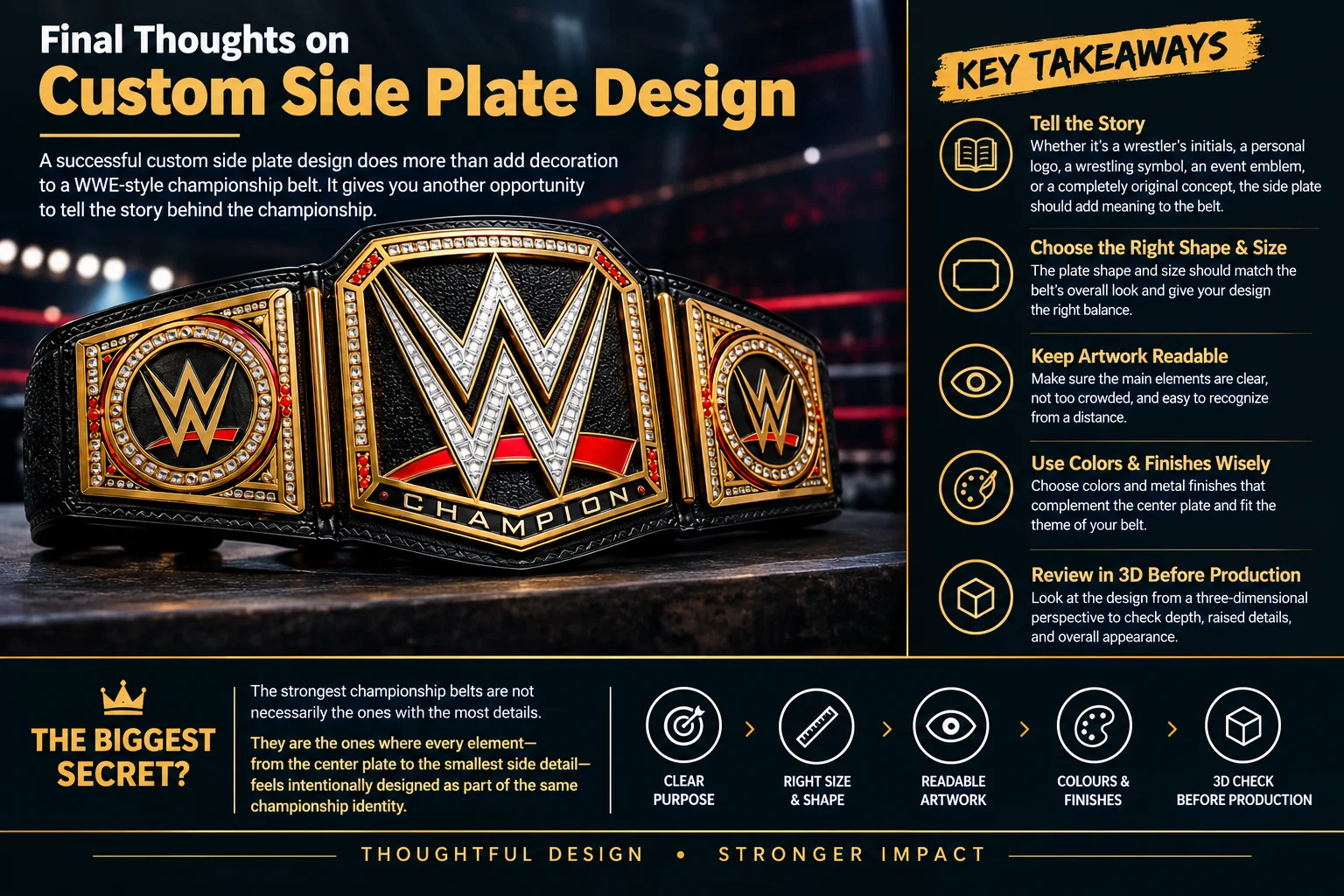
A successful custom side plate design does more than add decoration to a WWE-style championship belt. It gives you another opportunity to tell the story behind the championship.
Whether the plate features a wrestler’s initials, a personal logo, a wrestling symbol, an event emblem, or a completely original concept, the design should be clear, balanced, and connected to the center plate.
Start with the purpose of the belt. Choose the right plate shape and size. Keep important artwork readable. Use colors and finishes carefully, and always review the design from a three-dimensional perspective before production.
The strongest championship belts are not necessarily the ones with the most details. They are the ones where every element—from the center plate to the smallest side detail—feels intentionally designed as part of the same championship identity.