
How to Order a Custom Pendant: A Complete Step-by-Step Guide

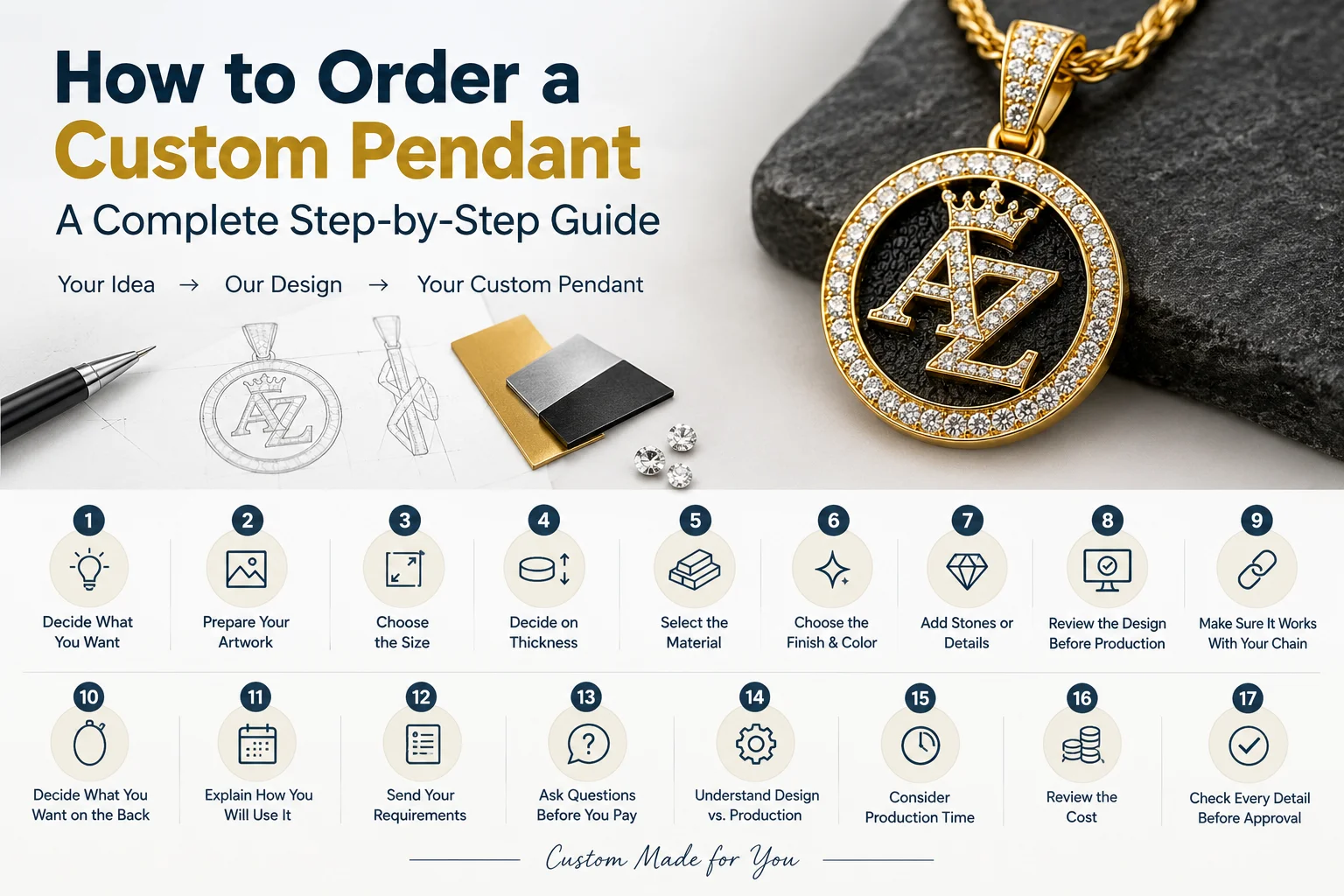
Ordering a custom pendant is an exciting way to turn an idea, logo, name, symbol, or personal concept into a piece you can actually wear. But a good result does not happen by simply sending a picture and waiting for production. The better approach is to understand what information a manufacturer needs and what decisions you should make before placing the order.
If you are wondering how to order a custom pendant, start by thinking about the purpose of the pendant. Is it for everyday wear, a special event, a gift, a collection, or a bold statement piece? Your answer can affect the pendant’s size, thickness, material, finish, stone placement, and overall construction.
A custom pendant can be simple or highly detailed. It may feature lettering, a logo, a sports symbol, a mascot, a meaningful design, or several decorative elements combined into one piece. The important thing is to turn your idea into clear production instructions.
This guide explains the process step by step so you know what to prepare, what to ask, and what to check before approving your custom pendant.
What Does a Custom Pendant Order Include?
Before contacting a manufacturer, it helps to understand what you are actually ordering.
A custom pendant is usually made according to a specific design rather than selected from a standard collection. You may provide your own artwork or explain an idea that needs to be developed into a production-ready design.
Your order may involve decisions such as:
- Pendant shape
- Logo, symbol, name, or artwork
- Width and height
- Overall thickness
- Base material
- Surface finish
- Plating or color
- Stone or crystal details
- Raised and recessed areas
- Lettering
- Bail size
- Back design
- Chain compatibility
- Quantity
- Production requirements
Not every pendant needs all of these features. A simple name pendant may require fewer decisions than a detailed logo pendant with stones and moving parts.
The key is to communicate your requirements clearly from the beginning.
Step 1: Decide What You Want Your Pendant to Represent
The first step in how to order a custom pendant is defining the idea behind the piece.
Start with the main element you want to feature. This could be a name, initials, logo, symbol, word, character, number, or original artwork.
Think about how the design should look when it becomes a physical pendant rather than just an image on a screen.
For example, very small text may look clear on a computer but become difficult to read when manufactured at a small size. Extremely thin lines may also need adjustment so they remain visible and durable.
Ask yourself:
- What should be the main focal point?
- Should the design be simple or highly detailed?
- Do I want text included?
- Should the design have a 3D appearance?
- Do I want stones or decorative details?
- Will the pendant be worn regularly?
- What type of chain will I use?
Answering these questions early makes the rest of the ordering process easier.
Step 2: Prepare Your Artwork or Reference
Once you know what you want, gather the artwork that will be used for the pendant.
If you already have a logo or design, send the clearest version available. A high-quality image is easier to work with than a small, blurry screenshot.
Useful artwork can include:
- Vector artwork
- High-resolution PNG files
- Clear JPG images
- Logo files
- Drawings
- Reference photographs
- Front-view design examples
If you do not have professional artwork, do not assume that your idea cannot be turned into a pendant. You can explain the concept and provide reference images. The design may then need to be recreated or adjusted before manufacturing.
This stage is particularly important for detailed pendants. The manufacturer needs to understand which areas should be raised, recessed, engraved, smooth, textured, or decorated.
Keep the Main Design Clear
A common mistake is trying to put too much information into a small pendant.
A design may contain several logos, long text, tiny symbols, borders, stones, and decorative patterns, but there may not be enough physical space for everything to remain clear.
A stronger design usually has a clear visual hierarchy. The most important logo, word, or symbol should be easy to recognize first.
Step 3: Choose the Pendant Size
Size is one of the most important decisions when ordering a custom pendant.
A pendant that is too small may lose important details. A pendant that is too large may become heavier or less comfortable for everyday use.
You should provide the desired dimensions whenever possible.
For example, you might specify:
- Width
- Height
- Thickness
- Approximate weight preference
Remember that the dimensions can affect the final appearance of your design.
A small pendant may require simplified lettering or artwork. A larger pendant gives the manufacturer more room for raised details, stones, borders, and decorative elements.
Think About How You Will Wear It
Consider the chain or necklace you plan to use.
A small, lightweight chain may suit a smaller pendant, while a large statement pendant may require a stronger chain and a suitable bail.
If you already own a chain, check its thickness and the size of its connecting clasp. The pendant’s bail should be designed so the chain can pass through it comfortably.
Step 4: Decide on the Pendant Thickness
Size and thickness are different.
Two pendants can have the same height and width but feel completely different because one is thinner than the other.
Thickness can influence:
- Durability
- Weight
- Three-dimensional appearance
- Edge definition
- Overall feel
- Stone setting space
- Comfort
For a simple flat pendant, a thinner construction may work well. A more complex pendant with raised sections or decorative features may need additional thickness.
Do not choose thickness based only on appearance. Consider how the pendant will be worn and how much detail the design requires.
Step 5: Select the Base Material
Another major part of ordering a custom pendant is choosing the base material.
Different materials can provide different combinations of weight, strength, detail, appearance, and production requirements.
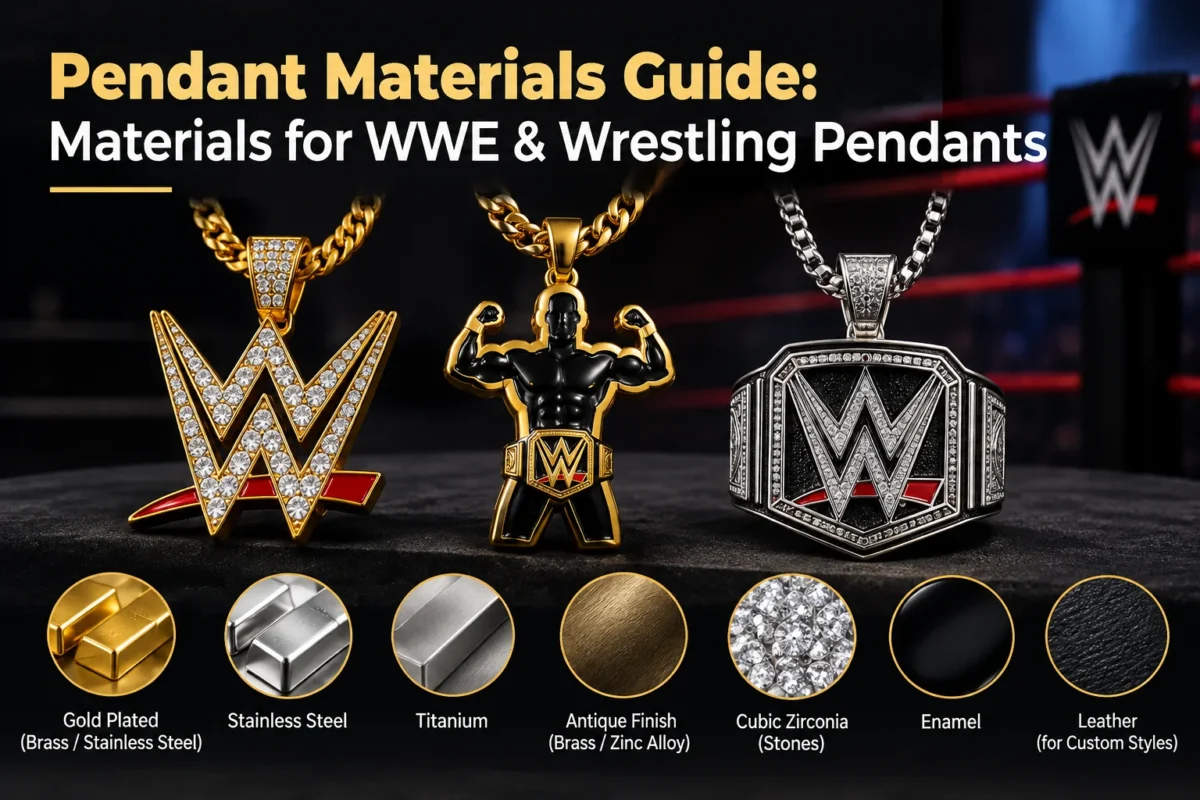
Common options may include metal alloys such as zinc alloy, brass, stainless steel, or other suitable metals depending on the design and manufacturer.
The base material should not be confused with the final surface color.
For example, a pendant can have one metal as its underlying material and then receive a different-colored surface finish. Therefore, asking only for a “gold pendant” may not provide enough information.
Instead, discuss both the base material and the desired finish.
Why Material Matters
The material can affect how the pendant is manufactured and how much detail can be incorporated.
It can also influence the final weight and feel of the piece.
If you want a substantial pendant, tell the manufacturer that weight and a solid feel are important to you. If comfort and lighter everyday wear are more important, communicate that instead.
The best material is not automatically the most expensive option. It is the one that fits the design, intended use, appearance, and construction requirements.
Step 6: Choose the Finish and Color
After deciding on the base material, consider how you want the finished pendant to look.
Possible finishes may include different metallic appearances, polished surfaces, darker contrasts, brushed effects, or other decorative treatments.
The finish can completely change the character of the same design.
For example, a clean polished finish may give a pendant a refined appearance, while contrasting darker recessed areas can make raised lettering or symbols easier to see.
If your design contains multiple sections, explain which areas should stand out.
You can also provide a reference image showing the type of finish you want. This helps reduce confusion between what you mean by a color and what you mean by a surface finish.
Step 7: Decide Whether You Want Stones or Decorative Details
Stones can add another level of visual impact to a custom pendant.
They can be used around lettering, inside logos, along borders, or across selected areas of the design.
However, stone details should be planned during the design stage rather than added as an afterthought.
Consider:
- Stone size
- Stone color
- Placement
- Quantity
- Setting style
- Spacing
- Overall pattern
Too many stones can make a small design look crowded. On the other hand, carefully placed stones can emphasize the most important part of the pendant.
If you want a fully decorated or iced appearance, make that clear before production begins.
Step 8: Review the Design Before Production
One of the most important stages of how to order a custom pendant is the design approval process.
Never assume that the first artwork automatically represents exactly what the finished pendant will look like.
Before approving production, carefully review the design.
Check:
- Overall shape
- Dimensions
- Thickness
- Lettering
- Spelling
- Logo proportions
- Raised areas
- Recessed areas
- Border details
- Stone placement
- Bail size
- Front and back
- Finish
- Color combinations
If something is wrong, this is the time to mention it.
Once production begins, changing the design may be much more difficult than correcting it during the approval stage.
A clear design preview gives both the buyer and manufacturer a common reference before the physical pendant is produced.
Step 9: Make Sure the Pendant Works With Your Chain
A beautiful pendant still needs to work properly with the chain or necklace you plan to wear.
One detail that is easy to overlook is the bail, which is the part attached to the pendant that allows the chain to pass through. Its size, shape, and position should match the chain you intend to use.
Before production, consider:
- Chain thickness
- Bail opening
- Pendant weight
- Connection strength
- How freely the pendant should move
- Whether the pendant should sit flat or rotate
If you already have a chain, provide its measurements when discussing your custom pendant. This gives the manufacturer useful information when determining the appropriate bail size.
For a larger or heavier pendant, the connection point deserves particular attention. A small or unsuitable bail can affect both appearance and everyday usability.
Step 10: Decide What You Want on the Back
The front of a pendant usually receives most of the attention, but the back can also be customized.
Depending on the design, you might want the back to remain clean and simple, or you may want to include additional details such as:
- A name
- Initials
- A date
- A short message
- A small logo
- An engraved pattern
- A maker or collection detail
Think carefully about how much information you really need.
The back does not always need to be decorated. A clean back can sometimes make the pendant feel more refined and keep attention on the main design.
If you want back engraving or another feature, mention it when placing the order rather than after the front design has already been approved.
Step 11: Explain How You Plan to Use the Pendant
Your intended use can help determine the right construction.
A pendant intended mainly for occasional events can be designed differently from one that will be worn frequently.
Tell the manufacturer if the pendant is intended for:
- Everyday wear
- Special occasions
- A gift
- Collecting
- Events
- Photoshoots
- Fashion styling
- A personal logo or brand identity
This information can help guide decisions about size, thickness, weight, surface finish, and decorative details.
For example, a large, heavily decorated pendant may create a strong statement but may not be the most comfortable choice for someone looking for a lightweight everyday piece.
The goal is not simply to make the pendant look impressive. It should also make sense for the way you intend to use it.
Step 12: Send Your Custom Order Requirements Clearly
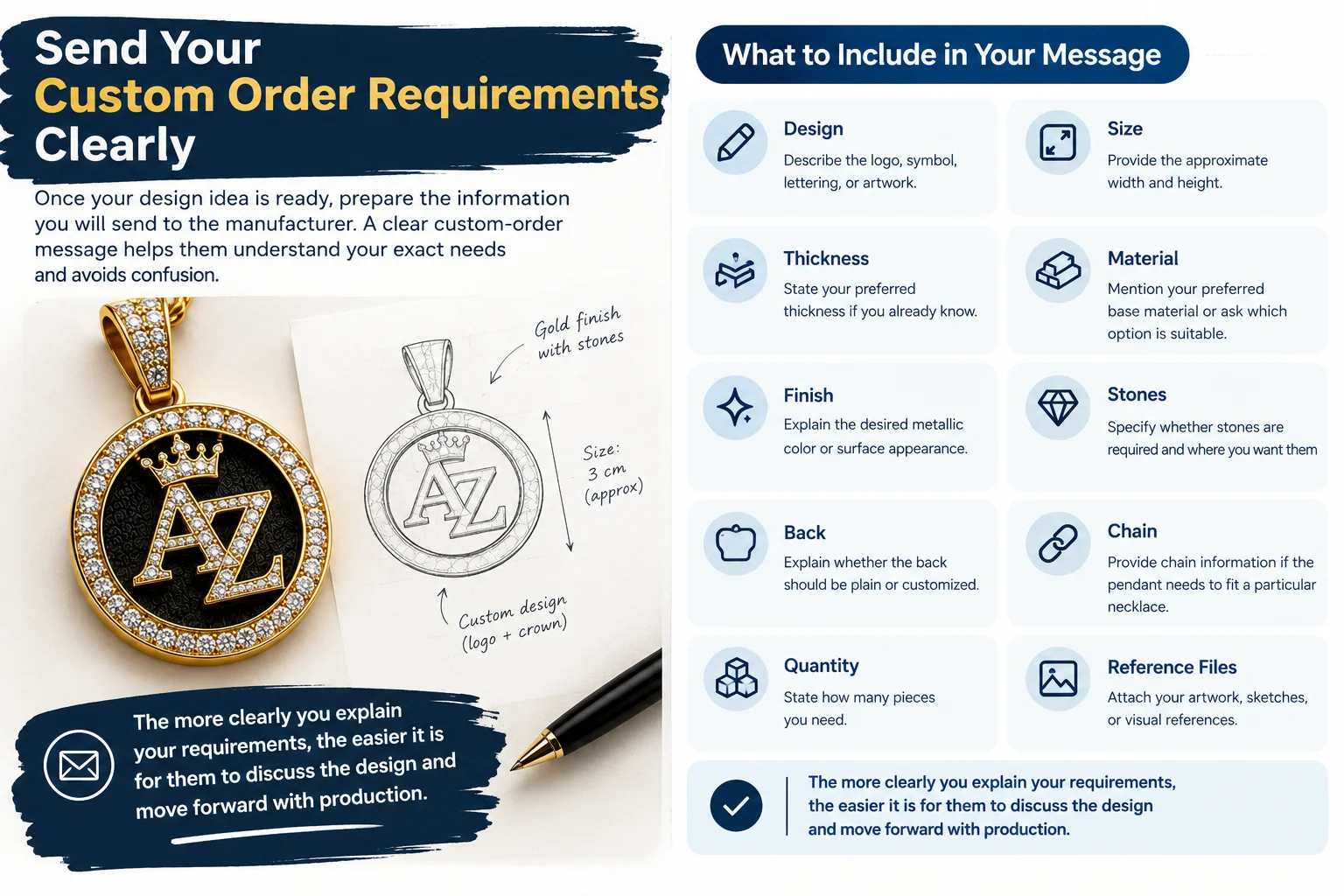
Once your design idea is ready, prepare the information you will send to the manufacturer.
A clear custom-order message should explain the important requirements without making the manufacturer guess what you want.
You can include:
Design: Describe the logo, symbol, lettering, or artwork.
Size: Provide the approximate width and height.
Thickness: State your preferred thickness if you already know it.
Material: Mention your preferred base material or ask which option is suitable.
Finish: Explain the desired metallic color or surface appearance.
Stones: Specify whether stones are required and where you want them.
Back: Explain whether the back should be plain or customized.
Chain: Provide chain information if the pendant needs to fit a particular necklace.
Quantity: State how many pieces you need.
Reference files: Attach your artwork, sketches, or visual references.
The more clearly you explain your requirements, the easier it is to discuss the design before production.
Step 13: Ask Questions Before You Pay
If you are unsure about anything, ask before confirming the order.
This is especially important for a fully custom pendant because the final result depends on several design and manufacturing decisions.
Useful questions include:
- Can my artwork be made into a pendant?
- What material would work best for this design?
- Can the small details remain visible?
- What size do you recommend?
- How thick should the pendant be?
- Can the back be customized?
- Will the pendant fit my existing chain?
- Can stones be added to specific areas?
- Will I receive a design preview?
- How many revisions are possible?
- What is the production time?
- What shipping options are available?
- How should I approve the final design?
You do not need to ask every question if the information has already been provided. The important point is to clarify anything that could affect your final piece.
Step 14: Understand the Difference Between Design Approval and Production
A design preview is not the same thing as the finished physical pendant.
The preview allows you to see how the proposed shape, artwork, lettering, colors, and other features are expected to come together.
After you approve the design, the manufacturer can move forward with production according to the agreed specifications.
This is why you should treat the approval stage seriously.
Look at the design from different angles if a three-dimensional preview is available. Pay attention to areas that are easy to miss, especially small lettering, borders, stones, and the connection point.
Do not approve the design simply because the overall shape looks attractive.
Check the details.
Step 15: Consider Production Time
Custom pendants generally require more preparation than ready-made jewelry because the piece may need to go through design, approval, tooling or preparation, manufacturing, finishing, stone setting when applicable, inspection, and shipping.
The exact timeline can vary depending on:
- Design complexity
- Quantity
- Material
- Manufacturing method
- Decorative details
- Custom tooling requirements
- Approval speed
- Production workload
- Shipping destination
If you need the pendant for a specific date, mention the deadline before placing the order.
Do not assume that a custom pendant can be produced as quickly as an item that is already made and ready to ship.
Planning ahead gives you more room for design revisions and unexpected delays.
Step 16: Review the Cost as a Complete Custom Order
The price of a custom pendant is not determined only by its size.
Several elements can affect the total cost.
These may include:
- Material
- Pendant dimensions
- Thickness
- Design complexity
- Number of pieces
- Surface finish
- Plating
- Stone details
- Custom tooling
- Back engraving
- Special construction
- Packaging
- Shipping
A simple pendant with one clean logo may require less work than a large pendant with multiple raised levels, detailed stones, custom lettering, and a complex shape.
When comparing quotes, make sure you are comparing similar specifications.
A lower price may represent a simpler material, smaller dimensions, fewer details, or a different finishing process. Instead of looking only at the number, compare what is actually included.
Step 17: Check Every Detail Before Giving Final Approval
Before production begins, go through your requirements one final time.
This is your final opportunity to catch small mistakes.
Create a simple checklist:
Design
- Is the correct artwork being used?
- Is the logo positioned correctly?
- Is the spelling correct?
- Are the proportions right?
Dimensions
- Is the width correct?
- Is the height correct?
- Is the thickness suitable?
Construction
- Is the bail large enough?
- Will it fit the intended chain?
- Is the pendant suitable for the intended use?
Appearance
- Is the finish correct?
- Are the colors correct?
- Are the stones placed correctly?
Back
- Is the back plain or customized as requested?
Order
- Is the quantity correct?
- Has the agreed production timeline been understood?
- Have the shipping details been confirmed?
This final review can prevent avoidable problems later.
Common Mistakes When Ordering a Custom Pendant
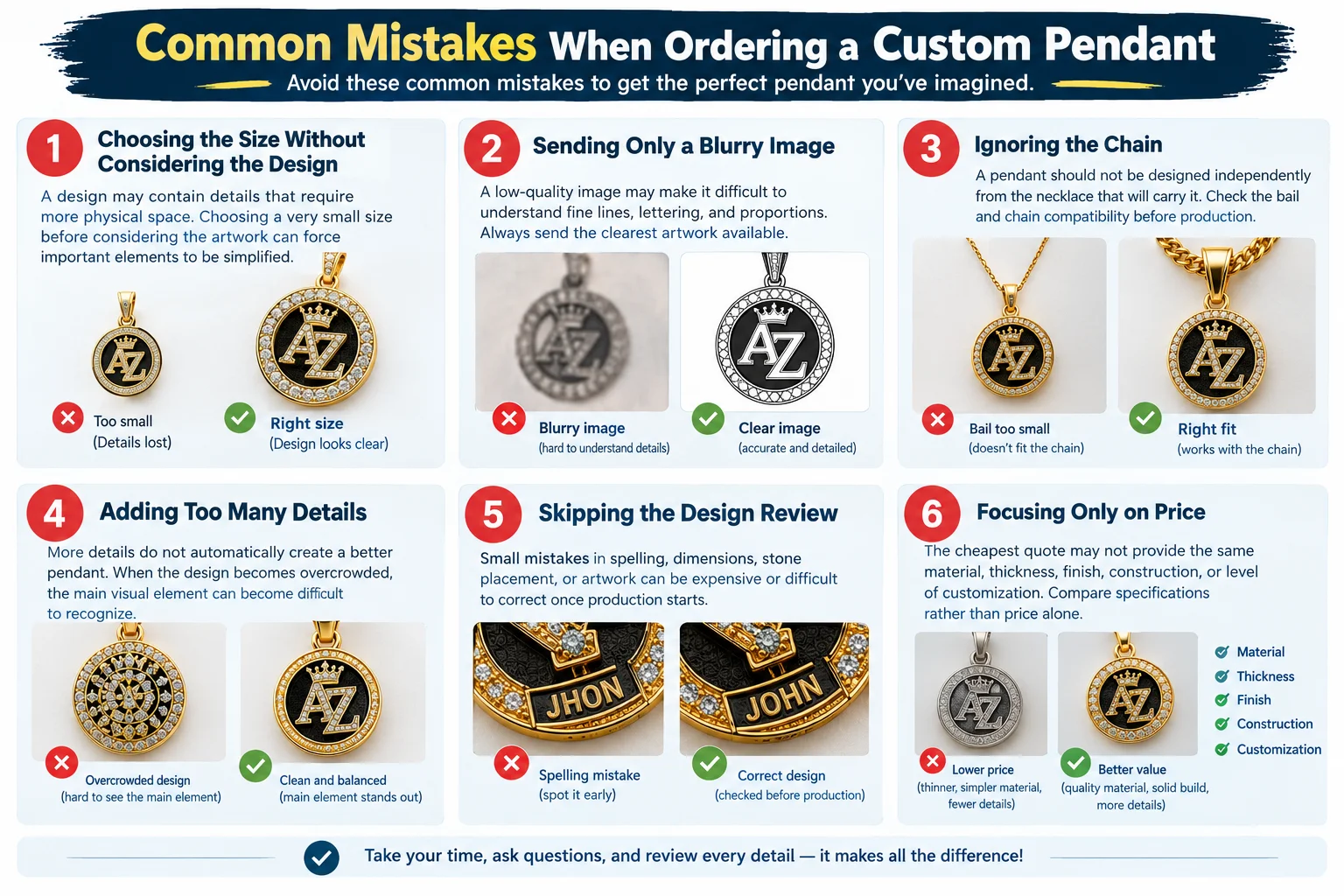
Knowing how to order a custom pendant also means knowing what not to do.
Choosing the Size Without Considering the Design
A design may contain details that require more physical space. Choosing a very small size before considering the artwork can force important elements to be simplified.
Sending Only a Blurry Image
A low-quality image may make it difficult to understand fine lines, lettering, and proportions. Always send the clearest artwork available.
Ignoring the Chain
A pendant should not be designed independently from the necklace that will carry it. Check the bail and chain compatibility before production.
Adding Too Many Details
More details do not automatically create a better pendant. When the design becomes overcrowded, the main visual element can become difficult to recognize.
Skipping the Design Review
Small mistakes in spelling, dimensions, stone placement, or artwork can become expensive or difficult to correct once production starts.
Focusing Only on Price
The cheapest quote may not provide the same material, thickness, finish, construction, or level of customization. Compare specifications rather than price alone.
What Makes a Custom Pendant Look Professional?
A professional-looking pendant usually starts with a design that has clear proportions and a strong visual hierarchy.
The main logo or symbol should be easy to recognize. Lettering should remain readable. Decorative elements should support the design rather than overwhelm it.
The edges should have a deliberate shape, and raised or recessed areas should be used purposefully.
Another important factor is consistency.
If the pendant includes several finishes, stone sections, borders, or lettering styles, they should work together rather than appearing randomly added.
Good customization is not about putting every possible feature into one piece. It is about selecting the features that make the design stronger.
Can You Order a Custom Pendant From Your Own Design?
Yes, many custom pendant orders begin with customer-supplied artwork or an existing concept.
You do not necessarily need to be a professional designer.
You can start with a logo, sketch, photograph, text idea, or reference and explain what you want changed.
For example, you might say that you want:
- A specific logo in the center
- Raised lettering
- A particular metallic finish
- Stones around the outside
- A customized back
- A certain pendant size
- A bail suitable for your chain
The manufacturer can then determine what adjustments may be required to turn the concept into a physical product.
The important thing is to communicate the idea clearly and review the proposed design before production.
How to Order a Custom Pendant With a Logo
Logo pendants require special attention because logos are often created for flat digital or printed applications rather than three-dimensional manufacturing.
Before ordering, check whether the logo contains extremely thin lines, tiny text, narrow spaces, or complicated details.
Ask how the artwork will be adapted for the pendant.
A good logo pendant should preserve the identity of the original design while making the important elements physically practical.
You may also want to decide whether the logo should be:
- Raised
- Recessed
- Engraved
- Filled with color
- Decorated with stones
- Surrounded by a border
These choices can produce very different results.
How to Order a Custom Pendant as a Gift
If you are ordering a pendant as a gift, personalization becomes even more important.
Think about what the recipient actually likes instead of simply choosing the most complicated design.
You might personalize the pendant with:
- A name
- Initials
- A meaningful symbol
- A special date
- A favorite design
- A personal logo
- A short word or phrase
Consider the recipient’s normal style as well.
Someone who prefers simple jewelry may appreciate a smaller and cleaner pendant, while someone who enjoys bold fashion pieces may prefer a larger design with more visual detail.
The best gift is not necessarily the biggest pendant. It is the one that feels connected to the person receiving it.
Final Thoughts on How to Order a Custom Pendant
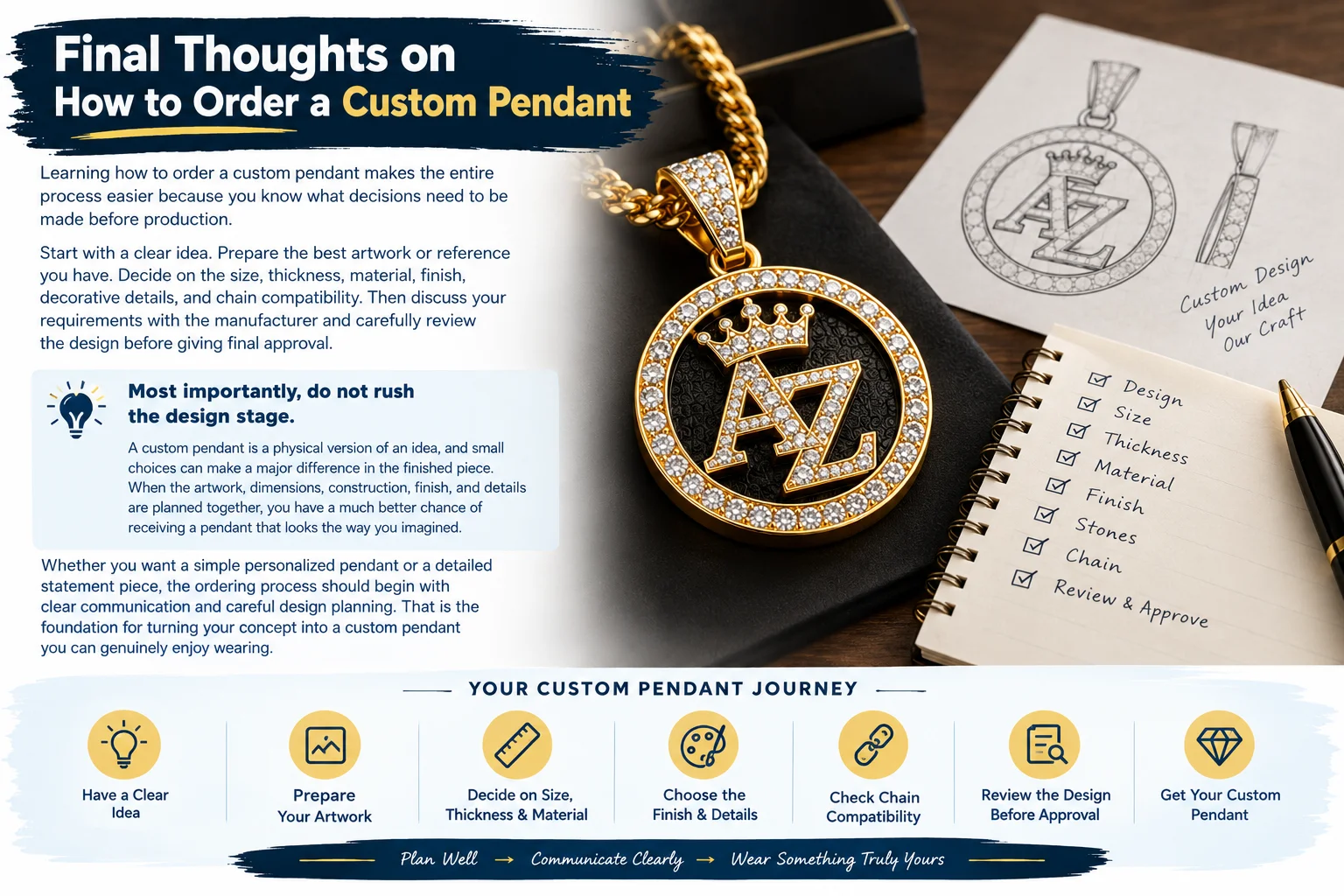
Learning how to order a custom pendant makes the entire process easier because you know what decisions need to be made before production.
Start with a clear idea. Prepare the best artwork or reference you have. Decide on the size, thickness, material, finish, decorative details, and chain compatibility. Then discuss your requirements with the manufacturer and carefully review the design before giving final approval.
Most importantly, do not rush the design stage.
A custom pendant is a physical version of an idea, and small choices can make a major difference in the finished piece. When the artwork, dimensions, construction, finish, and details are planned together, you have a much better chance of receiving a pendant that looks the way you imagined.
Whether you want a simple personalized pendant or a detailed statement piece, the ordering process should begin with clear communication and careful design planning. That is the foundation for turning your concept into a custom pendant you can genuinely enjoy wearing.