Custom Medals Guide: Types, Costs & Ordering Tips

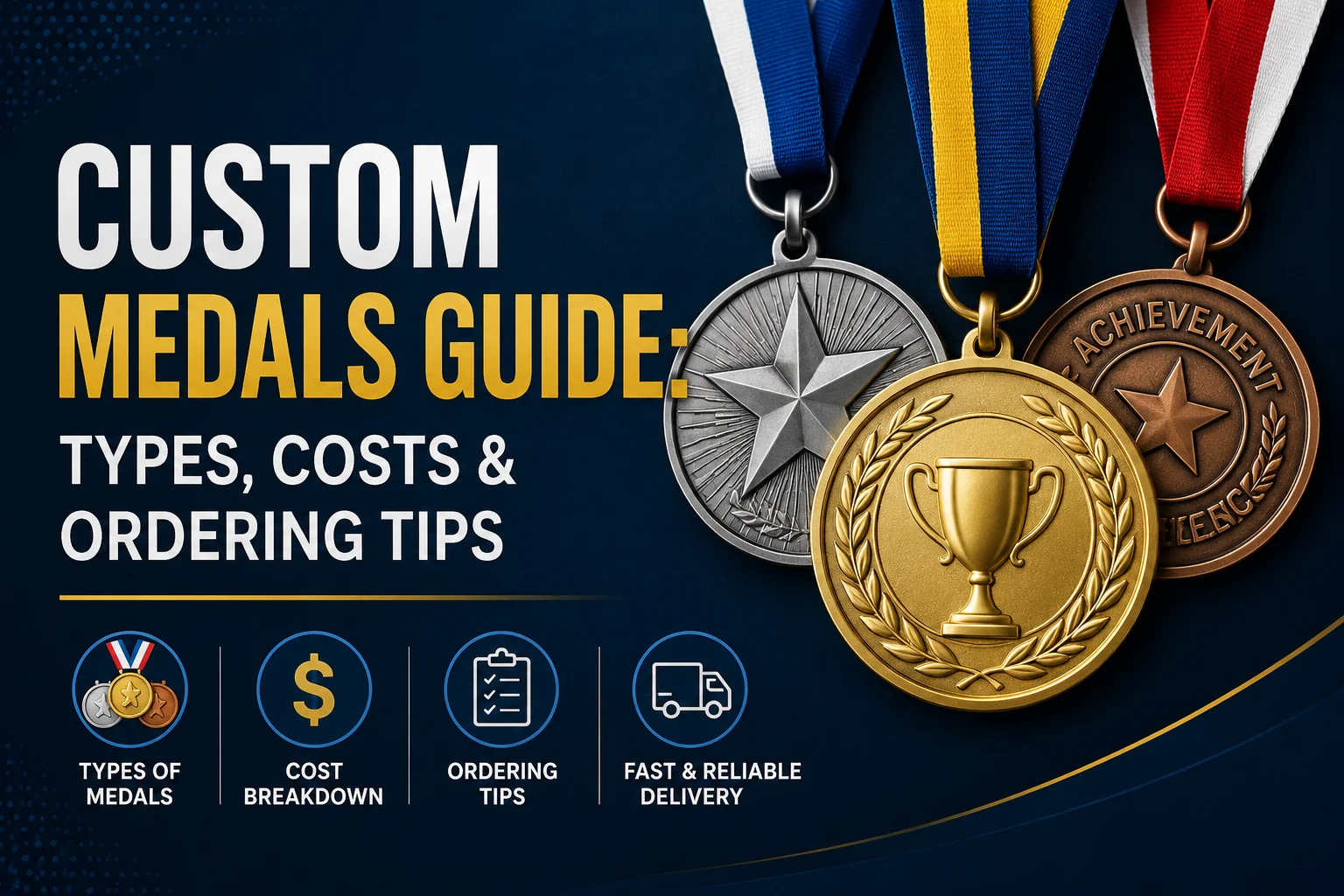
If you’re organising a race, a school event, a corporate competition, or any kind of achievement-based gathering, chances are you’ve thought about handing out medals. But if you’ve never ordered custom medals before, the process can feel more complicated than it should be. Between materials, sizes, ribbons, pricing, and timelines, there’s a lot to get right
This guide walks you through everything you need to know about custom medals — from what they are and why they matter, to how to pick the right type, control your budget, and avoid the common mistakes that trip up first-time buyers. Whether you’re planning a 5K, a spelling bee, or an employee recognition program, you’ll leave this guide knowing exactly what questions to ask your medal supplier.
What Are Custom Medals?
A custom medal is an award designed specifically for your event, brand, or organization, rather than pulled from a generic catalogue. Instead of a plain, mass-produced medal that could belong to any race in any city, a custom medal carries your event name, logo, colors, and theme.
The customization can go as deep as you want. You can change the shape, the metal finish, the ribbon color and pattern, the engraving on the back, and even the packaging it arrives in. Some organizers stop at a simple front-facing design; others build a fully branded experience, right down to a matching medal box that recipients keep long after the event is over.
The core idea is simple: a custom medal turns a piece of hardware into a keepsake. It’s the difference between an award that gets tossed in a drawer and one that gets displayed on a shelf or worn again at the next event.
Why Custom Medals Matter for Your Event
It’s easy to treat medals as an afterthought in event planning — something to check off the list once the bigger logistics are sorted. But medals do more work than most organizers give them credit for.
They influence registration decisions. Participants comparing two similar events will often choose the one that promises a better finisher medal. A distinctive design signals that the event is well-run and worth the entry fee.
They function as free advertising. A medal with your event’s branding doesn’t stop working once the event ends. Participants wear them, photograph them, and mention them in reviews — each one a small, ongoing reminder of your brand.
They drive social sharing. Medals are visual and personal, which makes them naturally shareable. A well-designed medal encourages participants to post finish-line photos, tagging your event and extending its reachCusto organically.
They shape how people remember the experience. A generic medal fades into the background. A thoughtful, well-made one becomes part of how someone remembers the day — which matters if you want repeat participants year after year.
None of this requires a huge budget. It requires knowing what your options are and choosing deliberately, which is exactly what the rest of this guide covers.
Popular Types of Custom Medals
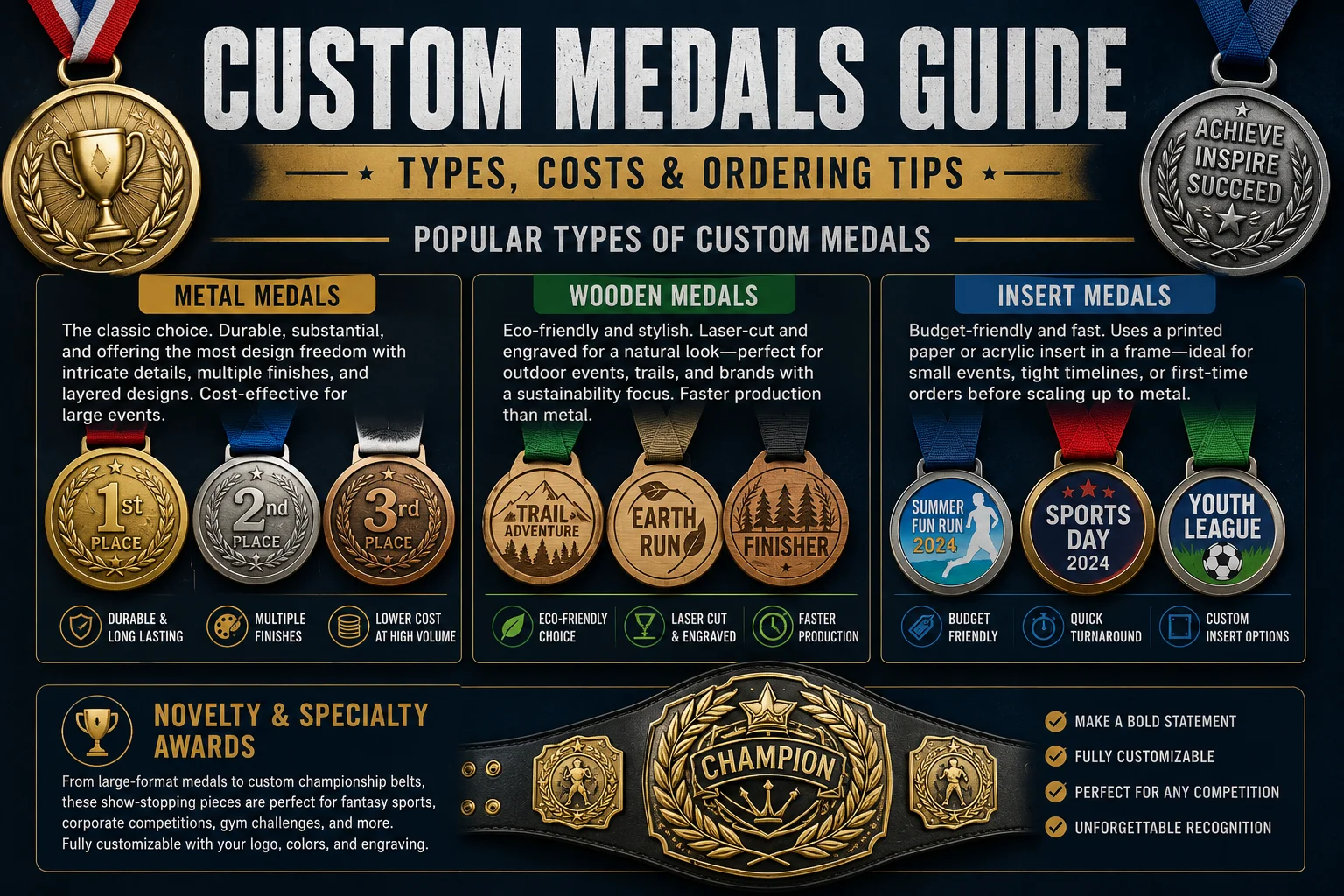
There isn’t one “correct” medal material — the right choice depends on your event size, budget, timeline, and the look you’re going for. Here are the most common options.
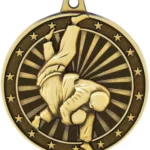
Metal medals are the classic choice, and for good reason. They’re durable, feel substantial in the hand, and offer the most design freedom — intricate cutouts, multiple plating finishes (gold, silver, bronze, antique, and more), and layered designs are all possible. Metal medals also tend to get cheaper per unit as quantity increases, which makes them a strong option for large events.
Wooden medals have grown in popularity among organizers who want an eco-friendlier alternative without sacrificing a polished look. They’re typically laser-cut and engraved, which gives them a clean, natural aesthetic that suits trail races, outdoor festivals, and brands with a sustainability angle. They’re usually faster to produce than metal, though they’re better suited to dry conditions than events involving heavy moisture or saltwater.
Insert medals use a printed paper or acrylic insert set inside a plastic or metal frame. They’re the fastest and most budget-friendly option, which makes them a good fit for smaller events, tight timelines, or organizers ordering for the first time and testing the waters before committing to a bigger metal order.
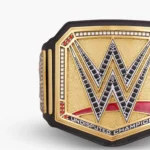
Beyond these three mainstays, some suppliers also produce novelty and specialty pieces — things like large-format custom championship belts, often used for fantasy sports leagues, corporate competitions, gym challenges, or fun “employee of the month” style awards. These work on the same customization principles as medals — your logo, colors, and engraving — just in a bigger, more dramatic format that suits events looking for a showpiece award rather than something worn around the neck.
Which Medal Material Is Right for You?
Think of choosing a medal type the way you’d choose footwear — you wouldn’t wear the same shoes for a hike and a formal event. The same logic applies here.
Metal medals suit you if you want something that lasts for years, need maximum design flexibility, want a premium feel, or are ordering in bulk and want the best price per unit.
Wooden medals suit you if sustainability matters to your brand, you need a large batch relatively quickly, and your event won’t expose the medals to heavy moisture or chemicals like chlorine.
Insert medals suit you if you’re working with a small recipient list, a tight budget, or a short runway before your event date.
There’s no wrong answer here — only a mismatch between medal type and event needs, which is what this comparison is meant to help you avoid.
Eco-Friendly Medal Options
Sustainability has become a real consideration for many event organizers, and medals are no exception. Eco-friendly medals generally fall into a few categories:
- Biodegradable medals, made from plant-based materials that can break down naturally over time.
- Recyclable medals, made from metal or plastic that can be processed and reused after their life as an award.
- Sustainable medals, made from responsibly sourced materials like wood or stone that have a lower environmental footprint from the start.
If sustainability is a priority for your brand, it’s worth asking your supplier directly which of their materials and processes qualify, since standards can vary between vendors.
Medal Thickness & Size: Does It Matter?
Yes — thickness and size affect both the look and the cost of your medal. A thicker medal feels more substantial and premium, but it also uses more raw material, which raises the price. Larger medals allow for more intricate designs and more text, but they also cost more to produce and ship in bulk.
Most standard medals fall in a predictable size and thickness range that balances cost with visual impact, but if you’re going for a statement piece — like an oversized championship-style award — expect the price per unit to climb accordingly.
How Custom Medals Are Made
Understanding the production process helps you set realistic expectations for cost and timeline — and it makes conversations with your vendor a lot easier.
Design. Everything starts with artwork. If you already have a logo or brand guidelines, your vendor’s design team adapts them into a medal-ready design, since designing for a flat screen or print piece is different from designing for a die-struck or cast object. If you don’t have a designer in-house, most reputable medal suppliers offer this service as part of the order.
Material selection. Once the design is locked in, you choose your material — typically metal (zinc alloy is the most common base), wood, acrylic, or a plastic/paper insert. This decision affects both look and lead time, as covered above.
Manufacturing. For metal medals, this usually means either die-striking (pressing the design into metal to create a raised, sculpted look) or casting (pouring molten metal into a mold for more three-dimensional detail). Wooden medals are typically laser-cut and etched. Insert medals are simply printed and mounted into a pre-made frame.
Engraving and personalization. If you want individual details added — a recipient’s name, a finish time, a placement — this is usually done separately from the main manufacturing run, either by laser or diamond-tip engraving.
Finishing. A plating or coating step gives the medal its final look, whether that’s a shiny gold finish, a brushed antique bronze, or a soft-touch matte coat.
Packaging. Finally, medals are packaged for shipping and presentation — anything from a simple poly bag to a branded velvet pouch or a printed presentation box.
Knowing these steps matters because each one adds time. A simple insert medal might take a couple of weeks from design approval to delivery, while a fully custom cast-metal medal with multiple plating colors can take significantly longer — which is exactly why timeline planning (covered next) is so important.
How Much Do Custom Medals Cost?
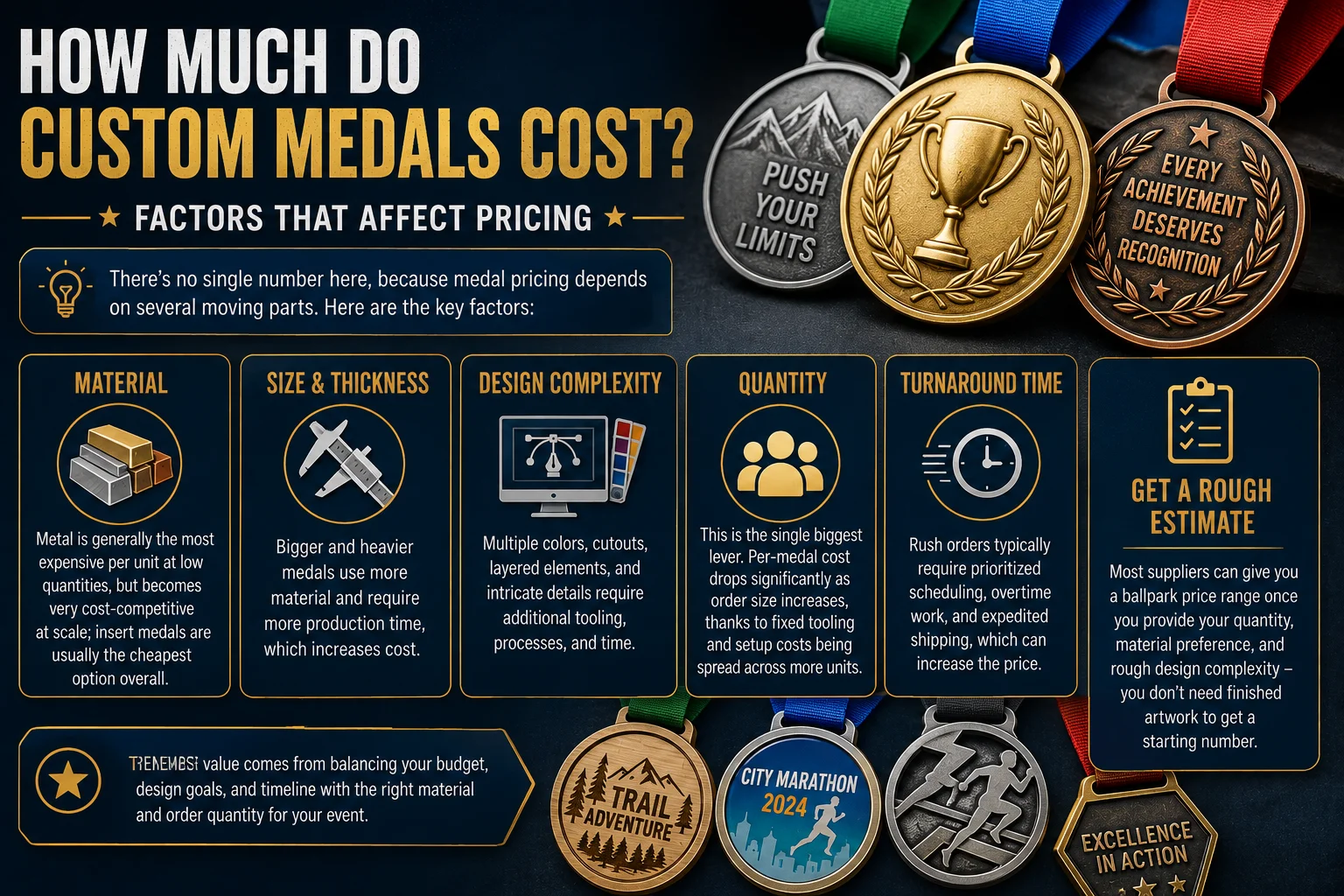
There’s no single number here, because medal pricing depends on several moving parts:
- Material – metal is generally the most expensive per unit at low quantities, but becomes very cost-competitive at scale; insert medals are usually the cheapest option overall.
- Size and thickness – bigger and heavier medals cost more.
- Design complexity – multiple colors, cutouts, or layered elements add cost.
- Quantity – this is the single biggest lever. Per-medal cost drops significantly as order size increases, thanks to fixed tooling and setup costs being spread across more units.
- Turnaround time – rush orders typically carry a premium.
If you want a rough estimate before committing, most suppliers can give you a ballpark price range once you tell them your quantity, material preference, and rough design complexity — you don’t need finished artwork to get a starting number.
Understanding MOQs (Minimum Order Quantities)
Most medal suppliers set a minimum order quantity, often somewhere between 50 and 100 units, because a custom mold or die has a fixed setup cost that needs to be spread across enough units to make sense. If you only need a handful of medals, insert medals or pre-made designs with light customization are usually your best bet, since they typically have lower or no MOQs.
Ways to Save Money on Custom Medals
A few practical tips can meaningfully lower your cost without lowering your medal’s quality:
- Order in bulk when possible. Combining multiple divisions or age groups into a single larger order (even with slight design variations) often reduces the per-unit price.
- Simplify where it doesn’t matter. A single plating color instead of three, or a slightly smaller size, can meaningfully cut cost without hurting the overall impact.
- Avoid rush fees. Ordering early is the single easiest way to avoid paying a premium for expedited production.
- Ask about stock ribbon and packaging options. Fully custom ribbon and boxes look great, but standard options in your brand colors can save money while still looking polished.
Designing Your Medal: What to Prepare
If you’re working with a vendor’s design team, come prepared with:
- Your logo in vector format (AI, EPS, or high-resolution PDF), if you have one.
- Your event colors, ideally with exact color codes (Pantone, CMYK, or hex).
- Any text you want engraved — event name, date, tagline.
- A sense of your event’s theme or personality (fun and playful vs. formal and prestigious).
- Reference images of medals you like, even from other events — this helps designers understand your taste quickly.
If you don’t have a design or a design team, don’t worry — this is one of the most common starting points for first-time buyers, and a good vendor will guide you through the process rather than expecting a finished concept upfront.
When Should You Order Custom Medals?
The safest rule of thumb: start the ordering process as early as possible, and always work backward from your event date. Custom medals involve several sequential steps — design approval, production, engraving, and shipping — and each one takes time. Rush orders are usually possible, but they typically cost more and limit your material and design options.
As a general guideline, more elaborate designs, larger quantities, and metal medals all need more lead time than simple, small-batch insert medals. If you’re not sure how much buffer to build in, ask your vendor directly for a timeline based on your specific medal type and quantity — this is far more reliable than guessing.
How to Choose the Right Medal Supplier
A good supplier does more than just manufacture medals — they guide you through the entire process. Look for a few things:
- In-house design support, so you’re not left guessing how to translate your logo into a medal-ready design.
- Clear communication about timelines, especially if your event date is fixed and non-negotiable.
- Sample or proof approval, so you can see and approve your design before full production begins.
- Transparent pricing, including what affects cost so there are no surprises later.
- A track record with your event type, whether that’s races, school programs, or corporate recognition — experience with similar events usually means fewer hiccups.
Final Thoughts
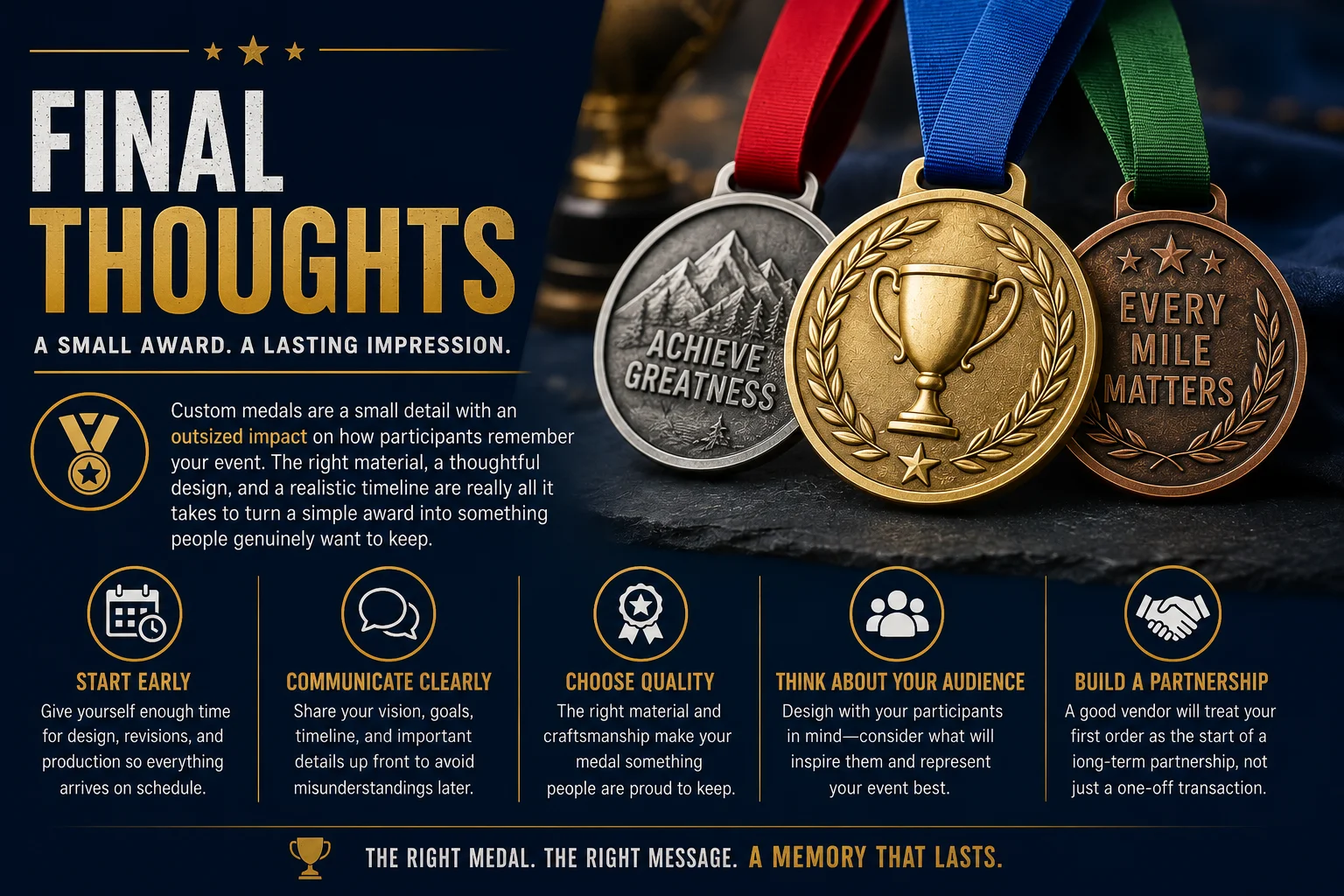
Custom medals are a small detail with an outsized impact on how participants remember your event. The right material, a thoughtful design, and a realistic timeline are really all it takes to turn a simple award into something people genuinely want to keep. Start early, communicate clearly with your supplier, and don’t be afraid to ask questions — a good vendor will treat your first order as the start of a long-term partnership, not just a one-off transaction.