How Medals Are Made: Guide to Custom WWE Wrestling Medals

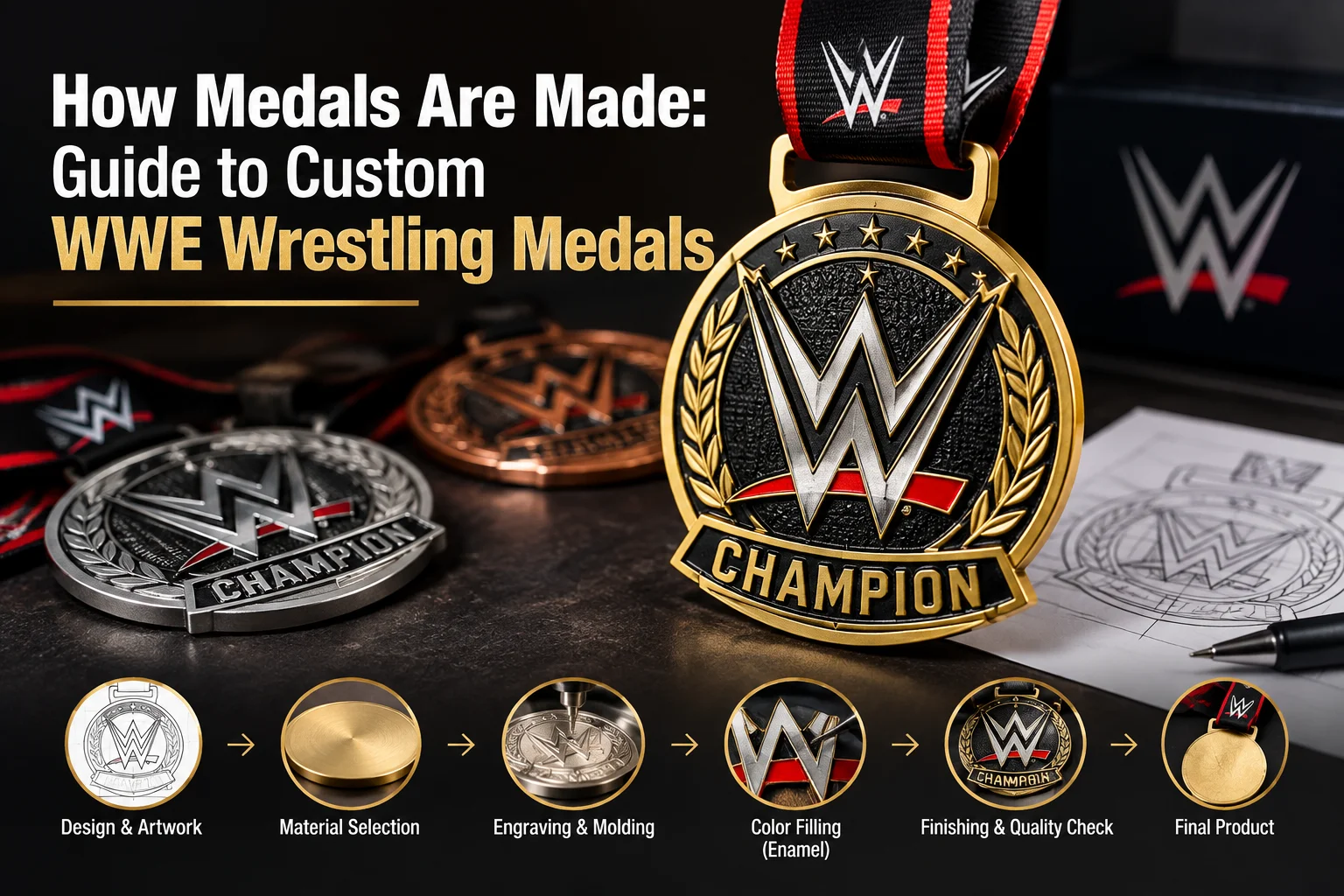
When you look at a custom wrestling medal, the finished piece may seem simple: a shaped metal award with a bold design, a ribbon, and details that represent the event or achievement. But creating that medal involves several important stages.
So, how are medals made?
The process usually begins long before metal is shaped. A manufacturer first needs to understand the purpose of the medal, prepare the artwork, select suitable materials and production methods, create the tooling, and then carefully finish the final piece.
For wrestling events, the design process can be even more creative. A medal might feature a wrestling ring, championship-style graphics, a wrestler silhouette, event branding, a championship emblem, or personalized text. WWE-inspired visual elements can also influence the overall concept when the medal is being designed for a wrestling-themed event.
This guide explains how custom medals are made from the initial idea to the finished award, with a focus on wrestling and championship-style medals.
How Are Medals Made?
The medal-making process can vary depending on the design, material, quantity, and production method. However, most custom medal projects follow a basic sequence:
- Create the medal concept and artwork
- Prepare the design for manufacturing
- Choose the production method
- Create the mold, die, or tooling when required
- Form the metal medal
- Add raised and recessed details
- Apply the desired finish and colors
- Add engraving or other personalization
- Attach the ribbon and accessories
- Inspect and prepare the medals for delivery
Each stage affects the final appearance of the award.
A simple round medal with basic lettering can have a relatively straightforward production process. A wrestling medal with a custom shape, multiple levels of detail, logos, lettering, and colored sections requires more planning.
Creating the Medal Design
The first step in making a custom medal is creating the design.
For a wrestling-themed medal, the artwork should communicate the purpose of the event immediately. The designer may start with the event name, championship title, wrestling organization, logo, year, or a specific theme.
For example, a custom wrestling medal could include:
- A wrestling ring design
- Wrestling gloves
- A championship-style emblem
- A wrestler silhouette
- Event or tournament name
- Winner or champion wording
- Date or year
- Custom logo
- Stars, banners, or decorative elements
- A central wrestling-themed symbol
The shape does not always have to be a traditional circle. Custom medals can be created in shapes that match the theme of the event.
A wrestling tournament might use a medal shaped around a championship belt concept, while another event may prefer a traditional circular award with a detailed wrestling graphic in the center.
The most important point is that the artwork should be prepared with manufacturing in mind.
A design that looks good on a computer screen is not automatically ready for production. Very small details, narrow gaps, thin lines, and complicated artwork may need to be adjusted so they can be reproduced clearly on the finished medal.
Preparing Artwork for Production
Once the concept is approved, the artwork is converted into a production-ready design.
This stage is particularly important for custom medals because the manufacturer needs to understand which areas should be raised, recessed, engraved, polished, colored, or left as part of the metal background.
A good production drawing separates the different elements of the design.
For example, a wrestling medal might have a large central emblem, raised lettering around the edge, recessed background areas, and colored sections inside the artwork.
The production team uses these details to determine how the medal will be manufactured.
This is also the stage where spelling, logos, dates, names, and other important information should be checked carefully.
A small mistake in the original artwork can become a permanent part of the medal if it is not corrected before production begins.
Choosing the Production Method
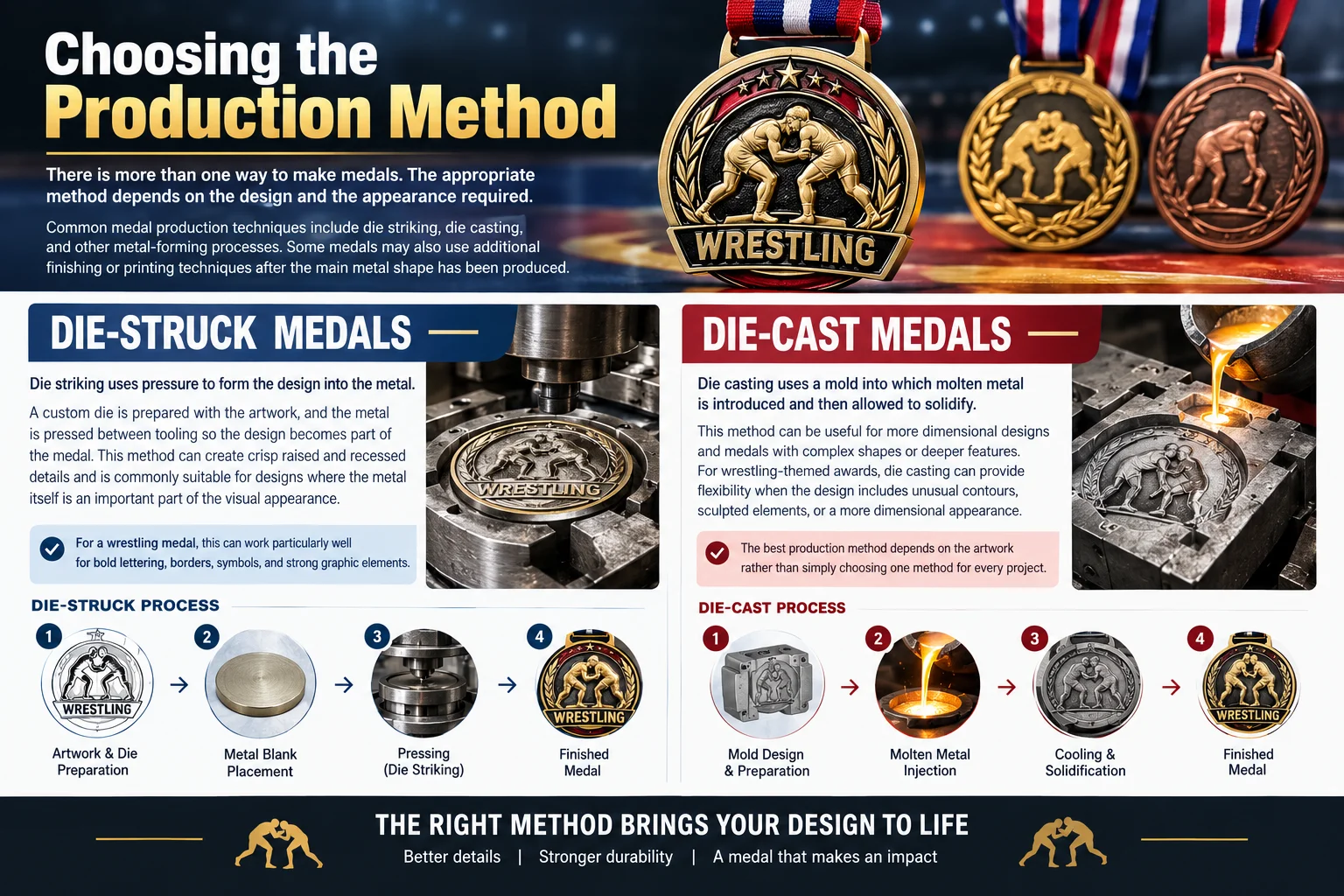
There is more than one way to make medals.
The appropriate method depends on the design and the appearance required.
Common medal production techniques include die striking, die casting, and other metal-forming processes. Some medals may also use additional finishing or printing techniques after the main metal shape has been produced.
Die-Struck Medals
Die striking uses pressure to form the design into the metal.
A custom die is prepared with the artwork, and the metal is pressed between tooling so the design becomes part of the medal.
This method can create crisp raised and recessed details and is commonly suitable for designs where the metal itself is an important part of the visual appearance.
For a wrestling medal, this can work particularly well for bold lettering, borders, symbols, and strong graphic elements.
Die-Cast Medals
Die casting uses a mold into which molten metal is introduced and then allowed to solidify.
This method can be useful for more dimensional designs and medals with complex shapes or deeper features.
For wrestling-themed awards, die casting can provide flexibility when the design includes unusual contours, sculpted elements, or a more dimensional appearance.
The best production method depends on the artwork rather than simply choosing one method for every project.
Creating the Tooling
After the production method is selected, the manufacturer prepares the tooling required to create the medal.
For many custom metal medals, this means producing a die or mold based on the approved artwork.
Think of the tooling as the production template that transfers the design into the metal.
This stage requires accuracy because the tooling controls important details of the finished award.
If the medal contains a wrestling logo, championship wording, decorative border, or custom symbol, those details need to be represented correctly in the tooling.
For custom orders, the production team may review the artwork again before creating the tooling. This is one reason customers should carefully approve the final design before manufacturing begins.
Forming the Metal Medal
Once the tooling is ready, production can begin.
The selected metal is prepared and formed according to the chosen manufacturing process.
In a die-struck process, pressure is used to impress the design into the metal.
In a casting process, molten metal is introduced into the prepared mold and then allowed to cool and solidify.
After the main production stage, the medal may still look quite different from the finished award.
The basic metal piece needs to be cleaned, trimmed, polished, plated, colored, and finished before it is ready for the customer.
This is where the medal starts to take on the appearance shown in the approved design.
Why the Design Matters So Much
When learning how medals are made, it is easy to focus only on the manufacturing equipment and metal.
However, the design itself has a major influence on the production process.
A medal with a simple central logo can be relatively straightforward to manufacture. A detailed wrestling medal with multiple layers, text, decorative borders, and custom shapes requires much more preparation.
Good medal artwork should balance creativity with practicality.
For example, a designer might want to place extremely small text around the outside of a medal. On screen, that text may look impressive. But if the lettering is too small for the selected manufacturing method, it may not reproduce clearly.
The same applies to intricate wrestling artwork.
Strong silhouettes, clear lettering, balanced spacing, and recognizable shapes generally make production easier and help the finished medal remain visually clear.
Designing a WWE-Inspired Wrestling Medal
For a wrestling-focused website or event, a championship-style medal can create a strong connection between the award and the world of professional wrestling.
The design can use wrestling-related themes such as championship graphics, dramatic lettering, ring imagery, stars, shields, banners, or a bold central emblem.
If the medal is being produced for a specific wrestling event, the event name should have a clear position within the design.
Personalization can also make the award more meaningful. Depending on the project, this could include the tournament name, division, year, winner’s name, or organization logo.
The goal is not simply to make the medal look impressive. The design should also make sense as an award that someone will want to keep.
What Happens After the Medal Is Formed?
Creating the basic metal medal is only part of the manufacturing process.
After forming, the medal normally goes through additional stages that give it its final appearance. These can include surface cleaning, polishing, plating, coloring, engraving, and assembly.
The exact combination depends on the approved design.
For example, one wrestling medal may use a clean metallic finish with raised details, while another may combine several metal finishes with colored sections and personalized engraving.
These finishing stages are what turn the basic manufactured piece into a finished custom award.
Cleaning and Surface Preparation
After the medal has been formed, the surface needs to be prepared for finishing.
The manufacturing process can leave small amounts of residue or imperfections on the metal. These need to be removed before the final finish is applied.
The medal may be cleaned, polished, and carefully prepared so that the surface is suitable for the next stages of production.
This step is especially important when the medal contains polished areas or contrasting finishes. A clean surface helps the final treatment appear more consistent across the award.
For a custom wrestling medal, this can make a noticeable difference because bold logos and raised designs are often intended to stand out clearly.
Applying the Metal Finish
One of the most visible stages in learning how medals are made is the finishing process.
The medal can be given different metallic appearances depending on the design.
Common finishes include:
- Gold-style finish
- Silver-style finish
- Antique finish
- Polished metal finish
- Two-tone metallic finish
- Other custom surface treatments
The selected finish should match the artwork.
For example, a championship-style wrestling medal might use a bright metallic appearance around a central emblem, while an antique-style finish can create a more traditional award appearance.
The finish is not simply a decorative decision. It also helps separate different parts of the design visually.
Raised details can stand out against a contrasting background, making the artwork easier to recognize.
Adding Color
Color can completely change the appearance of a custom medal.
Depending on the design, manufacturers can add colored enamel or other suitable color applications to selected areas.
For a wrestling medal, colors can be used for:
- Event branding
- Organization logos
- Wrestling graphics
- Banners
- Stars
- Borders
- Championship wording
- Team colors
The artwork should clearly identify which sections receive color.
A good design does not need to use many colors to look impressive. A carefully selected combination can often create a stronger visual result than an overcrowded design.
For example, a wrestling championship medal could use metallic gold-style elements with two or three strong accent colors in the central artwork.
The important thing is consistency between the artwork and the physical medal.
Engraving and Personalization
Personalization is another important part of custom medal production.
A standard medal may identify the tournament or organization, while a personalized medal can include information specific to the recipient or event.
Depending on the design, personalization may include:
- Winner’s name
- Event name
- Tournament date
- Division
- Weight class
- Champion wording
- Year
- Organization name
- Special achievement
Not every medal needs personalized information. It depends on how the awards will be used.
For a large wrestling tournament, the same medal design may be produced for many winners, with certain information changing between divisions.
If names or other variable information are required, this should be discussed before production begins. The manufacturer can then determine the appropriate way to include the information.
Adding the Ribbon
A medal is not complete without its ribbon or attachment system.
The ribbon connects the medal to the wearer and also provides another opportunity for customization.
For a wrestling event, the ribbon can incorporate event colors, organization branding, or a simple design that complements the medal.
The ribbon should work visually with the medal rather than competing with it.
For example, if the medal already has a detailed wrestling design, a cleaner ribbon can help keep the overall award balanced.
The attachment is also checked during assembly to ensure the medal is properly connected to the ribbon.
Quality Inspection
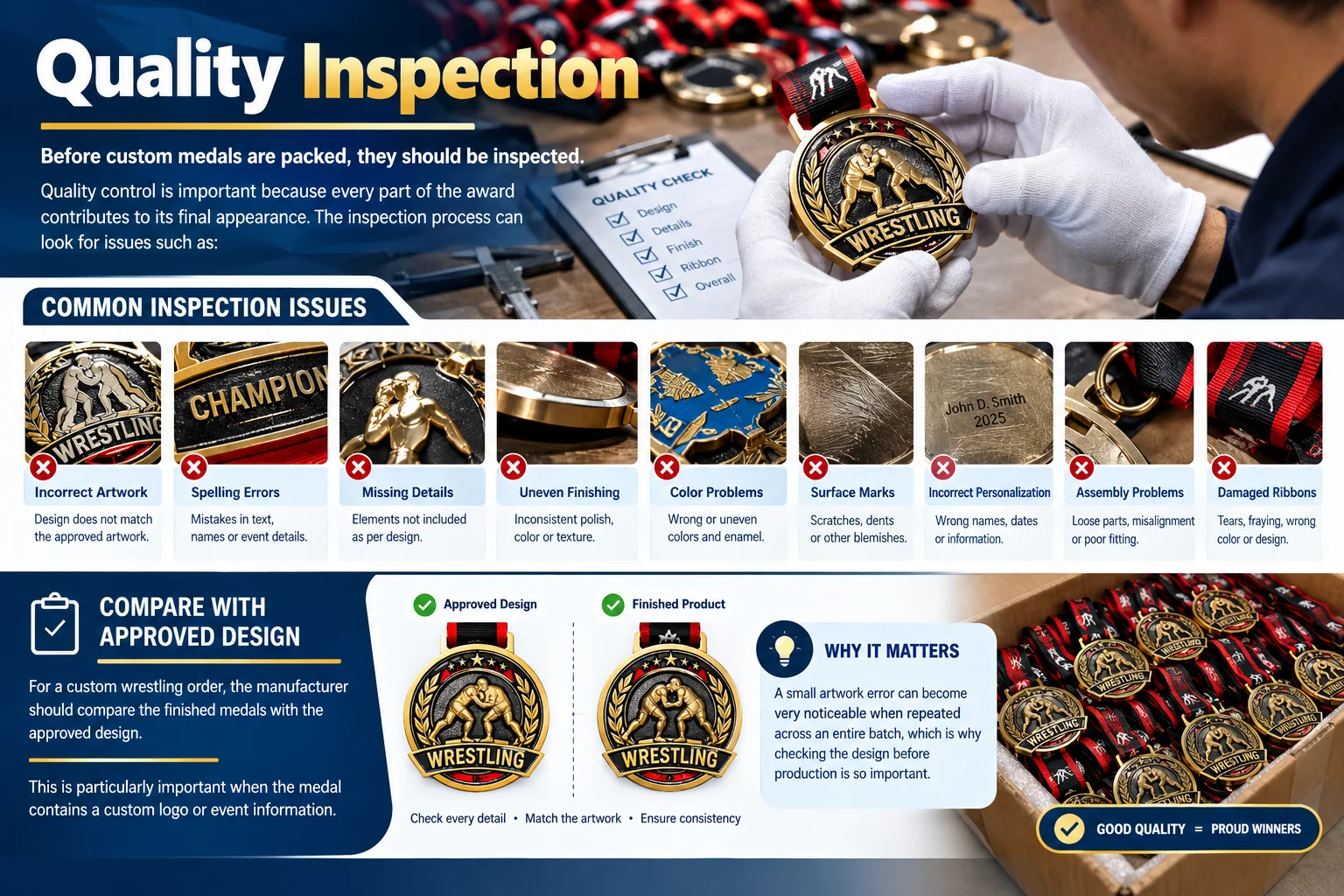
Before custom medals are packed, they should be inspected.
Quality control is important because every part of the award contributes to its final appearance.
The inspection process can look for issues such as:
- Incorrect artwork
- Spelling errors
- Missing details
- Uneven finishing
- Color problems
- Surface marks
- Incorrect personalization
- Assembly problems
- Damaged ribbons
For a custom wrestling order, the manufacturer should compare the finished medals with the approved design.
This is particularly important when the medal contains a custom logo or event information.
A small artwork error can become very noticeable when repeated across an entire batch, which is why checking the design before production is so important.
Custom Wrestling Medal Production: From Idea to Finished Award
The complete process can now be summarized as a simple journey:
Idea → Artwork → Production Preparation → Tooling → Metal Formation → Cleaning → Finishing → Coloring → Personalization → Ribbon Assembly → Quality Inspection
Every stage has a purpose.
The artwork establishes what the medal should look like. The tooling transfers that design into the production process. Metal formation creates the physical award, while finishing and coloring give it the desired appearance.
Finally, personalization and assembly turn the manufactured piece into a finished wrestling award.
This is why custom medal manufacturing is more involved than simply putting a logo onto a piece of metal.
How Long Does It Take to Make Custom Medals?
Production time depends on several factors.
A straightforward design with ready artwork may require less preparation than a completely new custom medal.
Factors that can affect the timeline include:
- Complexity of the artwork
- Whether new tooling is required
- Number of medals ordered
- Number of colors
- Personalization requirements
- Finishing requirements
- Approval time
- Production schedule
- Shipping requirements
Customers should therefore discuss the expected timeline with the manufacturer before placing an order.
If the medals are needed for a specific wrestling tournament, it is better to plan ahead rather than waiting until the event is close.
The design should be approved early enough to allow time for production, inspection, and delivery.
What Should You Provide to a Medal Manufacturer?
A manufacturer can work more efficiently when the customer provides clear information from the beginning.
For a custom wrestling medal, useful information can include:
- Event or tournament name
- Organization logo
- Preferred medal shape
- Artwork or design concept
- Desired colors
- Text that needs to appear
- Personalization requirements
- Quantity required
- Ribbon preferences
- Required delivery date
If you already have finished artwork, provide the highest-quality version available.
If you only have an idea, explain the concept clearly and provide reference material where appropriate.
For example, instead of simply saying “make a wrestling medal,” you could describe the desired theme, central graphic, wording, colors, and overall style.
The more clearly the concept is communicated, the easier it is for the production team to understand the intended result.
Common Mistakes When Ordering Custom Medals
Understanding how medals are made can also help customers avoid common problems.
Using Artwork That Is Too Complicated
A design may look excellent on a computer but become difficult to reproduce when converted into a physical medal.
Very small details and crowded artwork can reduce clarity.
A strong medal design should be visually clear from a normal viewing distance.
Not Checking the Text
Names, dates, tournament titles, and logos should always be checked before production.
Customers should carefully review the final artwork rather than assuming every detail is correct.
Changing the Design Too Late
Major changes after tooling or production has started can create delays and may require additional work.
It is better to finalize the design before manufacturing begins.
Ignoring the Ribbon
The medal and ribbon should be considered as one complete award.
A ribbon that does not match the medal’s colors or theme can make the finished product feel less coordinated.
Ordering Without Checking a Final Preview
A final design preview gives the customer an opportunity to identify problems before production.
Check the spelling, logo placement, colors, graphics, wording, and overall layout.
This is one of the simplest ways to reduce avoidable mistakes.
How to Design a Wrestling Medal People Will Want to Keep
A wrestling medal should represent the achievement it is being awarded for.
That does not mean every design needs to be complicated.
In many cases, a strong central symbol, clear event name, appropriate colors, and balanced layout can create a memorable award.
Consider what the medal should communicate when someone looks at it years later.
A good wrestling medal can remind the recipient of the tournament, the achievement, the organization, and the occasion.
This is particularly important for youth tournaments, championship events, wrestling clubs, leagues, and special competitions where participants may keep their awards for many years.
Frequently Asked Questions About How Medals Are Made
How are medals made from metal?
Custom medals are generally produced by forming metal using a suitable manufacturing method such as die striking or die casting. The medal is then cleaned, finished, colored or engraved when required, assembled with a ribbon, and inspected before delivery.
Can I create a completely custom wrestling medal?
Yes. Custom medal manufacturers can produce medals based on original artwork and event requirements. The design can include custom shapes, logos, text, colors, and wrestling-related graphics.
Can a wrestling medal include a logo?
Yes. Organization, tournament, club, or event logos can be incorporated into the medal design, provided the artwork is suitable for the selected production method.
Can names be added to wrestling medals?
Personalized names can be included depending on the production setup. Name, division, year, or other event information can be planned as part of the personalization process.
What should I check before approving a medal design?
Check the spelling, logo, wording, colors, artwork, placement of important elements, and overall appearance. Make sure the final preview represents what you actually want manufactured.
Are custom medals only suitable for wrestling competitions?
No. The same manufacturing principles can be used for medals for sports tournaments, schools, clubs, corporate events, charity events, competitions, achievements, and special occasions.
Final Thoughts on How Medals Are Made
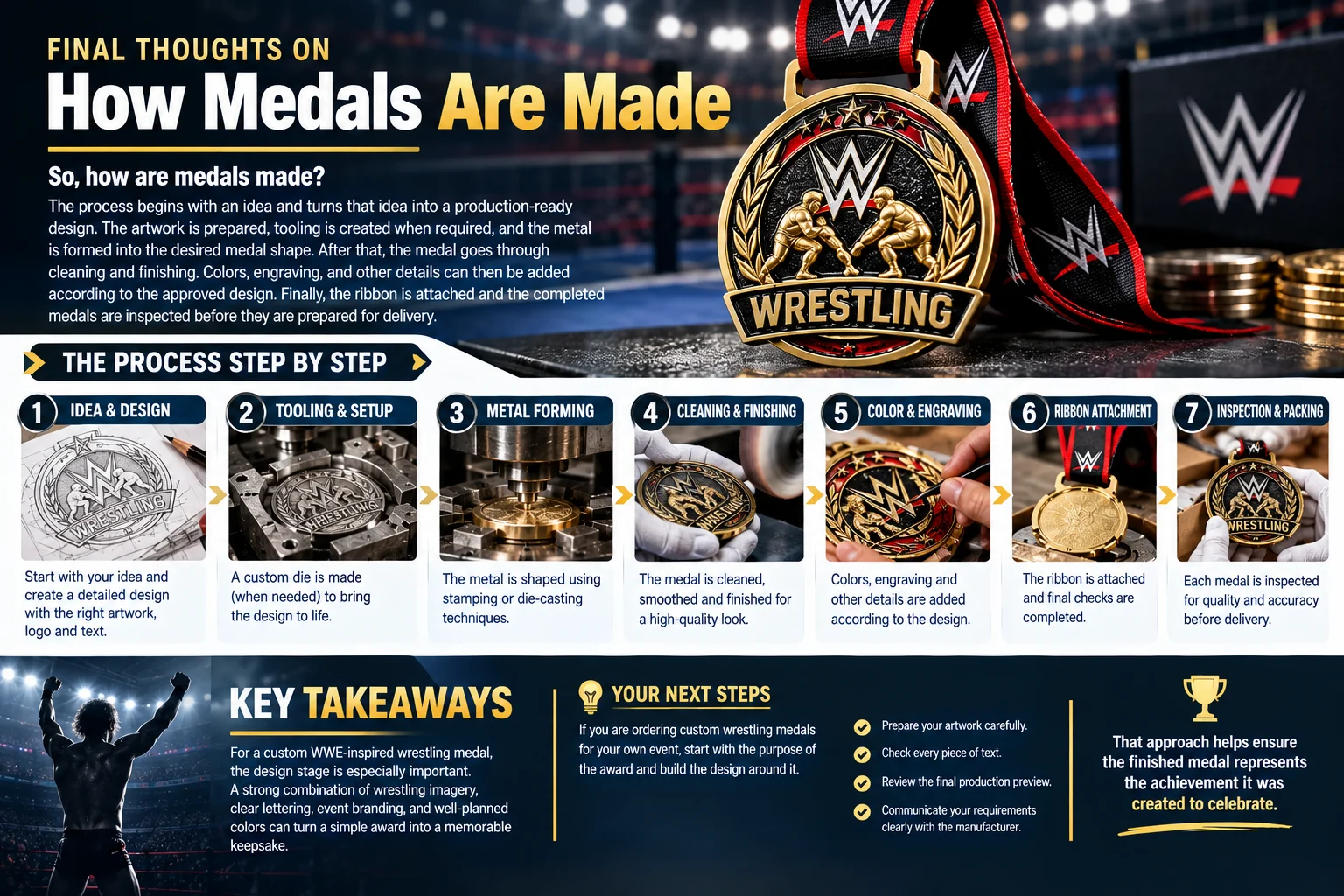
The process begins with an idea and turns that idea into a production-ready design. The artwork is prepared, tooling is created when required, and the metal is formed into the desired medal shape.
After that, the medal goes through cleaning and finishing. Colors, engraving, and other details can then be added according to the approved design. Finally, the ribbon is attached and the completed medals are inspected before they are prepared for delivery.
For a custom WWE-inspired wrestling medal, the design stage is especially important. A strong combination of wrestling imagery, clear lettering, event branding, and well-planned colors can turn a simple award into a memorable keepsake.
If you are ordering custom wrestling medals for your own event, start with the purpose of the award and build the design around it. Prepare your artwork carefully, check every piece of text, review the final production preview, and communicate your requirements clearly with the manufacturer.
That approach helps ensure the finished medal represents the achievement it was created to celebrate.