


What Are Side Plates? Guide to Championship Belt Side Plates

If you’ve ever watched a boxing match, a wrestling event, or an MMA fight and noticed the extra metal plaques attached to the sides of a championship belt’s strap, you’ve probably asked yourself: what are side plates, exactly? You’re not alone. This is one of the most common questions people search for when they start learning about custom championship belts.
In this guide, we’ll break down everything you need to know about side plates — what they are, what they’re made from, why they matter, and how you can get your own custom set. Whether you’re a fighter, a gym owner, a fantasy sports league organizer, or someone building a personal award belt, understanding side plates will help you make smarter decisions when designing your own.
What Are Side Plates?
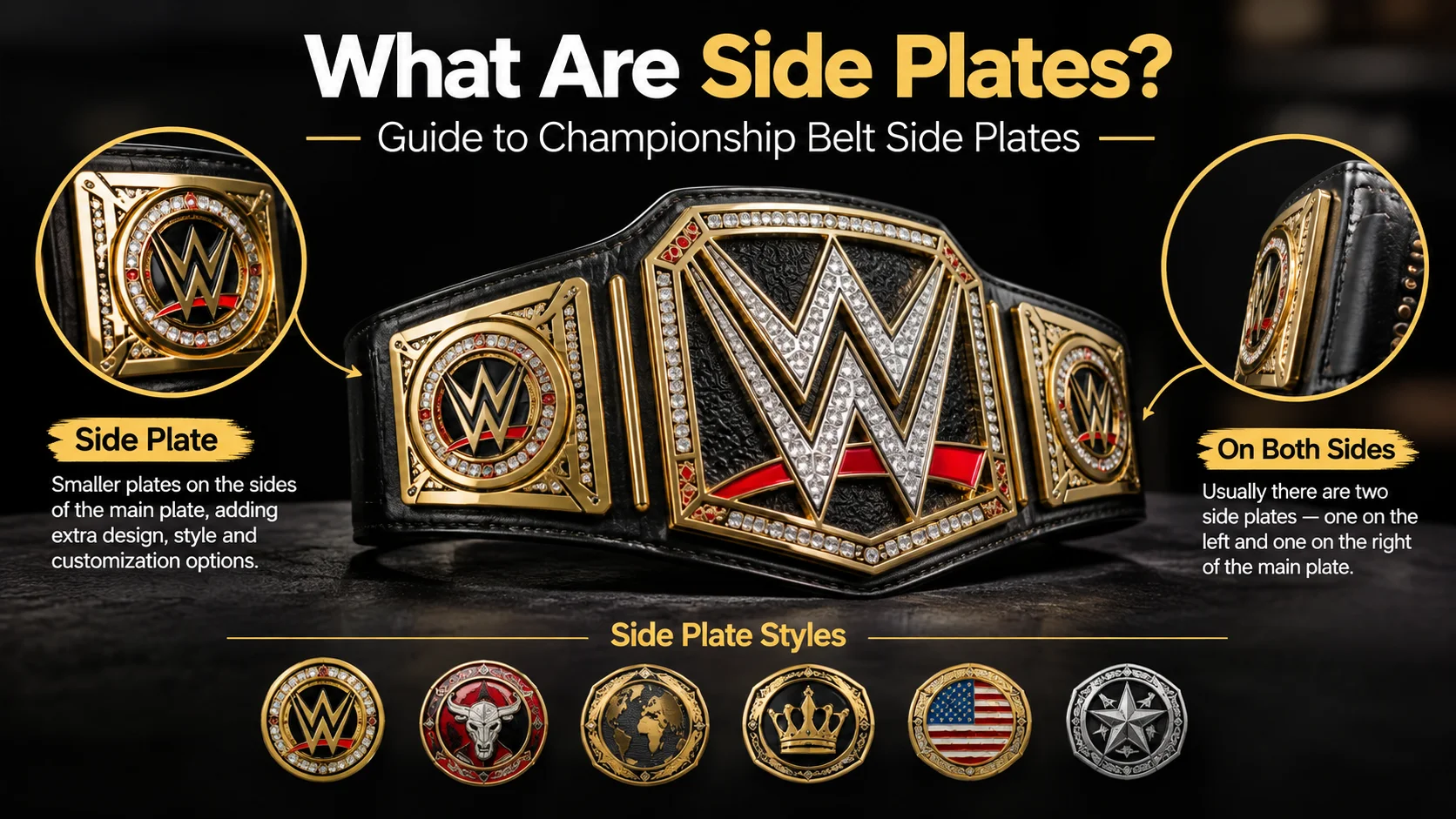
Side plates are the smaller decorative metal plaques attached to the leather strap of a championship belt, positioned on either side of the large center plate. While the center plate is usually the biggest and most eye-catching part of the belt, side plates play an equally important role in telling the full story of the belt.
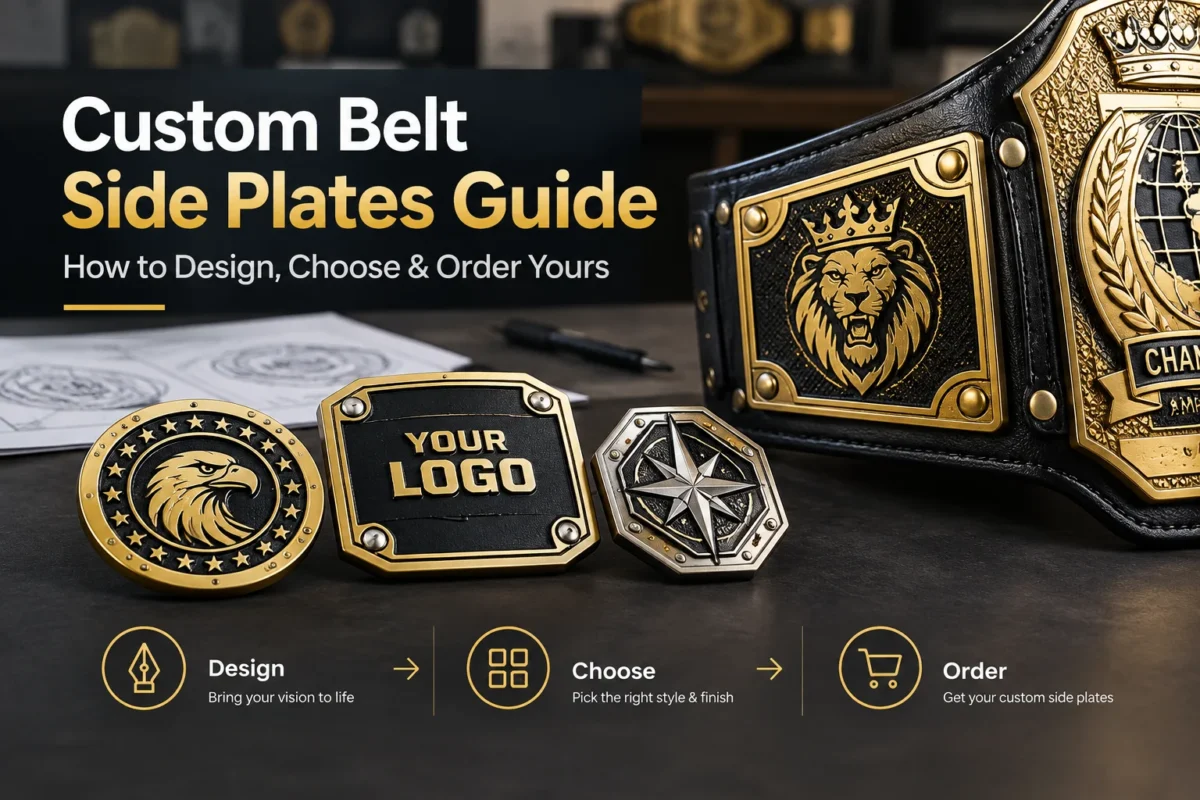
Think of a championship belt as having three main sections: the center plate in the middle, and two (or sometimes four) side plates flanking it on the strap. Side plates are generally smaller than the center plate, but they’re just as customizable. They can display logos, names, dates, mottos, team emblems, or any artwork the belt owner wants to include.
In short, side plates are where a lot of the personal or organizational branding happens. The center plate usually represents the main title or championship itself, while the side plates often carry additional details — like a league logo, a sponsor’s name, a division title, or even a custom message.
Why Do Championship Belts Have Side Plates?
You might wonder why belts even need extra plates instead of just one large center piece. There are a few practical and stylistic reasons for this.
1. They Add Visual Balance
A championship belt with just one center plate can look plain or unfinished, especially on a wide strap. Side plates fill out the design, making the belt look fuller, more symmetrical, and more impressive when worn or displayed.
2. They Allow for More Customization
Side plates give designers extra space to add details that wouldn’t fit on the center plate. This could include:
- A league or organization logo
- The recipient’s name or nickname
- A specific division or weight class
- A date or event name
- A motivational phrase or slogan
- A secondary emblem or mascot
This is especially useful for custom belts, where every inch of real estate matters for personalization.
3. They Reflect the Level of Prestige
In many professional sports and combat sports organizations, the number and detail of side plates can indicate how prestigious a title is. A grand championship or unified title belt might have more elaborate side plates compared to a regional or entry-level title.
4. They Help Tell a Story
Every side plate can represent a different part of the achievement being honored. For example, one side plate might show the winning team’s logo, while the other shows the league’s official crest. Together with the center plate, the side plates complete the full narrative of what the belt represents.
Types of Side Plates
Not all side plates are the same. Depending on the belt design, manufacturer, and purpose, side plates can vary in shape, size, and material. Here are the most common types you’ll come across.
Square or Rectangular Side Plates
These are common on modern custom belts and offer a clean, structured look. Square side plates are popular because they provide a larger flat surface for detailed artwork or text, making them a good choice for logos with fine detail.
Round Side Plates
Round side plates give a more classic, traditional appearance, similar to what you’d see on vintage boxing or wrestling belts. They’re often smaller than square plates and work well for simpler designs like a single emblem or initials.
Small vs. Standard Side Plates
Side plates also differ by size. Smaller side plates are often used on belts designed for women, youth divisions, or belts with a more minimalist look. Standard-sized side plates are typically used on men’s championship belts or larger, more traditional designs.
Number of Side Plates
Most belts feature two side plates — one on each side of the center plate. However, some larger or more elaborate belts include four side plates, two on each side, to allow for even more customization and detail.
What Are Side Plates Made Of?
Side plates are typically made from the same base metal as the rest of the belt’s plates, most commonly zinc alloy or brass, which is then plated with a finish such as gold, silver, or antique bronze. This matches the side plates to the center plate and keeps the entire belt looking cohesive.
After the base metal is shaped and plated, side plates often go through additional finishing processes, including:
- Enamel fill – Adding colored enamel into engraved sections for a bold, vibrant look
- Epoxy coating – A clear resin layer for a glossy, dome-like 3D effect over logos or text
- Engraving – Fine detail work for text, numbers, or intricate designs
- Antiquing – A slightly aged or textured finish for a more traditional, vintage appearance
The materials and finishes used will affect both the look and the durability of the side plates, so it’s worth understanding your options before finalising a design.
Center Plate vs. Side Plates: What’s the Difference?
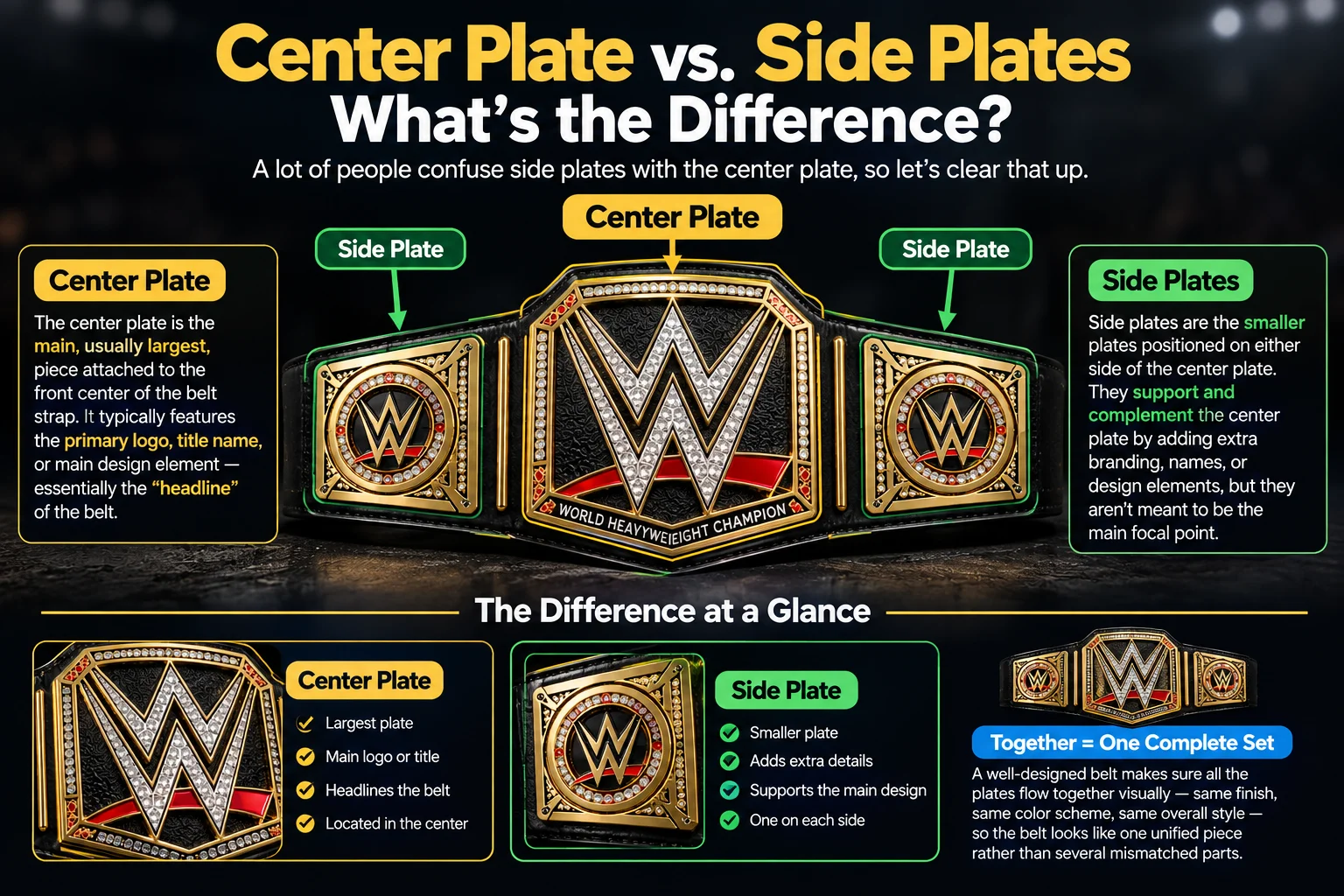
A lot of people confuse side plates with the center plate, so let’s clear that up.
The center plate is the main, usually largest, piece attached to the front center of the belt strap. It typically features the primary logo, title name, or main design element — essentially the “headline” of the belt.
Side plates, on the other hand, are the smaller plates positioned on either side of the center plate. They support and complement the center plate by adding extra branding, names, or design elements, but they aren’t meant to be the main focal point.
Together, the center plate and side plates work as a complete set. A well-designed belt makes sure all the plates flow together visually — same finish, same color scheme, same overall style — so the belt looks like one unified piece rather than several mismatched parts
How to Choose the Right Side Plates for Your Belt
If you’re designing a custom championship belt, choosing the right side plates is just as important as picking the center plate design. Here’s what to think about before you finalize your order.
1. Match the Size to Your Belt
Side plates need to be proportionate to the rest of the belt. A large, wide strap can usually handle bigger side plates, while a slimmer strap designed for women or youth divisions will look better with smaller, more delicate plates. Ordering side plates that are too large or too small for your strap can throw off the entire look of the belt, so always check sizing before you commit to a design.
2. Decide What You Want Them to Say
Before you start designing, think about what information or artwork actually needs to go on the side plates. Common choices include:
- Team or league logos
- Player or recipient names
- Division, weight class, or category
- Event names or dates
- Sponsor logos
- Custom taglines or mottos
Because side plates are smaller than the center plate, it’s best to keep the design relatively simple. Overly detailed artwork can lose clarity when shrunk down to fit a smaller surface.
3. Keep the Finish Consistent
Your side plates should match the finish of your center plate. If your center plate is gold with enamel detailing, your side plates should follow the same gold-and-enamel theme. Mismatched finishes — like a gold center plate paired with silver side plates — can make the belt look unfinished or poorly planned, unless that contrast is intentionally part of the design.
4. Think About Readability
If your side plates include text, such as a name or date, make sure the font size and style are legible at a glance. Small plates with overly intricate fonts can be hard to read, especially from a distance, which matters if the belt is going to be worn, photographed, or displayed on stage.
5. Consider How the Belt Will Be Used
A belt made for a one-time trophy presentation might not need the same durability as a belt that will be worn regularly, photographed at events, or shipped between recipients each season (common in fantasy sports leagues). If your belt will see frequent use, ask about more durable finishes and secure plate attachments that can handle wear and tear over time.
Common Questions People Ask About Side Plates
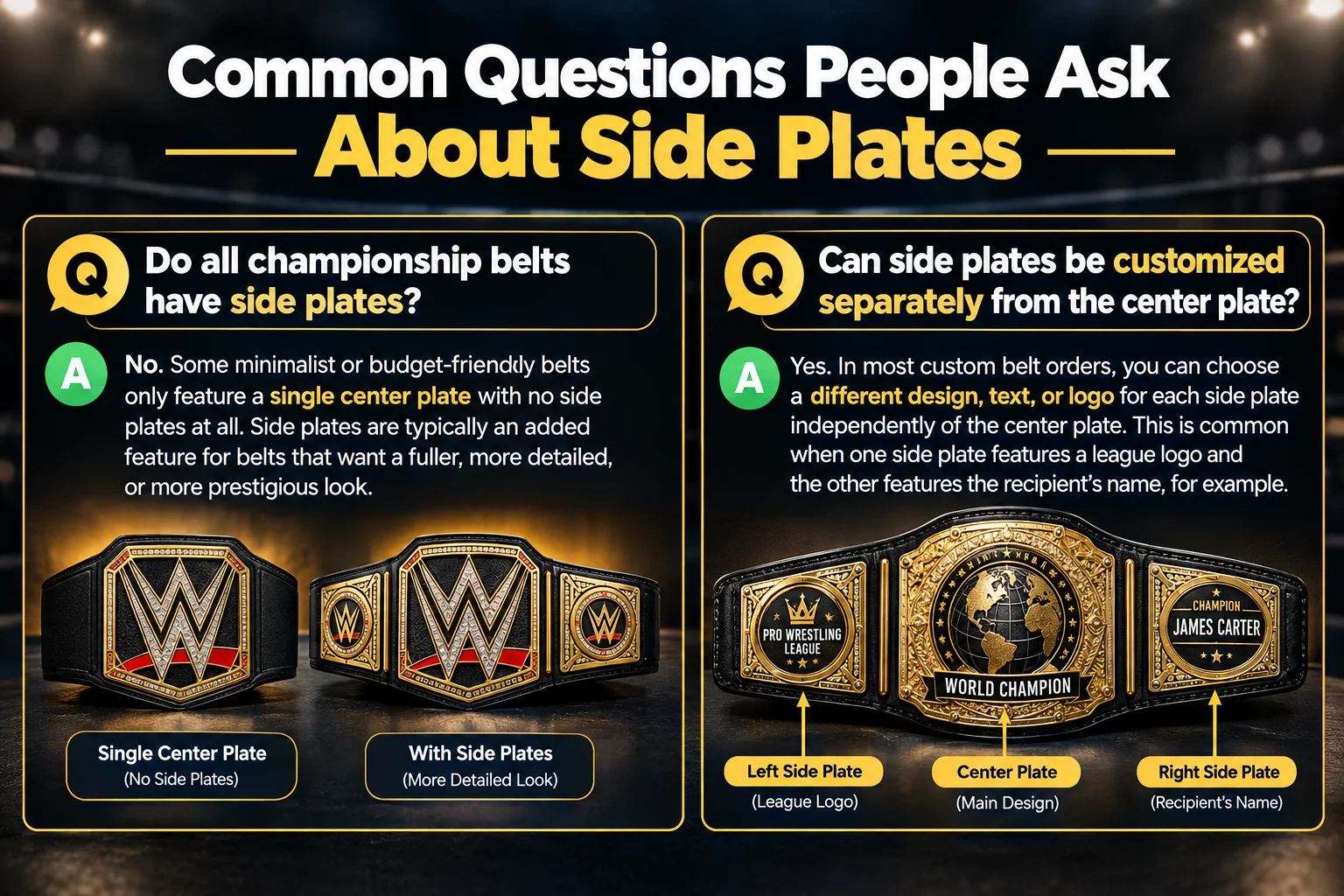
Do all championship belts have side plates?
No. Some minimalist or budget-friendly belts only feature a single center plate with no side plates at all. Side plates are typically an added feature for belts that want a fuller, more detailed, or more prestigious look.
Can side plates be customized separately from the center plate?
Yes. In most custom belt orders, you can choose a different design, text, or logo for each side plate independently of the center plate. This is common when one side plate features a league logo and the other features the recipient’s name, for example.
How many side plates does a belt usually have?
Most championship belts have two side plates, one on each side of the center plate. Some larger, more elaborate designs use four side plates for additional branding or detail.
Are side plates removable or interchangeable?
This depends on how the belt is manufactured. Some custom belts are designed with plates that can be swapped out or updated over time (useful for leagues that pass a belt between winners each season), while others have side plates permanently fixed to the strap. If interchangeability matters to you, it’s worth asking about this before placing an order.
What’s the difference between a side plate and a nameplate?
A nameplate is usually a smaller, simpler plate specifically used to display a name, while a side plate is a broader term for any plate positioned beside the center plate — which may or may not include a name. In many custom belts, the side plate functions as the nameplate, but not always.
Do side plates affect the overall cost of a custom belt?
Generally speaking, more side plates, larger side plates, or more detailed finishes (like enamel fill or 3D epoxy) will add to the overall complexity of a custom belt. The exact impact depends on the manufacturer and the specific design choices involved.
Tips for a Well-Designed Belt With Side Plates
If you’re putting together a custom belt and want the side plates to look as good as possible, keep these practical tips in mind:
Start with a clear reference image. If you have a logo, name, or design you want on your side plates, submit the cleanest, highest-resolution version you have. Blurry or low-quality images can lead to less accurate results during manufacturing.
Think about the whole belt, not just individual plates. The center plate, side plates, and strap should all work together as one cohesive design. Before finalizing anything, picture how all the pieces will look side by side.
Ask for a preview before production. Many custom belt makers offer a digital or 3D mockup before manufacturing begins. This step is important because it gives you a chance to catch sizing issues, spacing problems, or design elements that don’t translate well before the belt is actually made.
Don’t overcrowd small plates. It can be tempting to fit as much detail as possible onto a side plate, but simpler designs usually translate better onto smaller surfaces. If you have a lot of information you want to include, consider prioritizing what matters most.
Consider symmetry. If you’re using two side plates, decide whether you want them to mirror each other (same design, flipped) or feature two completely different elements. Both approaches work, but the choice should be intentional rather than accidental.
Final Thoughts on Side Plates

So, what are side plates? In simple terms, they’re the smaller, customizable plates attached to either side of a championship belt’s center plate. They add visual balance, extra branding space, and a sense of prestige to any custom belt design. Whether you’re designing a belt for a boxing match, a fantasy football league, a wrestling promotion, or a personal achievement award, understanding how side plates work will help you make better decisions when it’s time to customize your own.
From choosing the right size and material to deciding what text or artwork goes on each plate, side plates offer a lot of room for creativity while still playing a functional role in the overall design. Take your time picking a style that matches your center plate, keep your design elements clear and readable, and don’t be afraid to ask for a preview before your belt goes into production.
At the end of the day, side plates are more than just decoration — they’re an essential part of what makes a championship belt feel complete, personal, and truly one of a kind.