

Crown Materials WWE: A Complete Guide to Materials, Quality & Design

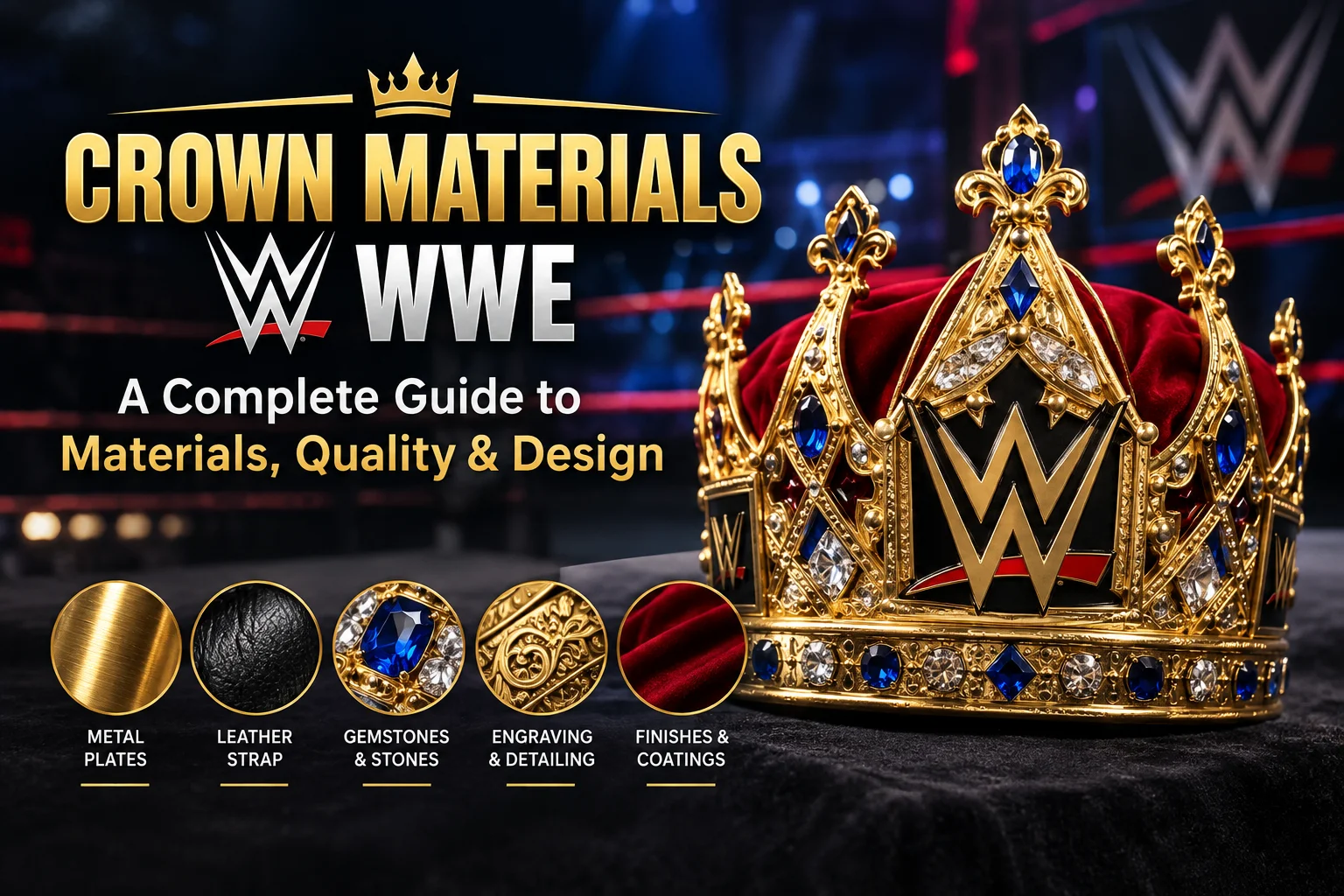
A wrestling crown is more than a decorative accessory. It represents power, achievement, character, and the larger-than-life style associated with professional wrestling. Whether you are creating a WWE-inspired crown for a costume, a championship presentation, a collector’s display, or a custom wrestling-themed product, the materials you choose can make a major difference in its appearance, durability, weight, and overall quality.
Understanding Crown Materials WWE helps you make better decisions before purchasing or designing a crown. Two crowns may look almost identical in photographs, yet their construction can be completely different. One might use lightweight plastic with a metallic coating, while another may feature a metal structure, decorative stones, and a more carefully finished surface.
These differences affect how the crown looks under lighting, how comfortable it feels when worn, how well its decorations stay in place, and how it holds up with regular handling.
In this guide, we will explore the materials commonly used in wrestling-style crowns, the differences between metal and plastic construction, popular finishes, decorative stones, and the important details to consider when choosing a crown. You will also learn how to evaluate craftsmanship and decide which materials best suit your intended use.
What Are WWE-Style Crown Materials?
WWE-style crown materials are the metals, plastics, coatings, decorative stones, and supporting components used to create crowns inspired by professional wrestling aesthetics.
These crowns often feature bold shapes, polished metallic surfaces, prominent center designs, colorful stones, and detailed decorative patterns. Their appearance is usually designed to stand out from a distance, making material selection especially important.
Unlike a traditional royal crown, a wrestling-inspired crown may prioritize dramatic styling, character branding, stage presentation, or collectible appeal. Its construction can range from a simple costume accessory to a more substantial custom-made display piece.
The main material categories include:
- Base materials: Metal alloys, brass, steel, plastic, or other structural materials.
- Surface finishes: Gold-tone plating, silver-tone finishes, polished surfaces, and antique effects.
- Decorative elements: Rhinestones, crystals, imitation gems, and colored inserts.
- Interior components: Linings, padding, and other comfort-related materials.
- Assembly components: Adhesives, settings, fasteners, and supporting structures.
Each component serves a different purpose. The base determines much of the crown’s strength and weight, the finish creates its visible appearance, and the decorative elements contribute sparkle and visual character.
Understanding these differences is the first step toward choosing a crown that looks impressive and suits your budget.
1. Metal Crown Materials: What Are the Main Options?
Metal is a popular choice for crowns that need a more substantial appearance, defined decorative details, and a durable structure. However, not all metals offer the same benefits.
The best option depends on the crown’s size, design complexity, intended use, and required finish.
Brass
Brass is a copper-and-zinc alloy used in various decorative and manufactured products. Depending on its thickness and construction, it can provide a solid foundation for detailed crown components.
Brass is particularly useful when a design includes raised patterns, shaped decorative panels, engraved details, or a polished metallic appearance.
Advantages of brass include:
- A substantial feel compared with many lightweight plastics.
- Good potential for detailed metalwork.
- Compatibility with a range of decorative surface finishes.
- A premium appearance when properly manufactured and finished.
However, brass crowns can be heavier than lightweight alternatives, particularly when the design uses thick metal sections. Brass may also tarnish or develop surface changes if left unprotected, depending on its composition and environmental exposure.
If you are considering a brass crown, ask whether the material is solid brass throughout or used only for selected components. A product may combine brass plates with a different supporting structure.
Zinc Alloy
Zinc alloy is another material used for decorative metal components. It can be suitable for complex shapes and molded details, making it useful for crowns with ornamental borders, sculpted patterns, and raised design elements.
Its main advantage is manufacturing flexibility. Detailed shapes can often be produced without constructing every decorative feature separately.
Zinc alloy may also be more affordable than some alternative metal constructions, depending on the design and production process.
However, quality varies considerably. Alloy composition, casting quality, wall thickness, finishing, and assembly all influence the final product.
A zinc alloy crown with clean edges and a carefully applied finish may look attractive, while a poorly made version can have rough surfaces, uneven plating, or visible imperfections.
When comparing crowns, do not judge quality by the words “metal crown” alone. Ask which metal is used, how thick the structural sections are, and whether the decorative details are raised, engraved, or simply printed.
Stainless Steel
Stainless steel is known for its strength and resistance to corrosion compared with ordinary carbon steel. It may be useful for selected structural components or designs that require a durable metallic surface.
However, stainless steel is not automatically the best choice for every crown.
Depending on the design and manufacturing method, shaping complex decorative details can be more demanding than using a castable alloy. A steel crown may also feel heavier than expected if the structure is unnecessarily thick.
For most buyers, the important question is not whether stainless steel sounds premium. It is whether the chosen material suits the crown’s construction, finish, and intended purpose.
Aluminum
Aluminum offers a useful balance between a metallic appearance and relatively low weight.
This can be valuable for crowns intended to be worn during performances, costume events, promotional activities, or extended photo sessions.
Its lower weight can improve comfort, especially when the crown has a large silhouette or several decorative sections.
On the other hand, aluminum can scratch, dent, or deform depending on its thickness, alloy, and construction. A thin aluminum component may not feel as substantial as a thicker metal design.
If comfort is a priority, aluminum may be worth considering. If the goal is a heavy display piece with a solid feel, another material may be more suitable.
2. Plastic Crowns vs. Metal Crowns
One of the most important decisions when comparing WWE-inspired crowns is whether to choose plastic construction or metal construction.
Both can serve a purpose. The right option depends on how the crown will be used and what you expect from it.
Plastic crowns are often appropriate for costumes, children’s dress-up activities, lightweight props, and occasional use. Metal crowns may be more suitable for collectors, custom displays, and projects where a more substantial material is desired.
| Feature | Plastic crown | Metal crown |
|---|---|---|
| Weight | Usually lightweight | Varies by metal and construction |
| Cost | Often more affordable | Can cost more, depending on materials |
| Appearance | Can imitate metallic surfaces | Naturally metallic or finished for a metallic look |
| Decorative detail | Molded, printed, or embellished | Can include cast, engraved, or assembled details |
| Durability | May crack or deform under stress | May resist some forms of damage but can dent or scratch |
| Comfort | Often easier to wear for long periods | Depends on weight, fit, and interior padding |
| Best use | Costumes and lightweight props | Display pieces, collectibles, and selected performance uses |
These are general comparisons, not guarantees. A thick, well-designed plastic crown may be more practical than a poorly constructed metal one.
Likewise, a metal crown is not necessarily comfortable simply because it uses a more substantial material.
When Is a Plastic Crown the Better Choice?
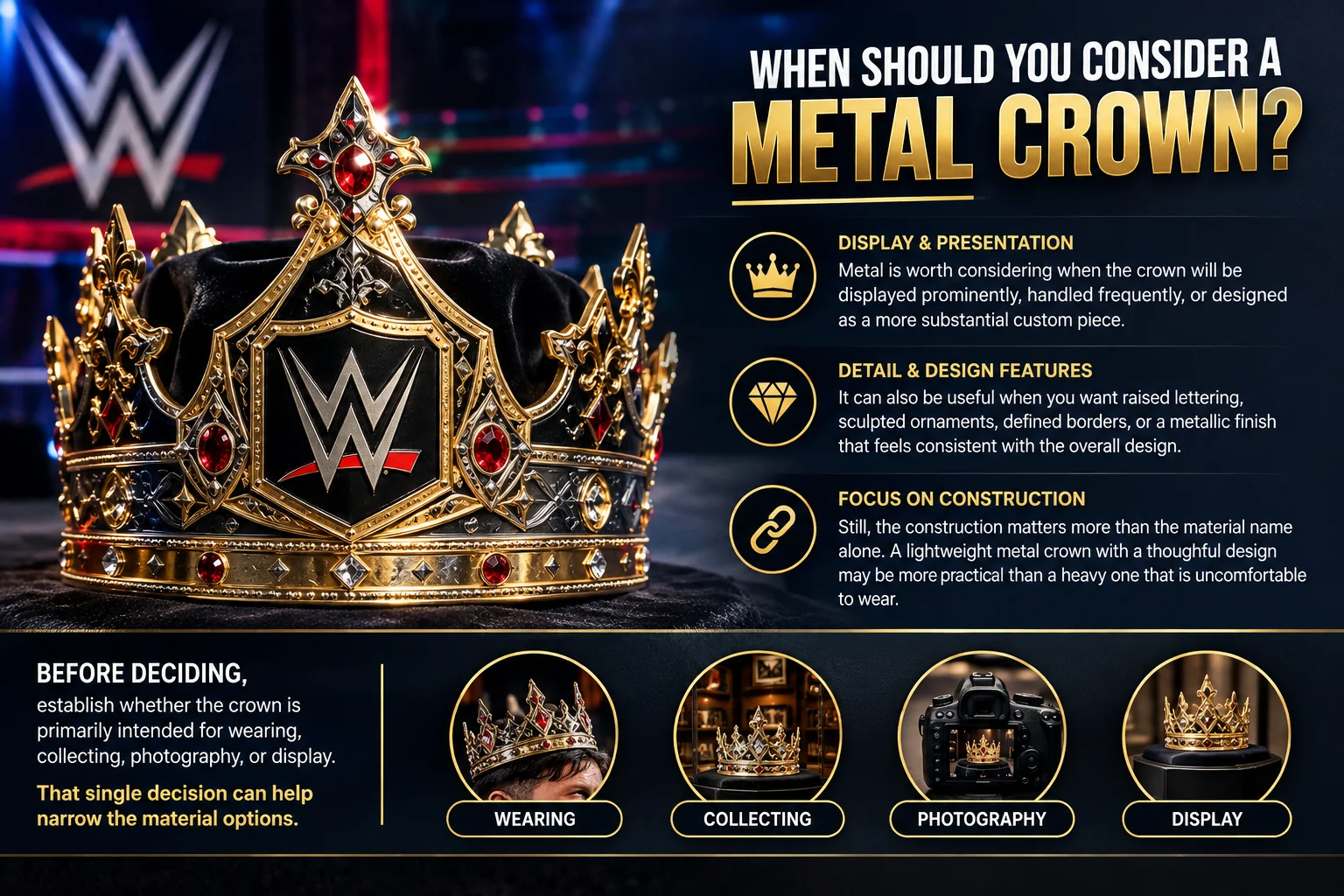
Choose plastic when affordability, portability, and low weight matter most.
For example, if you need crowns for a group costume, a themed birthday party, or a one-time wrestling-inspired photoshoot, plastic may offer everything you need.
A metallic coating and carefully placed decorative stones can also create an attractive appearance without the weight of a full metal structure.
Before buying, inspect the edges, attachment points, and decorative pieces. Thin plastic can crack around stressed areas, especially if the crown is bent repeatedly or stored carelessly.
3. Gold, Silver, and Other Crown Finishes
The visible finish plays a major role in the appearance of a WWE-inspired crown. Even when two crowns use the same base metal, their surface treatments can make them look very different.
A finish can influence color, shine, contrast, and how well decorative details stand out.
Gold-Tone Finish
Gold-tone finishes are popular for crowns designed to communicate prestige, victory, and championship status.
Depending on the manufacturing process, the appearance may come from gold-colored plating, another surface coating, a metallic paint, or a different finishing treatment.
These options are not equivalent.
A gold-colored finish does not automatically mean that the crown contains solid gold. Similarly, a product described as gold-plated should not be assumed to use a particular plating thickness unless the manufacturer confirms it.
When evaluating a gold-tone crown, look for consistent color across the main body, decorative borders, and smaller components. Uneven coloring around edges or visible patches can affect the overall appearance.
Silver-Tone Finish
Silver-tone surfaces create a cooler, brighter appearance. They can work well with clear stones, blue accents, black detailing, or designs that emphasize contrast rather than a traditional gold look.
Some silver-tone crowns use a plated metal surface, while others rely on polished metal or a coating.
Ask about the actual finish if resistance to tarnishing, scratches, or discoloration is important to you.
Antique and Two-Tone Finishes
An antique finish uses darker areas to emphasize recessed details, creating the appearance of depth and age.
Two-tone finishes combine contrasting colors, such as gold and silver, to distinguish borders, raised ornaments, lettering, or decorative sections.
These styles can be particularly effective on intricate crowns because they make the shapes easier to see.
For the best result, the finish should support the design rather than compete with it. Too many contrasting colors can make a crown look cluttered, especially when it already includes large stones or elaborate patterns.
The most effective finish is the one that complements the crown’s shape, decorative elements, and intended visual style.
4. Decorative Stones Used in WWE-Style Crowns
Decorative stones are often the most eye-catching part of a wrestling-inspired crown. They add color, reflect light, and help create the dramatic appearance associated with professional wrestling accessories.
However, the type of stone you choose affects more than appearance. It can influence cost, weight, maintenance, and how well the crown holds up during regular use.
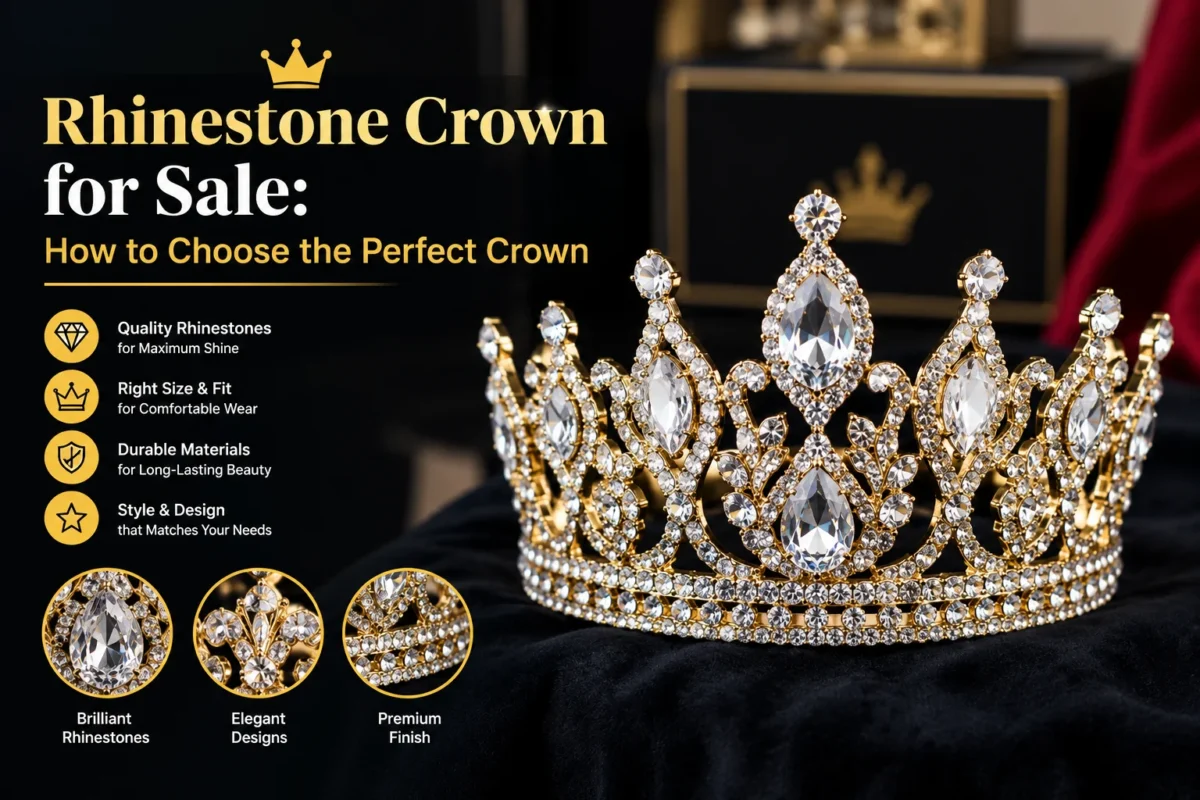
Rhinestones
Rhinestones are a popular option for crowns because they offer sparkle without requiring expensive gemstones. They are available in many colors, shapes, and sizes, making them suitable for both simple and elaborate designs.
Clear rhinestones create a diamond-like appearance, while red, blue, green, and black stones can introduce contrast or match a particular character’s colors.
The quality of the overall result depends on stone clarity, consistency, placement, and attachment.
For a crown with numerous stones, check whether the sizes are consistent and whether the settings look neat. Uneven spacing or poorly attached stones can make even an attractive design appear unfinished.
Glass Crystals
Glass crystals can provide a bright, reflective appearance and are available in different cuts and colors.
Their performance depends on the quality of the glass, the cut, and the way light reaches the surface. Well-positioned crystals can create attractive highlights under stage lighting or during photography.
Glass is generally harder than many plastics, but it can still chip or break when struck. A crown featuring glass crystals should therefore be handled and stored with care.
Acrylic Gems
Acrylic gems are lightweight decorative pieces that can imitate the appearance of cut stones. They can be a practical option for costume crowns and designs where reducing weight is important.
They are often less expensive than glass crystals, although their clarity and light reflection may differ.
Acrylic can scratch more easily than glass, so the crown should be cleaned with a soft cloth rather than an abrasive material.
How Stone Placement Changes the Crown’s Appearance
Stone placement is just as important as stone selection.
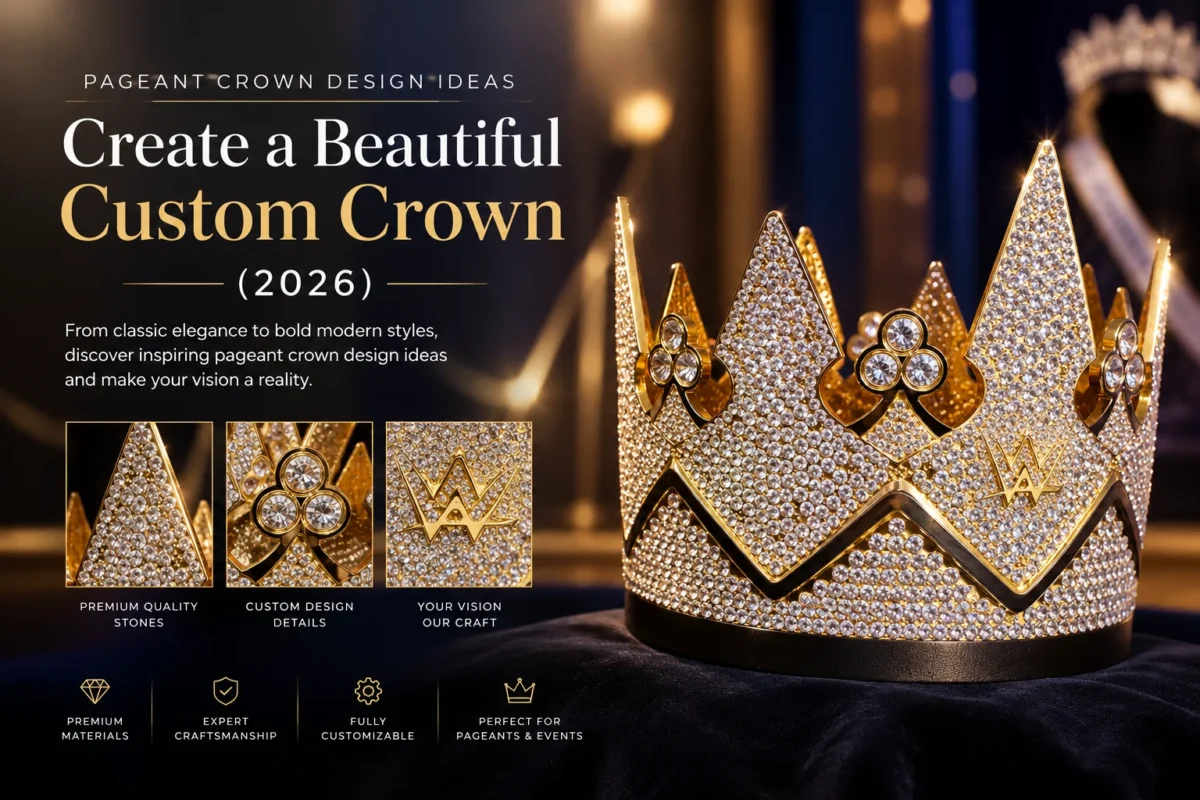
Large center stones can establish a visual focal point, while smaller stones can outline borders, highlight raised details, or create symmetrical patterns across the crown.
Before approving a custom design, review:
- The size and color of each stone.
- The spacing between decorative elements.
- Whether the left and right sides look balanced.
- How the stones interact with the metallic finish.
- Whether the settings appear secure.
- Whether the design leaves enough space for lettering and logos.
A successful crown design does not need the maximum possible number of stones. It needs a clear visual hierarchy, with decorative elements arranged to support the overall shape.
5. Crown Construction: Why Thickness and Structure Matter
When researching Crown Materials WWE, it is easy to concentrate on the visible metal, stones, and finish while overlooking the construction underneath.
Yet the crown’s structure determines much of its stability, weight, and comfort.
Two crowns made from the same material can feel completely different if one uses thin panels and the other has a carefully supported structure.
Metal Thickness
Metal thickness influences stiffness, weight, and the way a crown feels when handled.
Thin metal may help reduce weight and material costs, but it can be more vulnerable to bending or deformation. Thicker metal may provide a more substantial feel, although excessive thickness can make a wearable crown uncomfortable.
There is no single thickness that suits every design. A small decorative crown has different requirements from a large crown with extended points and multiple ornamental sections.
Ask the manufacturer whether the thickness varies between the main structure, decorative plates, and supporting components.
Crown Shape and Stability
A crown with tall points, wide side sections, or large decorative ornaments needs a structure that supports its shape.
Poorly balanced construction may cause the crown to tilt when worn or feel unstable during movement.
For wearable designs, the internal circumference and overall weight distribution are particularly important. For display crowns, the base and supporting structure should help the piece sit securely on its stand.
A well-planned design considers the crown as a complete object rather than a collection of decorative parts.
Joining and Assembly
Depending on the manufacturing process, a crown may contain several joined sections rather than one continuous structure.
Inspect the visible connections, edges, and attachment points. Poorly finished joints can create rough areas, weak spots, or noticeable gaps.
Decorative pieces should also be attached securely. Stones, emblems, and ornamental components may loosen if the crown is dropped, bent, or handled roughly.
If you are ordering a custom crown, ask how its sections are assembled and which components can be repaired if they become damaged.
6. How to Choose the Best Crown Materials for Your Needs
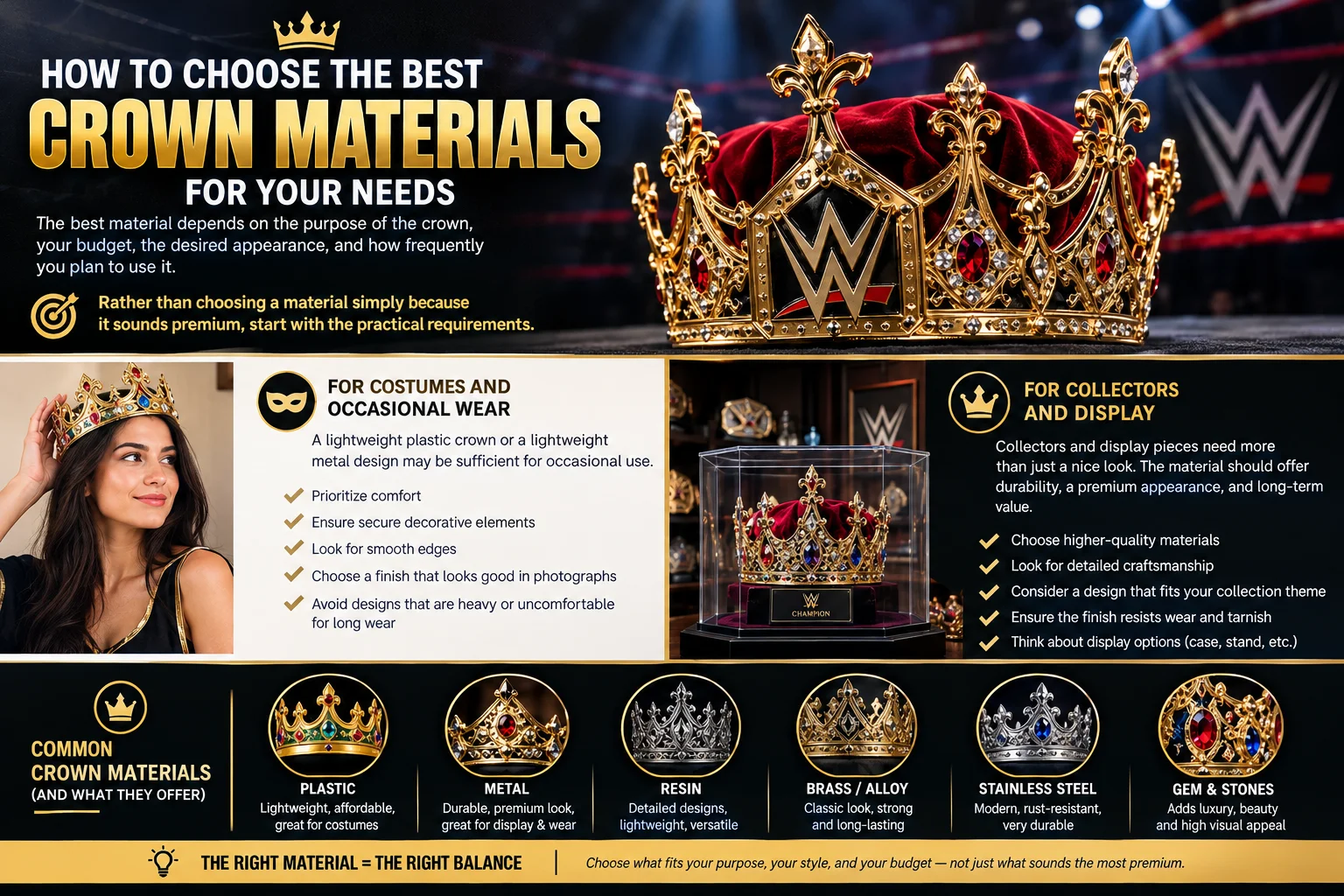
The best material depends on the purpose of the crown, your budget, the desired appearance, and how frequently you plan to use it.
Rather than choosing a material simply because it sounds premium, start with the practical requirements.
For Costumes and Occasional Wear
A lightweight plastic crown or a lightweight metal design may be sufficient for occasional use.
Prioritize comfort, secure decorative elements, smooth edges, and a finish that looks good in photographs.
If the crown will be worn for several hours, avoid choosing a design solely because it looks impressive in product images. Weight and fit can make a considerable difference.
For Collectors and Display
For a display piece, consider metal construction, well-defined details, a consistent finish, and a stable base or stand.
The crown does not necessarily need to be heavy to look impressive. Proportions, craftsmanship, and surface quality often matter more than weight alone.
Think about where the crown will be displayed. A brightly polished gold-tone crown may suit a well-lit cabinet, while an antique finish may work better with darker display surroundings.
For Events and Performances
Event use introduces additional considerations. The crown should be comfortable enough for its intended duration, securely assembled, and appropriate for the movement involved.
A heavy crown with protruding decorations may be unsuitable for activities involving running, jumping, or physical contact.
For a performance, test the fit and stability before the event. If the crown is part of a costume, make sure it does not obstruct vision or create sharp contact points.
For Custom Wrestling-Themed Products
If you want a crown built around a logo, name, character, or original concept, choose materials that support the artwork.
Large raised elements may need stronger support than flat printed details. Small lettering may require a more precise manufacturing method to remain readable.
Before production, decide which features are essential and which can be simplified. This helps keep the design visually effective without adding unnecessary complexity.
7. Crown Materials and Manufacturing Methods
The material is only one part of the production process. The manufacturing method also affects the level of detail, consistency, and finish that can be achieved.
Different crowns may use different methods depending on their shape, materials, quantity, and complexity.
Casting
Casting involves forming a component from molten or otherwise processable material using a mold.
It can be useful for crowns featuring sculpted shapes, raised patterns, decorative borders, and three-dimensional ornaments.
The final quality depends on the material, mold design, production control, and finishing work. Casting alone does not guarantee a premium result.
Stamping and Forming
Some metal components can be shaped through stamping, pressing, or other forming processes.
These methods may suit designs with repeated shapes, panels, or relatively consistent decorative features.
The best approach depends on the metal and the complexity of the design. Highly sculpted shapes may require a different production method from simple curved panels.
Machining and Engraving
Machining removes material to create a desired shape or detail. Engraving adds lines, lettering, or patterns to a surface.
These techniques can be useful when the design requires defined edges, customized lettering, or precise decorative features.
However, small text and intricate artwork still need to be designed with the manufacturing process in mind. Fine details that look clear on a screen may become difficult to reproduce at a small physical size.
Surface Finishing and Assembly
After shaping, components may require polishing, plating, coating, stone setting, or assembly.
This stage has a major influence on the final appearance. Rough edges, uneven coatings, visible adhesive, and inconsistent stone placement can reduce the quality of an otherwise promising crown.
When evaluating a manufacturer, ask to see close-up photographs of completed work rather than relying only on a digital concept or distant product image.
8. How to Maintain and Protect Different Crown Materials
Proper care helps preserve a crown’s appearance and reduces avoidable damage.
The safest cleaning method depends on the base material, surface finish, and decorative components. When the material is unknown, use a cautious approach.
Cleaning Metal Crowns
Remove dust with a soft, dry microfiber cloth. Avoid abrasive pads and harsh cleaners, which can scratch a polished surface or damage a plated finish.
Do not assume that a gold-tone crown can be cleaned with products intended for solid gold. Its surface may use a different coating that reacts differently to chemicals.
If the crown has loose stones or visible surface damage, avoid aggressive cleaning until the problem has been assessed.
Caring for Plastic Crowns
Plastic crowns can usually be maintained with gentle dusting and a soft cloth.
Avoid excessive heat, solvents, and strong chemical cleaners unless the manufacturer confirms that they are suitable for the specific plastic and coating.
Store the crown where it will not be crushed under other objects.
Protecting Decorative Stones
Use a soft brush or cloth to remove dust around stones and their settings.
Do not pull at stones or press hard against them while cleaning. If a stone becomes loose, repair it before continued use rather than relying on repeated handling to keep it in place.
Storage Recommendations
Store the crown in a clean, dry location away from direct sunlight, excessive humidity, and unnecessary pressure.
A padded box can help protect the finish and decorative elements. For a large display crown, use a stable stand that supports its weight without placing excessive pressure on delicate points.
Regular inspection can also help you identify loose components, scratches, or changes in the finish before they become more noticeable.
9. Common Mistakes to Avoid When Buying a WWE-Style Crown
Even a visually attractive crown can disappoint if important details are overlooked before purchase.
Choosing by appearance alone: Product photographs may not clearly reveal the material, thickness, weight, or quality of the finish. Ask for specifications and close-up images.
Assuming gold color means solid gold: A gold appearance may come from plating, paint, or another coating. Confirm the actual material and finish.
Ignoring comfort: A large, heavy crown may be suitable for display but impractical for extended wear.
Overlooking construction: Examine the joints, edges, stone settings, and supporting structure instead of focusing only on the front design.
Expecting every detail to be reproduced perfectly: Small logos, narrow lettering, and tiny decorative patterns may need adjustment before manufacturing.
Failing to confirm dimensions: Check the crown’s height, width, internal circumference, and overall weight where relevant.
Neglecting storage: Even a well-made crown can become scratched or damaged if stored carelessly.
Avoiding these mistakes will help you choose a crown that matches your expectations rather than simply looking attractive in a listing.
10. Frequently Asked Questions About Crown Materials WWE
What materials are commonly used in WWE-style crowns?
Common options include plastic, zinc alloy, brass, aluminum, and other metals. Crowns may also feature gold-tone or silver-tone finishes, decorative rhinestones, glass crystals, acrylic gems, and interior padding. The exact materials vary by product.
Are metal crowns better than plastic crowns?
Not in every situation. Metal may provide a more substantial feel and support certain detailed designs, while plastic is often lighter and more affordable. The better choice depends on whether the crown is intended for display, collecting, costume use, or performance.
Does a gold-colored crown contain real gold?
Not necessarily. A gold-colored appearance may be created with metallic paint, a coating, or gold-tone plating. Ask the seller to confirm the base material and surface treatment before purchasing.
Which material is best for a lightweight crown?
Plastic and aluminum are two options worth considering. The final weight also depends on the crown’s dimensions, thickness, internal structure, and decorative components.
Do decorative stones fall out of wrestling crowns?
They can become loose if the settings or adhesive deteriorate, or if the crown is dropped or handled roughly. Secure attachment, careful storage, and periodic inspection help reduce this risk.
How can I tell whether a crown is well made?
Look for clean edges, consistent finishing, balanced construction, secure decorative elements, and accurate dimensions. Ask about materials and request detailed photographs if the available product images do not show these features clearly.
Can I order a custom WWE-inspired crown?
Custom options depend on the manufacturer. Before placing an order, confirm whether the maker can accommodate your preferred shape, logo, colors, materials, dimensions, and decorative elements. Also ask for a design preview and clarify which details can realistically be produced.
Final Thoughts on Crown Materials WWE
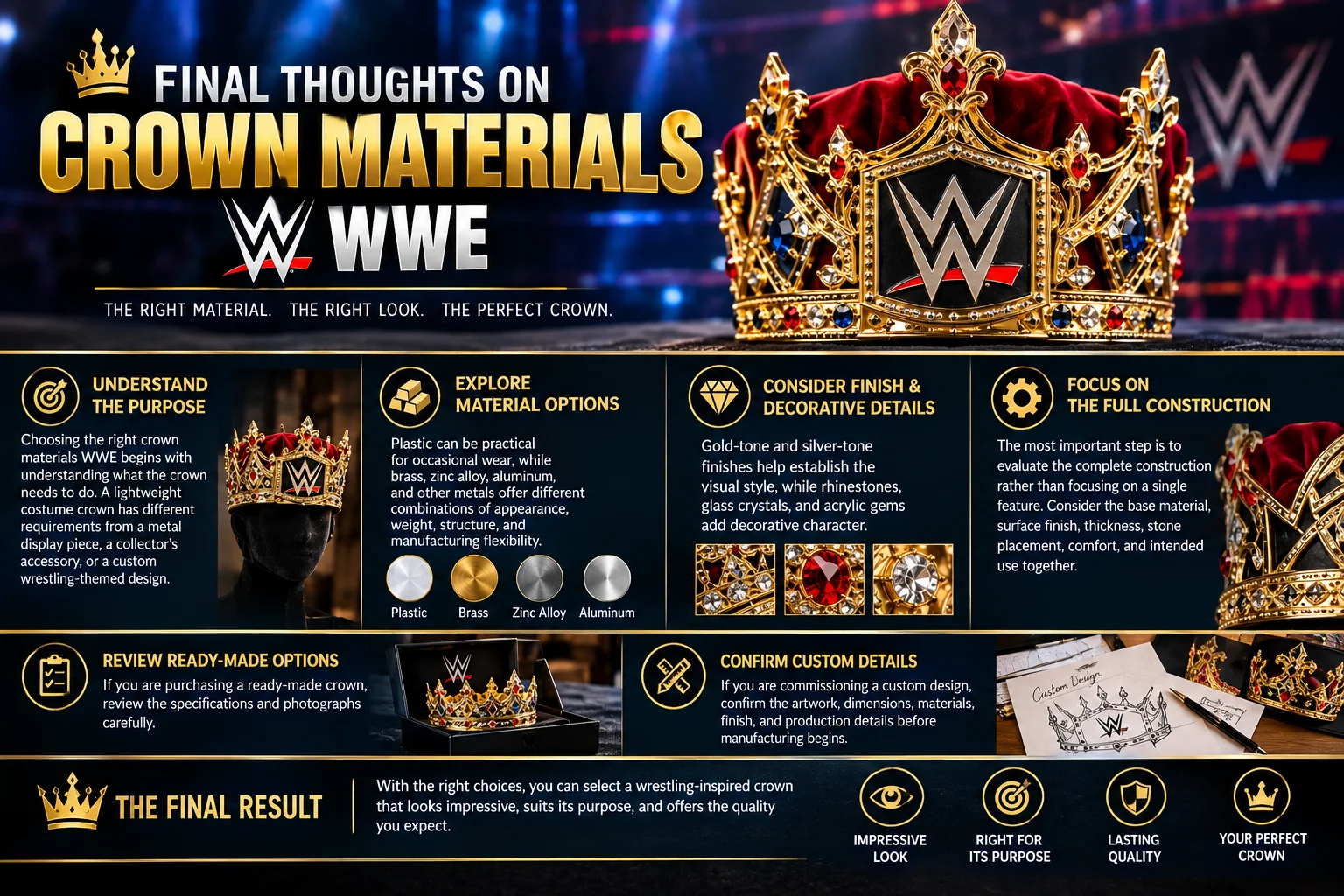
Choosing the right Crown Materials WWE begins with understanding what the crown needs to do. A lightweight costume crown has different requirements from a metal display piece, a collector’s accessory, or a custom wrestling-themed design.
Plastic can be practical for occasional wear, while brass, zinc alloy, aluminum, and other metals offer different combinations of appearance, weight, structure, and manufacturing flexibility. Gold-tone and silver-tone finishes help establish the visual style, while rhinestones, glass crystals, and acrylic gems add decorative character.
The most important step is to evaluate the complete construction rather than focusing on a single feature. Consider the base material, surface finish, thickness, stone placement, comfort, and intended use together.
If you are purchasing a ready-made crown, review the specifications and photographs carefully. If you are commissioning a custom design, confirm the artwork, dimensions, materials, finish, and production details before manufacturing begins.
With the right choices, you can select a wrestling-inspired crown that looks impressive, suits its purpose, and offers the quality you expect.