Pageant Crown Design Ideas: Create a Beautiful Custom Crown (2026)

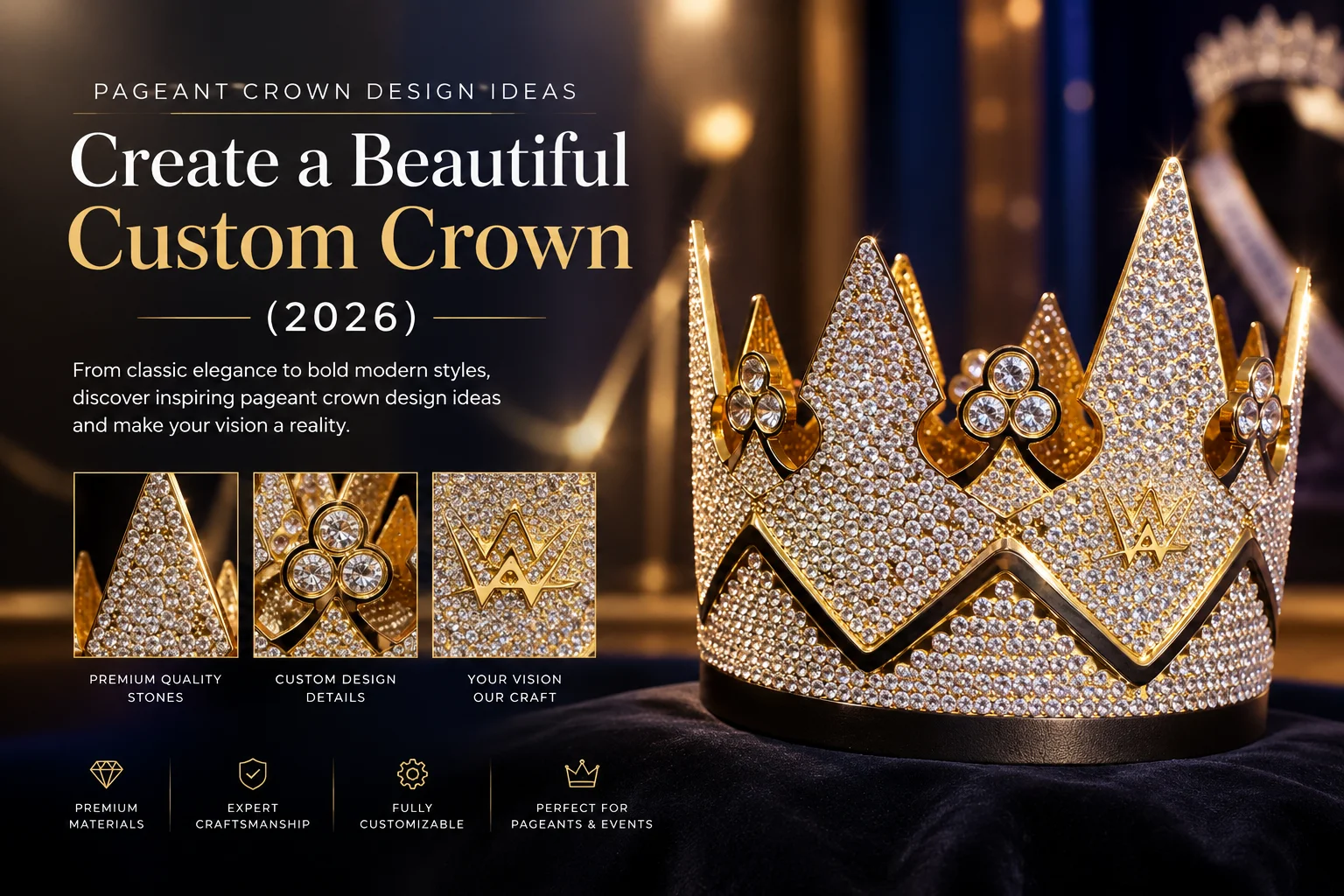
A crown is more than a beautiful accessory. It represents confidence, achievement, elegance, and the special moment when someone is recognized as a queen. Whether you are organizing a pageant, designing a crown for a winner, or looking for a unique custom crown, the right design can make the occasion even more memorable.
A well-designed pageant crown combines attractive details with practical construction. Gold finishes, crystal-style stones, raised crown points, and carefully planned proportions can create a striking appearance under stage lights. At the same time, comfort, stability, and the crown’s overall size are important when it needs to be worn during an event.
Today, custom crowns are used for beauty pageants, queen competitions, themed events, promotional occasions, and collectible displays. Each purpose may require a different approach to the design.
In this guide to Pageant Crown Design Ideas, we will explore creative styles, materials, stone arrangements, sizing, customization options, and practical considerations. Whether you prefer a classic royal crown or a modern statement design, these ideas can help you develop a crown that suits your vision.
What Makes a Pageant Crown Design Stand Out?
An attractive pageant crown usually brings several design elements together. Its shape, finish, stone placement, and overall proportions all contribute to the final appearance.
A crown does not need to be overloaded with decorations to look impressive. Sometimes, a balanced design with clear details and a refined finish creates a stronger visual effect than one with too many competing elements.
When planning your crown, consider:
-
The overall crown shape
-
The height and arrangement of the points
-
The metal finish
-
The color and placement of stones
-
The crown’s size and fit
-
The occasion where it will be worn
These details should work together to create a unified design.
For example, a gold-finish crown with crystal-style stones can offer a classic royal appearance. A modern crown may use a more streamlined silhouette, while a highly decorative design can feature layered details and prominent central elements.
The most suitable style depends on the event, the wearer, and the appearance you want to achieve.
7 Creative Pageant Crown Design Ideas
Exploring different design directions is a useful starting point when creating a custom crown. The following ideas can help you choose a style or combine elements into an original concept.
1. Classic Gold Royal Crown
The main attraction of this style is its traditional royal appearance. A symmetrical arrangement of points can create a balanced silhouette, while carefully placed stones add brightness to the design.
You can customize the crown by adjusting:
-
The number of crown points
-
The height of the central point
-
The shape of the side points
-
The size of the decorative stones
-
The level of surface detailing
A central feature can be made more prominent to draw attention toward the middle of the crown. The remaining points can be arranged to support the overall shape without making it look crowded.
This design works particularly well when you want a crown that feels elegant, recognizable, and suitable for formal occasions.
2. Crystal-Style Statement Crown
This concept focuses on reflective stone details across the crown’s visible surface. Depending on the construction, stones may be placed around the points, along the base, or within decorative patterns.
The visual effect depends on the stone size, arrangement, metal finish, and lighting. A carefully planned design can help the crown look detailed without losing the clarity of its shape.
When developing this style, think about where you want the strongest visual emphasis. You might highlight the center point, create a continuous stone border, or use contrasting sections.
A crystal-style crown can be suitable for stage appearances, formal pageants, and special celebrations.
3. Modern Minimalist Crown
This style may suit events that prefer a contemporary appearance. The crown can feature a smooth metal surface, subtle stone accents, or a small number of carefully selected decorative elements.
The advantage of a simpler design is that its main silhouette remains easy to recognize. It can also provide a more understated look while maintaining a formal appearance.
Consider using:
-
Clean geometric points
-
A simple curved base
-
Limited decorative accents
-
A consistent metal finish
-
Balanced spacing between design elements
A minimalist approach does not mean the crown has to look plain. Small details, precise proportions, and a quality finish can make a significant difference.
4. Heart-Inspired Pageant Crown
This type of design can be adapted to different occasions, especially when the crown needs a recognizable symbol or a personalized theme.
For a custom version, consider whether the heart should be a subtle accent or the main visual feature. A central heart-shaped detail surrounded by symmetrical points can create a balanced layout.
You can also combine the heart motif with crystal-style stones or a contrasting finish to emphasize the shape.
The key is to make the symbol fit naturally into the overall crown rather than adding it as an unrelated decoration.
5. Tall Center-Point Crown
This layout creates a clear focal point and can give the crown a traditional royal appearance.
When designing this style, consider the relationship between the center and side points. A large center point with appropriately sized surrounding details can create a more balanced look.
The height should also be considered in relation to the wearer’s head size and the event’s requirements. A crown designed for comfortable wear may need different proportions from one intended primarily for display.
6. Layered Decorative Crown
This approach can be useful when you want a crown with a more elaborate appearance.
However, layered designs require careful planning. Too many elements may make the crown look crowded or add unnecessary weight.
Before production, consider how the layers will appear from the front and side. The design should maintain a clear silhouette and a comfortable structure.
7. Custom-Themed Crown
For example, the design might include an original emblem, a meaningful symbol, or decorative details connected to the pageant’s theme.
The advantage of this approach is that the crown can be developed around a specific concept instead of following a standard style.
When creating a themed crown, focus on one central idea and use supporting details that complement it. This helps the design remain cohesive and easier to recognize.
Choosing the Right Materials for a Custom Pageant Crown
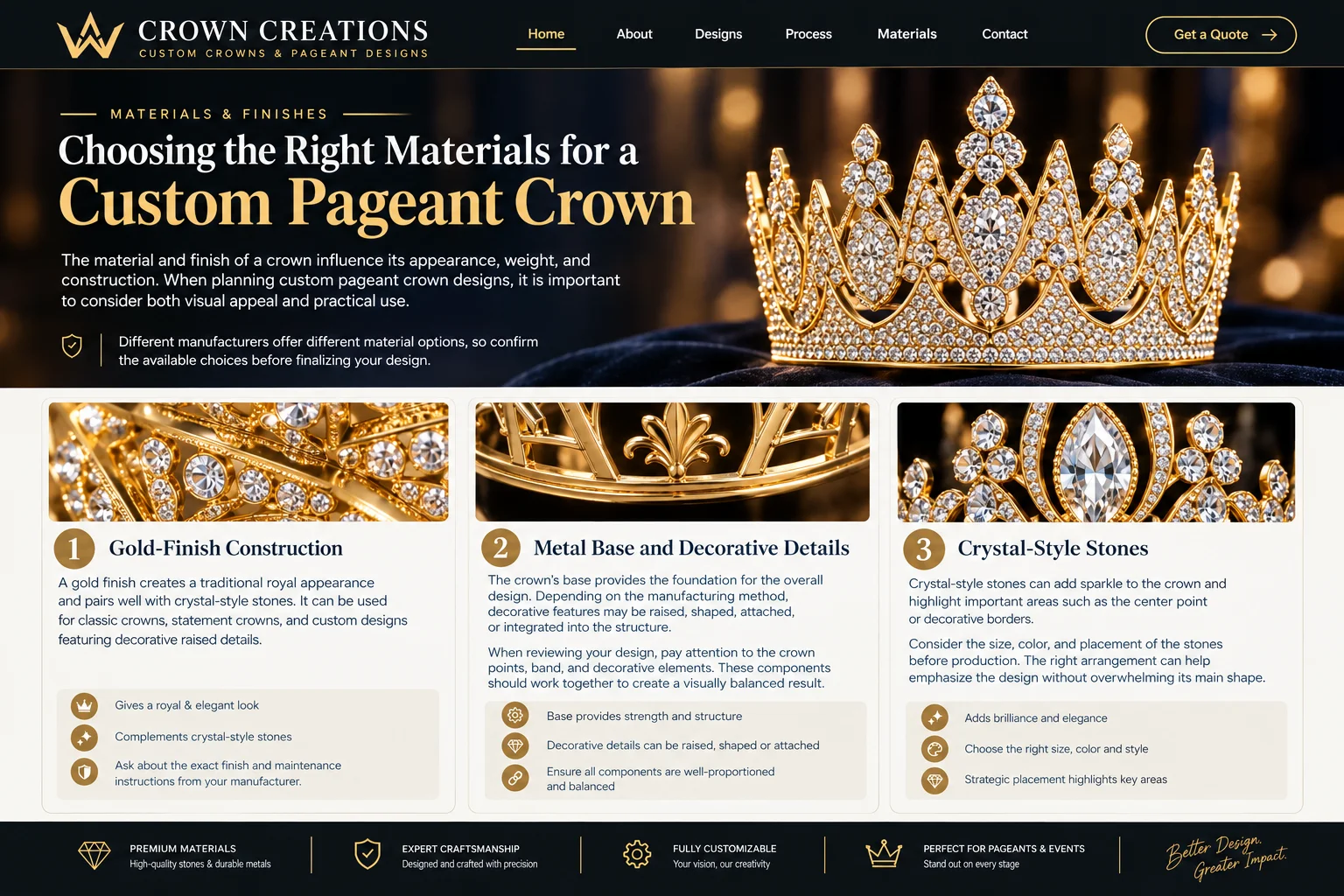
The material and finish of a crown influence its appearance, weight, and construction. When planning custom pageant crown designs, it is important to consider both visual appeal and practical use.
Different manufacturers offer different material options, so confirm the available choices before finalizing your design.
Gold-Finish Construction
A gold finish creates a traditional royal appearance and pairs well with crystal-style stones. It can be used for classic crowns, statement crowns, and custom designs featuring decorative raised details.
The exact appearance depends on the base material and finishing process. Ask your manufacturer about the finish being used and how it should be maintained.
Metal Base and Decorative Details
The crown’s base provides the foundation for the overall design. Depending on the manufacturing method, decorative features may be raised, shaped, attached, or integrated into the structure.
When reviewing your design, pay attention to the crown points, band, and decorative elements. These components should work together to create a visually balanced result.
Crystal-Style Stones
Crystal-style stones can add sparkle to the crown and highlight important areas such as the center point or decorative borders.
Consider the size, color, and placement of the stones before production. The right arrangement can help emphasize the design without overwhelming its main shape.
Crown Size, Fit, and Comfort
A beautiful crown should also be practical to wear. Size and fit are especially important for pageant winners who may need to wear the crown for extended periods during ceremonies, photographs, or appearances.
Before ordering a custom crown, consider:
-
Head size and fitting requirements
-
Crown height
-
Overall width
-
Approximate weight
-
Stability during movement
-
Interior construction and comfort
A crown intended for stage use may need different proportions from one designed primarily for display.
Ask the manufacturer how the crown is designed to sit on the head and whether adjustments or fitting options are available.
Plan Your Custom Crown Before Production
A successful custom crown project starts with a clear design concept. Consider the style, materials, dimensions, and intended use before approving the final artwork.
How to Personalize a Pageant Crown
One of the biggest advantages of a custom crown is the ability to create details that are specific to the event or the person receiving it. Instead of choosing a standard shape, you can build the design around a theme, logo, colors, or visual identity.
Customization can include:
- Crown shape and point arrangement
- Gold or silver-style finish
- Crystal-style stone placement
- Centerpiece design
- Decorative patterns
- Event or organization symbols
- Crown height and proportions
The important thing is to keep the design visually balanced. Adding more details does not automatically make a crown look better. Each element should have a purpose and support the main design.
Add a Strong Centerpiece
The center of a crown naturally attracts attention, making it a useful place for an important decorative feature.
You could use a larger crystal-style stone, an original emblem, a decorative shape, or another central element that represents the event.
A strong centerpiece can also help create a visual hierarchy. The viewer’s eye naturally moves toward the main feature while the surrounding crown points provide structure.
Create Symmetry
Symmetry can make a crown look polished and professionally designed. Similar decorative elements on both sides of the crown can create a balanced appearance.
This does not mean every crown has to be perfectly symmetrical. An artistic asymmetrical design can also work, but it should look intentional rather than accidental.
Pageant Crown Design Ideas Based on Different Events
The occasion can influence the best crown style. A crown for a formal beauty pageant may have a different appearance from one created for a themed competition or special celebration.
Beauty Pageants
Traditional beauty pageants often suit elegant designs with defined crown points, decorative stones, and a refined finish.
A gold-finish crown with raised points and crystal-style detailing can create a strong royal appearance while remaining suitable for formal photography and stage presentations.
Queen and Royal-Themed Events
For a queen-themed event, you can explore more traditional royal shapes. Taller points, elaborate decoration, and a prominent center feature can help create a regal appearance.
A layered design can also add depth without requiring excessive decoration across the entire crown.
Themed Competitions
A themed competition gives you more freedom to experiment. The crown can incorporate shapes or symbols connected to the event while maintaining the recognizable appearance of a crown.
For example, an original symbol can be placed in the center while the surrounding points follow a classic royal silhouette.
Display and Collectible Crowns
If the crown is mainly intended for display, you have greater freedom with size and decorative details.
A display crown can feature a larger silhouette, additional raised elements, and more elaborate stone arrangements because it does not necessarily have to remain comfortable on someone’s head for long periods.
How to Choose the Right Crown Shape
The silhouette is one of the first things people notice. Before adding stones or decorative details, decide what overall shape you want.
Some common approaches include:
Traditional pointed crown: A familiar royal appearance with several upward points.
Tall center crown: A strong central point surrounded by shorter details.
Rounded crown: Softer curves instead of sharp points.
Layered crown: Multiple decorative levels that create depth.
Modern geometric crown: Clean shapes and contemporary lines.
Your choice should match the event and the overall visual identity you want to create.
Important Details to Check Before Ordering
Before production begins, review the design carefully. A few minutes spent checking the specifications can prevent avoidable problems later.
Check the Dimensions
Confirm the crown’s:
- Width
- Height
- Interior fitting
- Point proportions
- Approximate weight
A design can look perfect on a digital screen but feel different when produced at its actual size.
Review the Stone Layout
Look closely at where the crystal-style stones will be positioned.
Check whether the stones:
- Highlight the main design
- Have consistent spacing
- Follow the crown’s shape
- Create enough contrast
- Leave important details visible
If the crown contains a centerpiece, make sure the surrounding stones do not overpower it.
Review the Finish
Ask for confirmation of the selected finish before production. Gold-tone, silver-tone, polished, and other finishes can create very different appearances.
If possible, review a digital rendering or production preview showing the expected finish.
Common Pageant Crown Design Mistakes
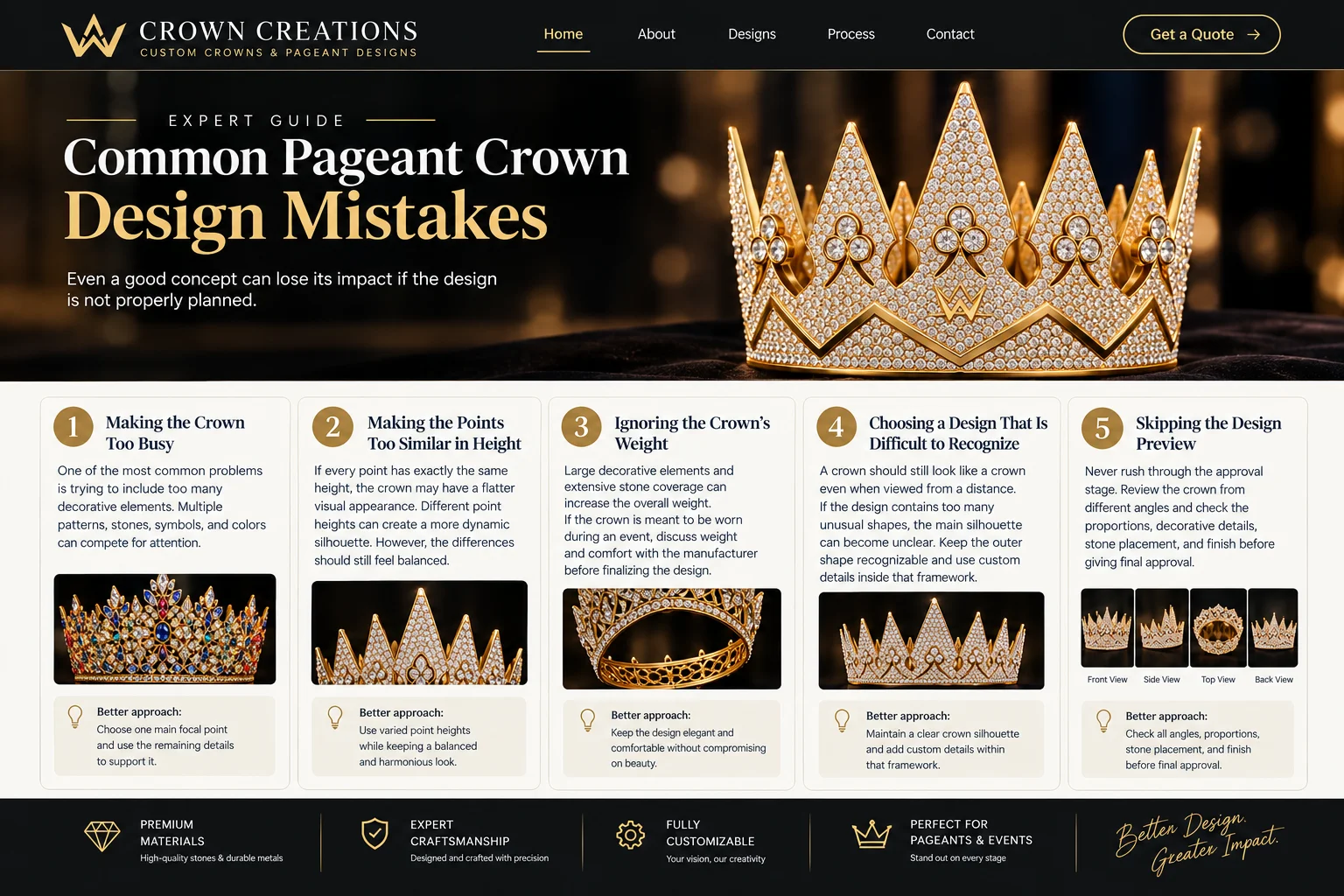
Even a good concept can lose its impact if the design is not properly planned.
Making the Crown Too Busy
One of the most common problems is trying to include too many decorative elements.
Multiple patterns, stones, symbols, and colors can compete for attention.
Better approach: Choose one main focal point and use the remaining details to support it.
Making the Points Too Similar in Height
If every point has exactly the same height, the crown may have a flatter visual appearance.
Different point heights can create a more dynamic silhouette. However, the differences should still feel balanced.
Ignoring the Crown’s Weight
Large decorative elements and extensive stone coverage can increase the overall weight.
If the crown is meant to be worn during an event, discuss weight and comfort with the manufacturer before finalizing the design.
Choosing a Design That Is Difficult to Recognize
A crown should still look like a crown even when viewed from a distance.
If the design contains too many unusual shapes, the main silhouette can become unclear.
Keep the outer shape recognizable and use custom details inside that framework.
Skipping the Design Preview
Never rush through the approval stage.
Review the crown from different angles and check the proportions, decorative details, stone placement, and finish before giving final approval.
How to Find a Manufacturer for a Custom Pageant Crown
Choosing a manufacturer is just as important as choosing the design. A custom crown requires clear communication because small details can affect the final product.
When comparing manufacturers, look for information about their custom design process, available finishes, decorative options, and previous crown work.
Ask practical questions such as:
- Can you create a custom crown from my artwork?
- Can I choose the crown dimensions?
- What finishes are available?
- What stone options can I choose from?
- Can you provide a design preview?
- How is the crown fitted?
- How should the finished crown be maintained?
- What information is needed before production?
A manufacturer should be able to explain the production requirements clearly before you approve the order.
Caring for Your Pageant Crown
Proper care can help preserve the appearance of a crown after the event.
Keep the crown away from harsh chemicals, excessive moisture, and unnecessary impact. Decorative stones and surface finishes can require more careful handling than ordinary metal accessories.
After use, gently remove fingerprints or dust with a suitable soft cloth if recommended for the crown’s finish.
When storing the crown, keep it somewhere dry and protected. Avoid placing heavy objects on top of it, particularly if it contains raised decorative points or delicate elements.
For a crown used only on special occasions, protective storage is especially important because long-term exposure to dust, moisture, or poor storage conditions can affect its appearance.
Custom Pageant Crown Ideas for a More Memorable Design
If you want something different from a standard crown, consider combining several compatible ideas rather than copying one existing style.
For example, you could combine:
- A classic gold finish
- Tall central crown points
- Crystal-style stone detailing
- A distinctive centerpiece
- Raised decorative elements
- A custom event-inspired design
This approach creates a crown that maintains the recognizable royal appearance while giving it its own identity.
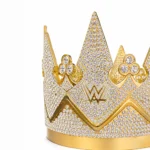
The Elite Belts Women’s Queen of the Ring Crown is an example of this kind of statement approach, combining a gold-finish look, high-shine crystal-style stones, and detailed raised crown points. It is designed for uses such as displays, entrances, special events, and collectors.
For a fully custom project, you can also start with your own artwork, reference, logo, or concept and discuss how those elements can be incorporated into the crown.
Questions People Ask About Pageant Crowns
What makes a good pageant crown design?
A good design balances appearance, proportions, comfort, and construction. A strong silhouette, well-placed decorative details, and a suitable finish can create a crown that looks impressive without becoming visually crowded.
What materials are commonly used for custom crowns?
Custom crowns can be produced using different metal bases and decorative finishes. The exact options depend on the manufacturer and the desired design.
Can I create a crown using my own design?
Yes, many custom manufacturers can work from customer artwork, logos, sketches, or reference ideas. The manufacturer should confirm whether the artwork needs to be adjusted before production.
Should a pageant crown be heavy?
Not necessarily. A crown intended to be worn should balance visual impact with practical comfort. Large decorative features can increase weight, so this should be discussed during the design stage.
Can crystal-style stones be added to a custom crown?
Yes, decorative stone arrangements can be incorporated into many crown designs. Their size, placement, and pattern should be planned around the crown’s main shape.
Can a crown be made for display instead of wearing?
Yes. A display crown can be designed with different proportions and decorative features because comfort and long-term wear are less important considerations.
Turn Your Crown Idea Into a Custom Design
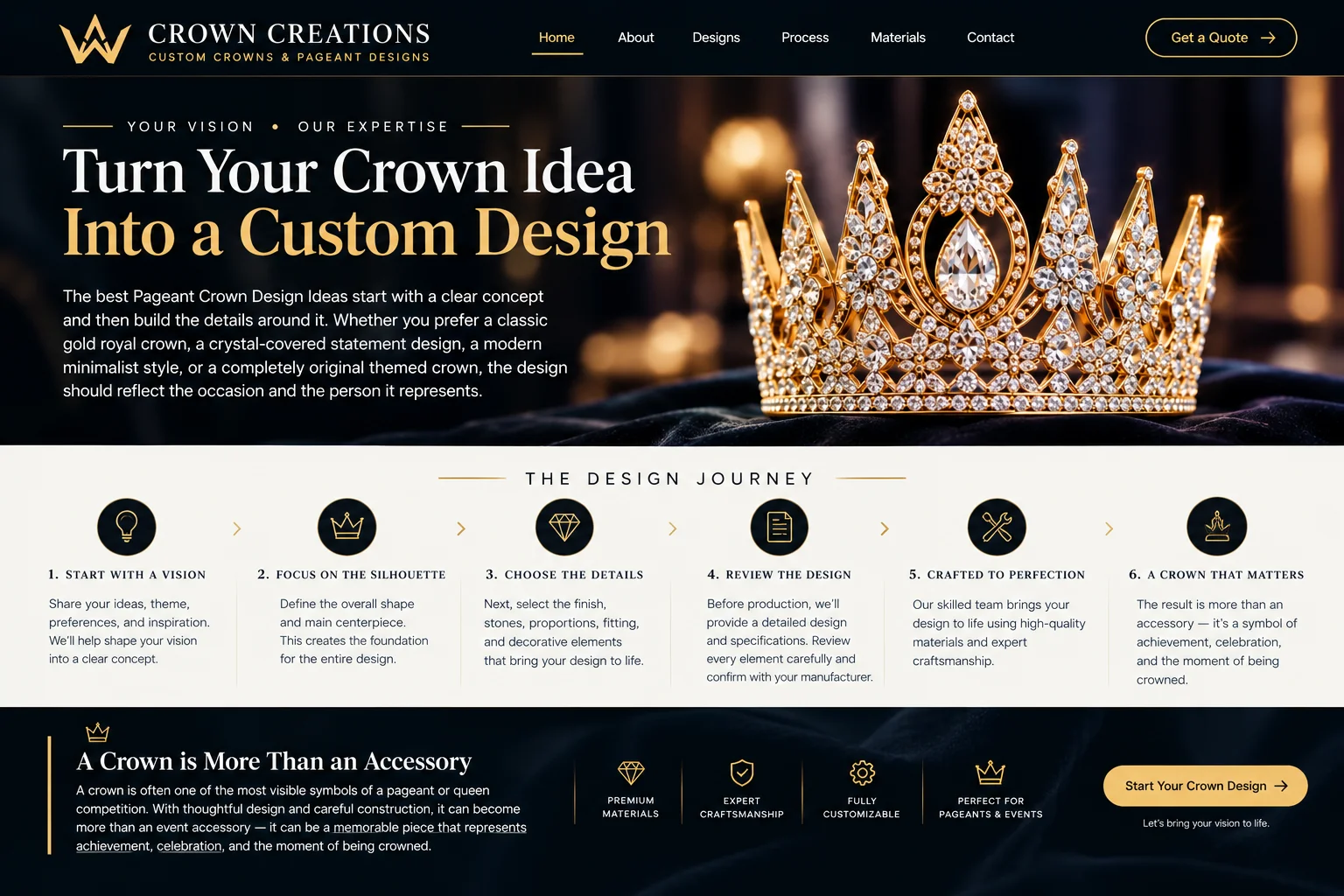
The best Pageant Crown Design Ideas start with a clear concept and then build the details around it. Whether you prefer a classic gold royal crown, a crystal-covered statement design, a modern minimalist style, or a completely original themed crown, the design should reflect the occasion and the person it represents.
Focus first on the silhouette and main centrepiece. Then consider the finish, stones, proportions, fitting, and decorative details. Before production, review the design carefully and confirm the specifications with your manufacturer.
A crown is often one of the most visible symbols of a pageant or queen competition. With thoughtful design and careful construction, it can become more than an event accessory—it can be a memorable piece that represents achievement, celebration, and the moment of being crowned.