

Side Plates Materials Guide: Best Materials for Custom Belt Plates

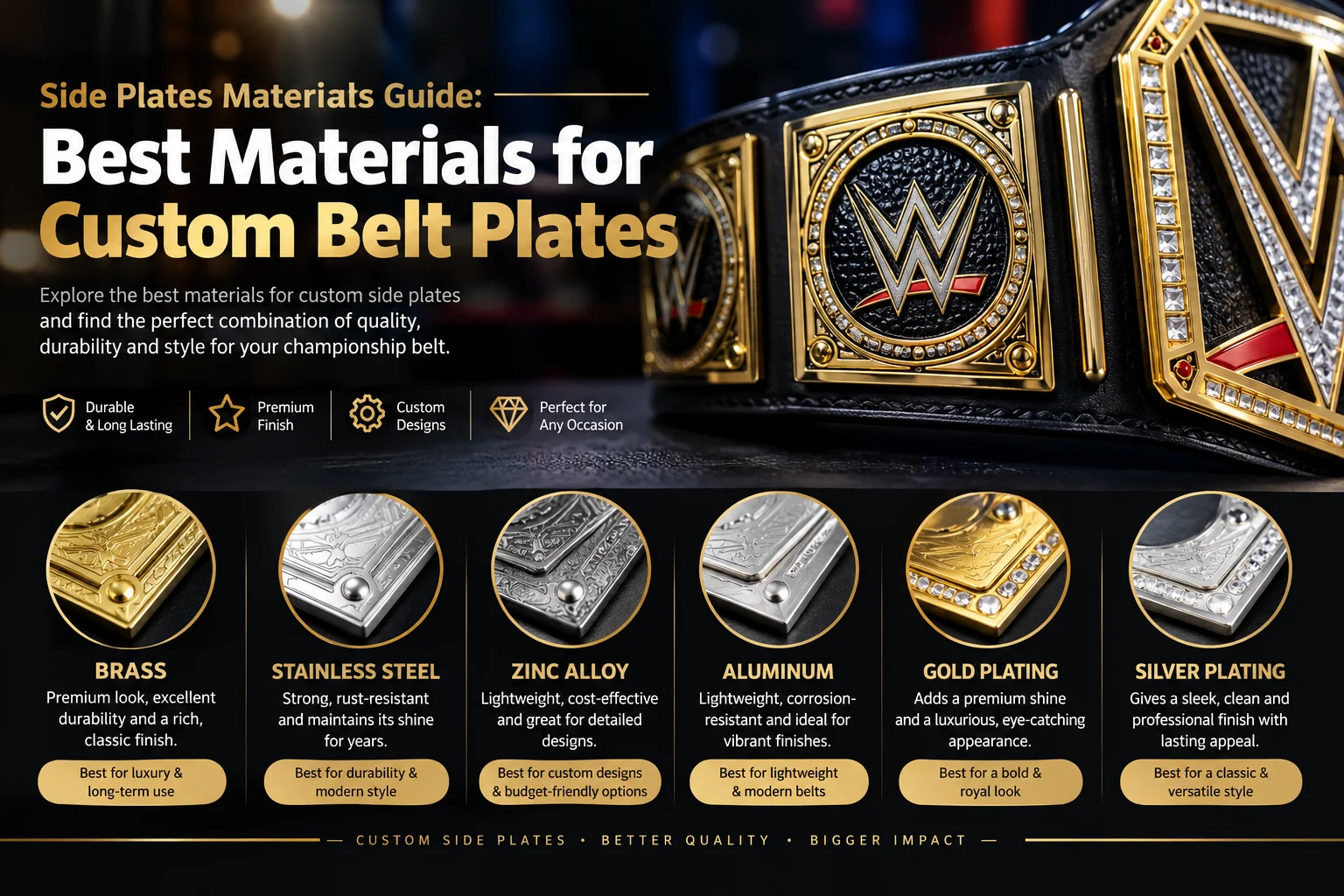
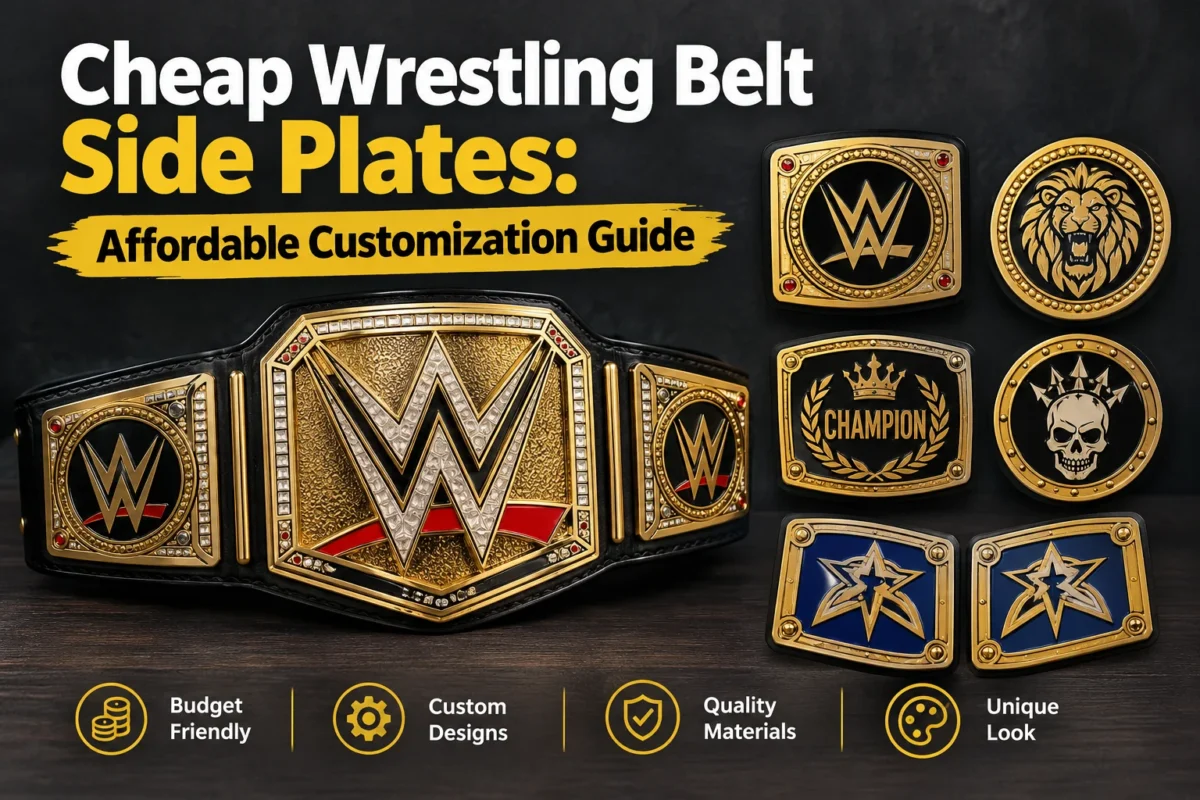
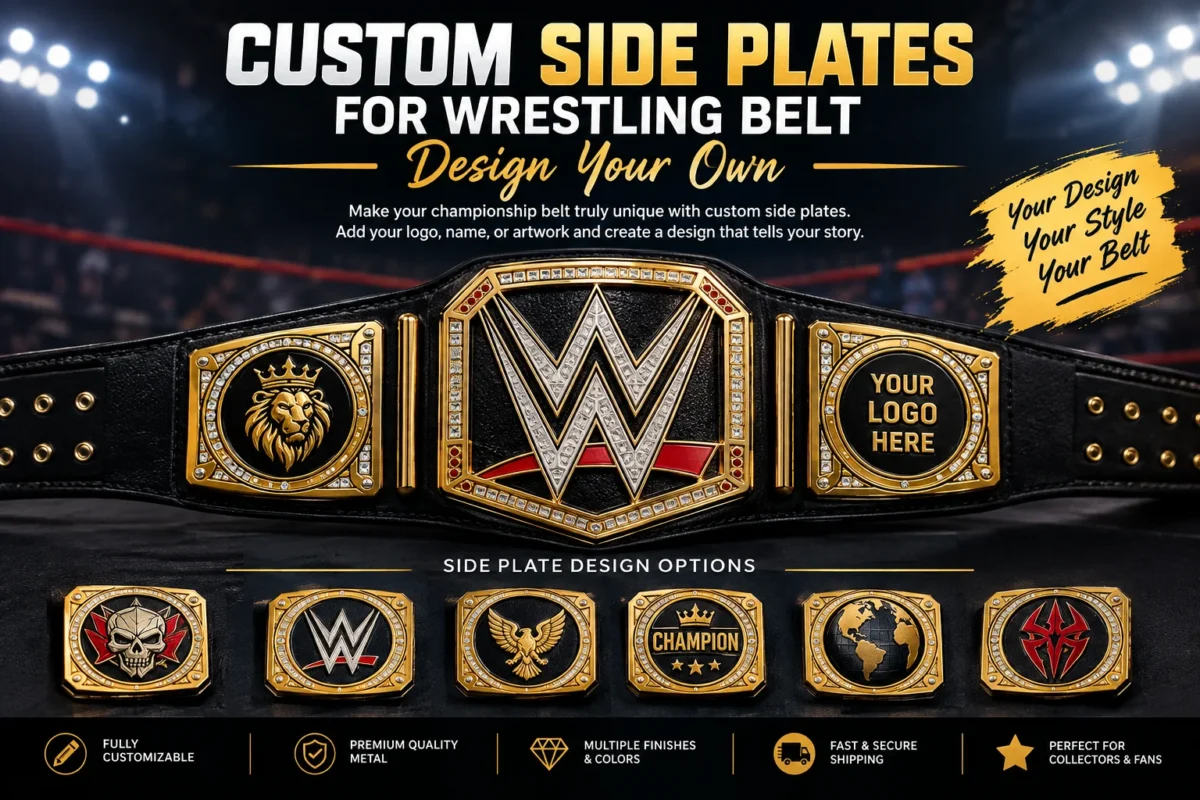
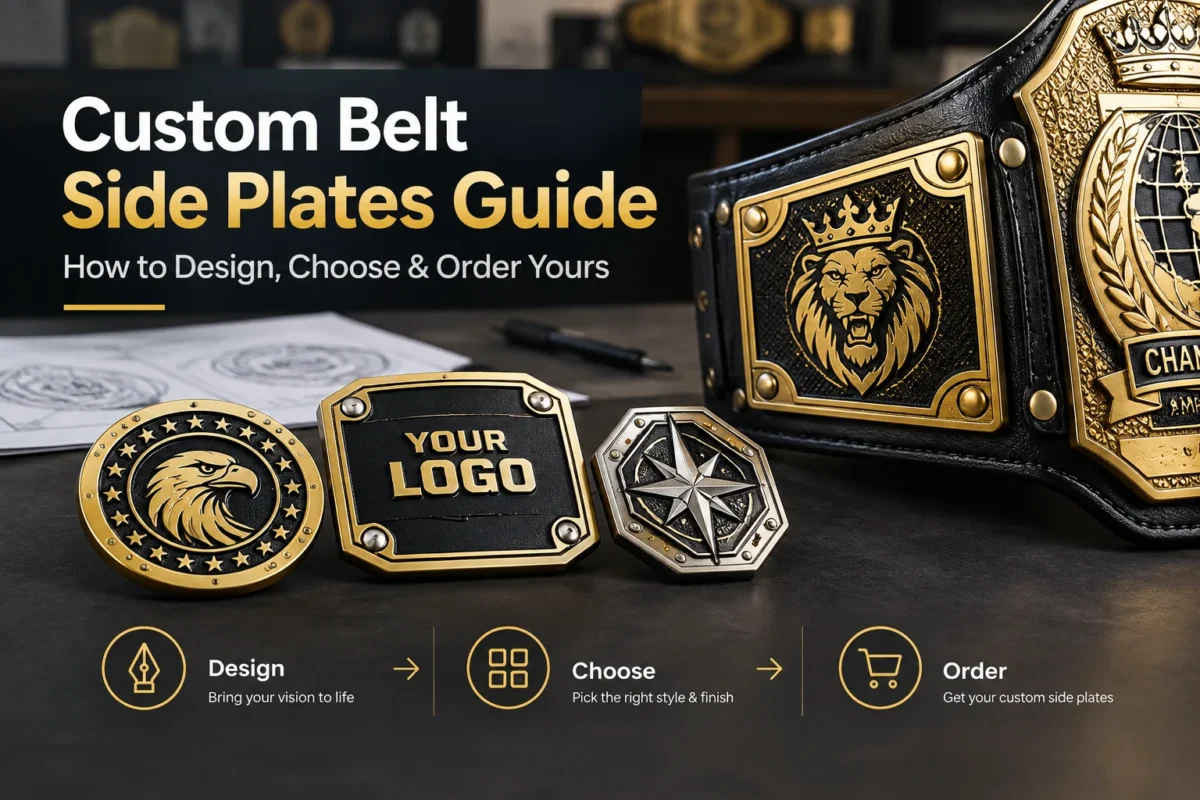
Championship belt side plates may be smaller than the center plate, but they play an important role in the belt’s overall appearance. They can display a wrestler’s logo, a personal name, a team emblem, a company logo, or artwork that makes a championship belt unique. Choosing the right material and finish helps bring that design to life.
This Side Plates Materials Guide explains the common materials used for custom championship belt side plates, how different finishes affect their appearance, and what buyers should consider before ordering personalized plates. Whether you are customizing a wrestling replica, upgrading an existing title belt, or creating a completely original design, understanding these options can help you make a better decision.
Material selection is only one part of the process. Plate size, artwork quality, engraving or raised details, color combinations, and compatibility with your existing belt also matter. A well-planned design considers all these elements together rather than choosing a material based on appearance alone.
If you are planning to order custom side plates, this guide will help you understand your options and prepare the details needed to achieve a professional result.
What Are Championship Belt Side Plates?
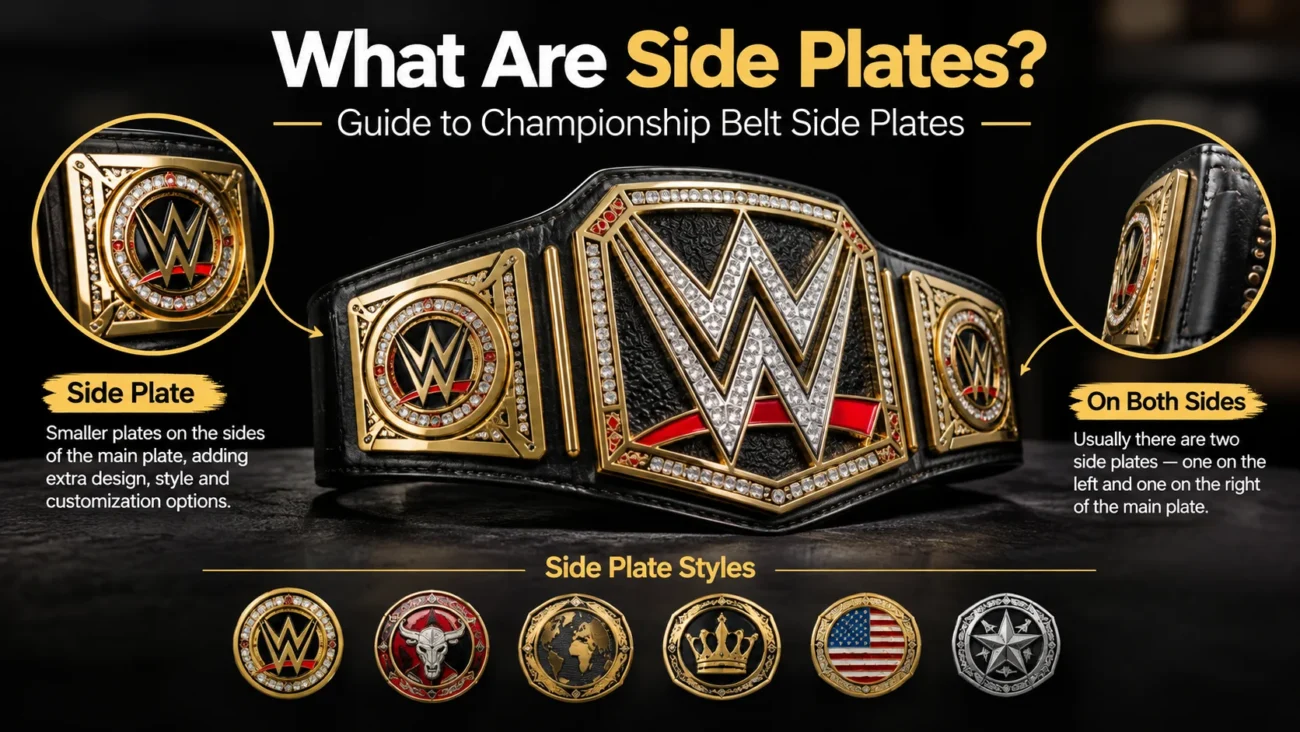
Side plates are decorative plates positioned on the left and right sides of a championship belt’s main center plate. They help complete the belt’s design and provide additional space for personalized artwork.
Depending on the belt and its construction, side plates may feature a wrestler’s logo, initials, a promotion emblem, a national symbol, a team identity, or another custom graphic.
Unlike a center plate, which usually carries the primary championship design, side plates often focus on personal identity and smaller decorative details.
Custom side plates are especially useful for people who want to personalize an existing belt without redesigning the entire championship.
For example, a wrestling fan might want plates featuring a favorite wrestler’s logo. A wrestling promotion could use custom plates to represent its brand, while a belt owner might choose initials or a personal emblem.
The right material helps support the intended design, but the final appearance also depends on the manufacturing method, surface finish, plate thickness, and level of detail.
Side Plates Materials Guide: Which Materials Are Commonly Used?
There is no single material that suits every custom side plate project. Different metals offer different advantages in appearance, weight, detailing, manufacturing, and finishing.
The best option depends on the type of belt, the complexity of the artwork, and how you intend to use or display the finished plates.
1. Zinc Alloy Side Plates
Zinc alloy is commonly used for decorative metal products because it can be formed into detailed shapes and designs. It is a practical option for many custom accessories, including championship belt plates.
One of its main advantages is its suitability for designs featuring raised lettering, shaped borders, decorative symbols, and layered visual details. These features can help make a side plate look more dimensional than a flat printed design.
Zinc alloy plates can also receive decorative finishes, including gold-colored plating and other metallic appearances, depending on the manufacturing process.
Advantages of zinc alloy include:
- Good potential for detailed decorative shapes.
- Suitability for raised logos and lettering.
- Compatibility with various decorative surface finishes.
- Flexibility for creating personalized designs.
However, the final quality depends on the alloy composition, manufacturing process, surface preparation, and finishing quality. A zinc alloy plate with a poor finish may look less impressive than a carefully manufactured plate made from the same material.
Zinc alloy can be worth considering if you want custom artwork with dimensional details and a polished championship-style appearance.
Before ordering, ask the manufacturer about the plate construction, available finishes, and how small lettering or intricate artwork will be reproduced.
2. Brass Side Plates
Brass is a metal alloy primarily made from copper and zinc. It is used in decorative products, engraved components, and various metal accessories.
For championship belt side plates, brass may appeal to buyers who want a substantial metal component with a premium appearance. It can support engraving, machining, polishing, and different surface treatments, depending on the design and manufacturing method.
Brass can also develop a natural change in appearance over time if left untreated. A plated or coated surface behaves differently, so the finish should be considered separately from the base metal.
Potential advantages of brass include:
- A solid metal construction.
- Suitability for certain engraved and machined designs.
- Compatibility with polishing and decorative finishing.
- A distinctive appearance when the material itself is visible.
Brass is not automatically better than zinc alloy for every project. The best choice depends on the required details, plate dimensions, manufacturing technique, and overall design.
If you are considering brass, ask whether the finished plate will show the natural metal or receive a separate plating treatment. This distinction affects both appearance and maintenance.
3. Other Metal Options
Some custom plate projects may use other metals or metal combinations, depending on the manufacturer’s capabilities and the specifications of the original belt.
Stainless steel, for example, can be used for certain decorative or machined components. Its properties differ from those of zinc alloy and brass, so its suitability depends on the intended shape, thickness, and manufacturing process.
Aluminum may also be considered for particular applications where lower weight is important, although the available detailing and finishing options will depend on the production method.
These materials should not be treated as interchangeable. A metal that works well for a flat engraved plate may not be the best choice for a thick, sculpted design.
When requesting a quote, describe the finished product you want instead of asking only for a particular metal. Explain whether you need raised artwork, recessed engraving, a smooth surface, a lightweight construction, or a specific metallic finish.
The manufacturer can then confirm which material and production method are appropriate for your requirements.
Base Material vs. Surface Finish: What Is the Difference?
One of the most important points in this Side Plates Materials Guide is the difference between a plate’s base material and its surface finish.
The base material is the metal used to manufacture the plate. The surface finish is the treatment applied to the outside to create a particular color, texture, or appearance.
For example, a zinc alloy plate may have a gold-plated surface. A brass plate may also receive a decorative coating instead of showing its natural color.
This means two plates can look similar in photographs even when they use different base materials.
It also means that choosing gold-colored plates does not necessarily mean choosing solid gold. Decorative plating is a surface treatment, and its appearance and durability depend on the coating and the preparation underneath it.
When comparing custom side plates, ask two separate questions:
- What material is used to manufacture the plate?
- What finish will be applied to its surface?
You should also ask whether the finish is available in your preferred color and whether it can be combined with enamel or other decorative details.
Getting these answers before production helps you understand what you are ordering and reduces the risk of receiving plates that look different from your expectations.
Popular Finishes for Custom Championship Belt Side Plates
The finish has a major influence on the visual style of a championship belt. Even when two plates share the same base material and shape, different finishes can produce very different results.
Gold Plating
Gold plating creates a gold-colored metallic surface and is a popular choice for traditional championship belt designs.
It can complement engraved lettering, raised borders, decorative patterns, and contrasting enamel colors. Gold finishes can also help custom side plates match a belt with gold-colored center and side plates.
If you want the plates to match an existing belt, provide clear photographs of the original plates. Gold tones can vary, and a reference image gives the manufacturer a better starting point.
Silver-Colored Finishes
Silver-colored finishes offer a cooler metallic appearance that works well with modern, minimalist, and high-contrast designs.
They can make dark lettering or colored enamel stand out while giving the belt a different appearance from traditional gold designs.
Before choosing a silver finish, confirm the actual finishing option available from your manufacturer rather than assuming every silver-looking surface uses the same coating.
Enamel Detailing
Enamel-style detailing adds color to selected areas of a metal plate. It can be useful for logos, lettering, flags, team colors, and distinctive graphic elements.
For example, a side plate could combine a metallic outer border with a colored central logo. This approach creates contrast without requiring the entire plate to have a single finish.
The artwork should be prepared with clear color boundaries so the manufacturer can understand which areas need metallic surfaces and which require color.
Mixed Finishes
A mixed finish combines two or more visual treatments in one design. A plate might use a gold-colored border, contrasting lettering, and colored enamel inside a logo.
This option can help a custom design look more detailed and coordinated with the rest of the belt.
However, adding more colors and surface treatments can make production more involved. Keep the design focused, especially if it contains small lettering or intricate symbols.
A good starting point is to select one primary metallic finish and one or two contrasting colors, then add extra details only where they improve the design.
How to Choose the Right Material for Your Side Plates
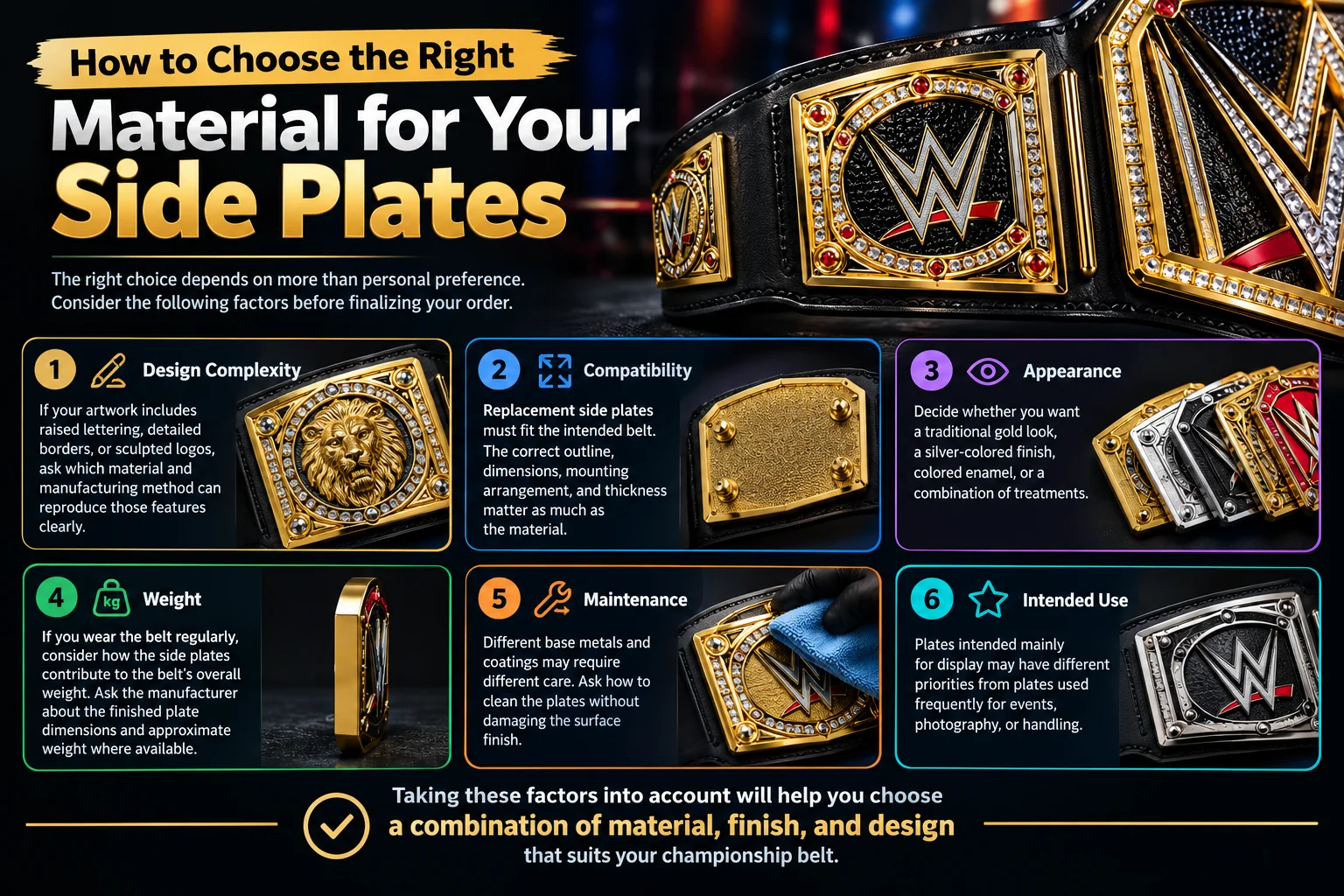
The right choice depends on more than personal preference. Consider the following factors before finalizing your order.
Design complexity: If your artwork includes raised lettering, detailed borders, or sculpted logos, ask which material and manufacturing method can reproduce those features clearly.
Compatibility: Replacement side plates must fit the intended belt. The correct outline, dimensions, mounting arrangement, and thickness matter as much as the material.
Appearance: Decide whether you want a traditional gold look, a silver-colored finish, colored enamel, or a combination of treatments.
Weight: If you wear the belt regularly, consider how the side plates contribute to the belt’s overall weight. Ask the manufacturer about the finished plate dimensions and approximate weight where available.
Maintenance: Different base metals and coatings may require different care. Ask how to clean the plates without damaging the surface finish.
Intended use: Plates intended mainly for display may have different priorities from plates used frequently for events, photography, or handling.
Taking these factors into account will help you choose a combination of material, finish, and design that suits your championship belt.
How to Choose the Correct Side Plate Size
Selecting the correct size is essential when ordering custom championship belt side plates. Even an attractive design may not look right or fit properly if the dimensions do not match the belt.
Side plates come in different shapes and sizes, depending on the championship belt model. Some use rounded plates, while others feature square or specially shaped designs. Before choosing a replacement or custom set, confirm which size is compatible with your belt.
Common Side Plate Size Options
When ordering custom side plates, you may encounter options such as:
- NXT Square: A square-style plate option for compatible belt designs.
- Women’s Round Small: A smaller, rounded plate option intended for compatible belts.
- Men’s Round Standard: A standard rounded plate option for compatible belt designs.
These labels describe particular size and shape options, not universal measurements. Different belt models can have different dimensions and mounting requirements, even when their plates appear similar.
Before placing an order, compare your existing plates with the manufacturer’s available options. If you are unsure, provide clear photographs and measurements so the seller can help identify the closest match.
What Measurements Should You Check?
If you already own a championship belt, measure the existing side plates before ordering replacements.
Pay attention to the following details:
- Overall plate width and height.
- Plate outline and corner shape.
- Thickness and raised sections, where relevant.
- Mounting holes or attachment points, if present.
- Available space around the plate on the belt strap.
Do not rely on photographs alone when exact compatibility is important. Perspective and camera angles can make a plate appear larger or smaller than it actually is.
If the manufacturer provides a size guide, compare your measurements against those specifications. When no measurements are available, ask for clarification before approving production.
Preparing Artwork for Custom Side Plates
Artwork is one of the most important parts of a personalized side plate project. The material and finish determine how the plate is made and presented, but the quality of the original design affects how clearly your logo, lettering, or graphic can be reproduced.
You do not necessarily need to create professional manufacturing files yourself. However, providing clear artwork and specific instructions can make the process easier.
1. Use a Clear Logo or Reference Image
Start with the highest-quality version of your logo or design that you have available.
A sharp image helps the manufacturer identify the shapes, lettering, and boundaries that need to be reproduced. Blurry screenshots and low-resolution images can make small details difficult to interpret.
If you have a vector file, such as SVG, AI, or EPS, ask whether the manufacturer can accept it. A high-resolution PNG or another suitable image format may also work, depending on the design and production process.
If you only have a reference photograph, explain which parts you want to preserve and which parts you want changed.
2. Keep Small Details Readable
Side plates have limited space, so complicated artwork may need to be simplified.
Very thin lines, tiny lettering, and closely spaced shapes can be difficult to reproduce clearly, depending on the plate dimensions and manufacturing method.
For the best result, prioritize the most recognizable parts of your design. A strong central logo with readable lettering often works better than a plate crowded with unnecessary details.
Before approving production, ask to see how the artwork will look at the actual plate size.
3. Explain Your Customization Requirements
Never assume that uploading an image communicates every detail of your design.
Provide written instructions explaining what you want the finished plate to look like. Mention the placement of your logo, any required text, preferred colors, metallic finish, and details that must not be changed.
For example, you could request a gold-colored border, a personalized center logo, and dark enamel behind the lettering. If you want the artwork reproduced as closely as possible, state that clearly.
Specific instructions help reduce misunderstandings and give the manufacturer a clearer basis for preparing your design preview.
Why a 3D Preview Matters Before Production
A design can look excellent on a computer screen but appear different when converted into a physical metal plate. Raised surfaces, recessed areas, metallic reflections, and the actual dimensions can all affect the final appearance.
That is why reviewing a design preview before production is an important step in a custom order.
A preview allows you to evaluate the layout and identify changes before the manufacturer begins making the plates.
What to Check in Your Preview
Before approving the design, review these details carefully:
Logo placement: Make sure the main artwork is positioned correctly and has enough space around it.
Lettering: Check spelling, capitalization, spacing, and readability.
Colors: Confirm that the intended enamel colors and metallic finishes are represented correctly.
Raised and recessed details: If the design includes dimensional features, confirm that the preview reflects the intended appearance as clearly as possible.
Borders and proportions: Check that the design looks balanced and that important elements are not too close to the edges.
Overall compatibility: Make sure the plate shape and proportions suit the belt you intend to use.
Do not approve a preview simply because the overall design looks attractive. Take time to inspect the small details, especially names, logos, and other elements that would be difficult to correct after production.
For custom side plates, the approval stage is your opportunity to communicate any final changes and confirm the intended design.
Custom Side Plates Materials Guide: Common Mistakes to Avoid
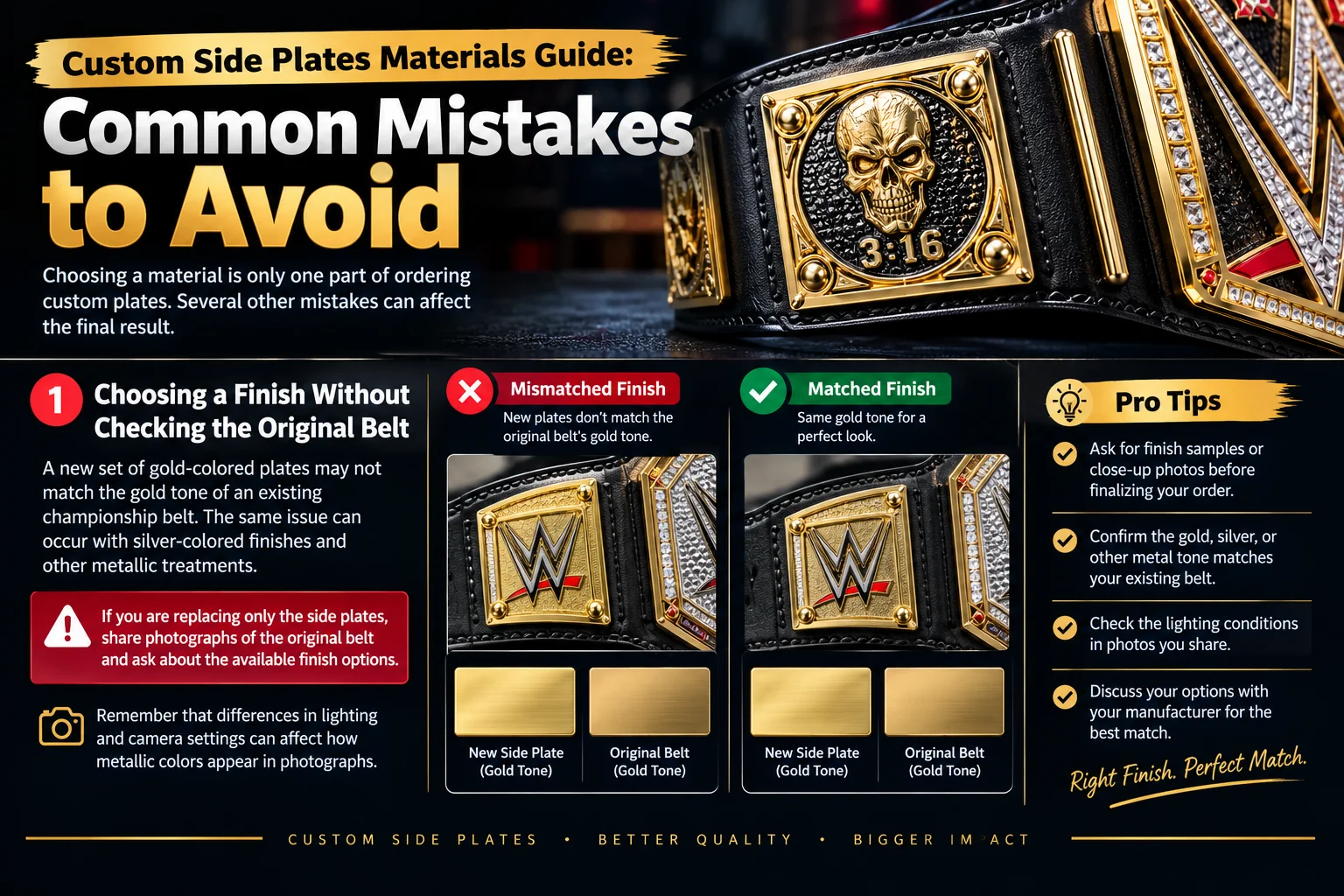
Choosing a material is only one part of ordering custom plates. Several other mistakes can affect the final result.
Choosing a Finish Without Checking the Original Belt
A new set of gold-colored plates may not match the gold tone of an existing championship belt. The same issue can occur with silver-colored finishes and other metallic treatments.
If you are replacing only the side plates, share photographs of the original belt and ask about the available finish options.
Remember that differences in lighting and camera settings can affect how metallic colors appear in photographs.
Assuming All Metal Plates Have the Same Quality
Two products made from the same base material may differ in thickness, surface preparation, detailing, and finishing quality.
Instead of comparing products by material name alone, ask about the manufacturing process, available customization, and the level of detail the seller can achieve.
The finished product matters more than the material label by itself.
Ordering Without Confirming the Size
Choosing the wrong plate shape or dimensions can create compatibility problems. Always check whether the selected option is suitable for your particular belt.
If you are uncertain, provide measurements or request assistance before confirming the order.
Submitting Artwork Without Instructions
An uploaded logo does not automatically explain your preferred finish, colors, layout, or lettering.
Include written customization requirements and review the design preview before approving production.
Ignoring Care Requirements
Decorative metal surfaces can become scratched or lose their appearance if cleaned with unsuitable products.
Ask the manufacturer how to maintain the specific finish you choose. Avoid assuming that every metallic surface can be polished with the same products.
How to Care for Metal Championship Belt Side Plates
Proper care helps preserve the appearance of your custom side plates, particularly when they feature plated surfaces or colored decorative details.
The exact cleaning method depends on the base material and finish, so follow any instructions supplied by the manufacturer.
For general care, consider these practices:
- Use a soft, clean cloth to remove fingerprints and light dust.
- Avoid abrasive pads that could scratch the surface.
- Do not use strong chemical cleaners unless they are confirmed to be suitable for the finish.
- Keep the plates away from unnecessary moisture when their coating or construction may be vulnerable to it.
- Store the belt in a clean, dry place when it is not being used.
- Handle the plates carefully to reduce scratches and accidental impacts.
If the plates have enamel details, decorative coatings, or delicate surface treatments, take extra care around those areas.
For stubborn marks or signs of coating damage, ask the manufacturer for advice rather than experimenting with harsh cleaning methods.
Regular, gentle care is usually a better approach than aggressive polishing, especially when the original finish is part of the design.
Ordering Custom Side Plates from Elite Belts
If you want to personalize an existing championship belt, custom send-out side plates are an option worth considering. Rather than redesigning the entire belt, you can focus on creating plates that reflect your preferred logo, artwork, name, or identity.
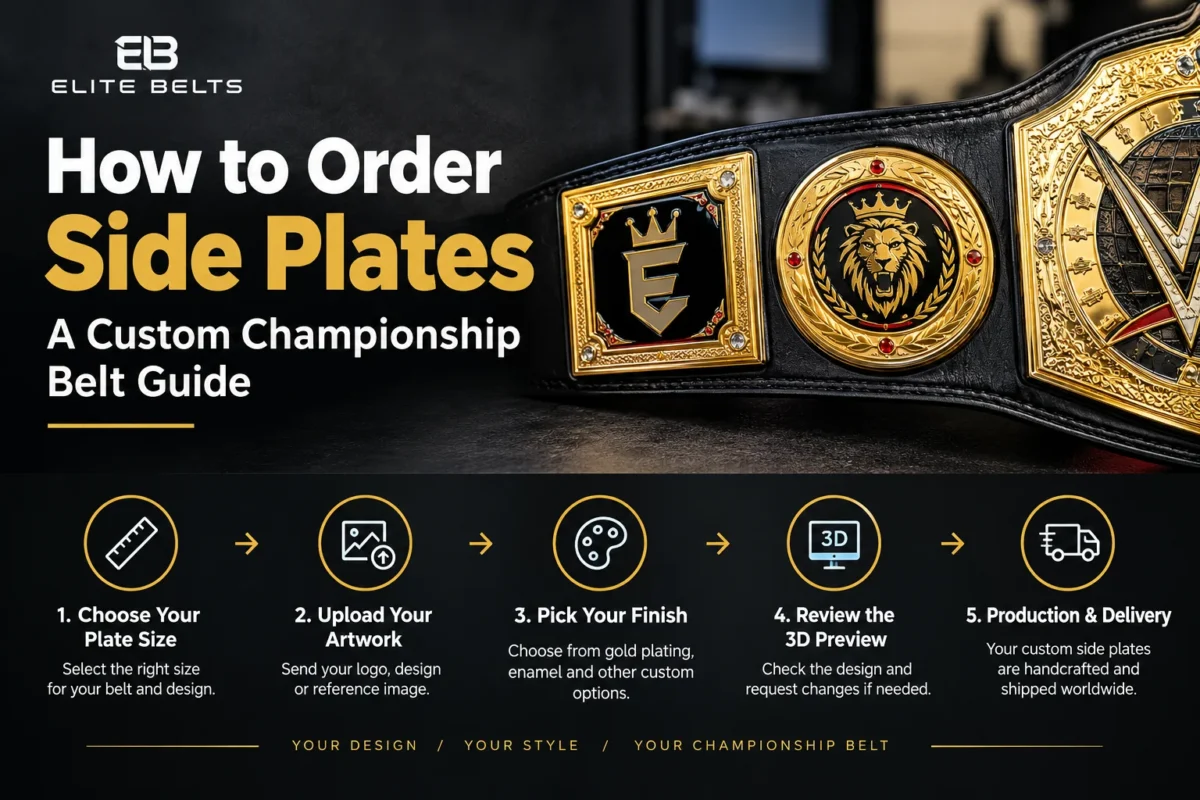
Elite Belts offers Chris Austin Custom Send-Out Side Plates, designed for customers who want personalized plates made to their requirements.
The product offers three size options: NXT Square, Women’s Round Small, and Men’s Round Standard. Selecting the correct option is an important first step, particularly if the plates need to fit an existing championship belt.
Customers can upload a logo, name, artwork, or reference image and provide written instructions explaining their desired customization. This allows the team to understand the intended design before manufacturing begins.
Custom Finishes and Artwork Approval
Depending on the design requirements, available customization options include premium gold plating, enamel detailing, and other custom finishes.
If you are choosing between different materials or finishes, explain the appearance you want and ask the team to confirm the suitable options for your design.
Another useful feature is the 3D design preview provided for approval before production. Reviewing this preview gives you an opportunity to check the artwork and communicate necessary adjustments before the manufacturing stage proceeds.
For the best experience, upload clear artwork, specify your preferred colors and lettering, and confirm that the selected plate size is appropriate for your belt.
Production and Worldwide Shipping
Elite Belts states a production timeframe of approximately 20–40 days for these custom side plates. The actual timeline for a particular order should be confirmed with the team, especially if the design requires additional customization or revisions.
The product also includes free worldwide shipping, with orders packed in protective packaging to help safeguard the plates during transit.
If you have a special request or need help choosing a size, you can contact Elite Belts through its available email, WhatsApp, or Instagram channels.
You can explore the product here: Chris Austin Custom Send-Out Side Plates – Elite Belts.
Frequently Asked Questions About Side Plate Materials
Which material is best for custom championship belt side plates?
The best material depends on your design, preferred finish, plate dimensions, and intended use. Zinc alloy may suit detailed decorative designs, while brass can be appropriate for certain engraved or machined plates. Ask the manufacturer which option best fits your requirements.
Are gold-colored side plates made from solid gold?
Not necessarily. Gold-colored side plates often use a base metal with a gold-colored plated finish. Ask the manufacturer to identify both the base material and the surface treatment.
Can I customize side plates with my own logo?
Yes, custom side plate orders can be designed around personal logos, names, artwork, and reference images. Elite Belts accepts uploaded artwork and written customization instructions for its custom send-out side plates.
Can I use custom side plates on my existing championship belt?
Potentially, yes, provided the plate dimensions, shape, and mounting arrangement are compatible with the belt. Confirm the correct size and design requirements before placing your order.
Why should I approve a preview before production?
A preview lets you check the design, spelling, layout, and intended visual details before the plates are manufactured. It is much easier to request a correction before production than to address a mistake after the finished plates arrive.
How long does it take to make custom side plates?
Production time depends on the manufacturer and the complexity of the order. Elite Belts lists an estimated production period of 20–40 days for its custom send-out side plates. Confirm the current schedule when placing your order.
How can I protect the finish on my side plates?
Clean the plates gently with a soft cloth, avoid abrasive materials, and follow the manufacturer’s instructions for the specific finish. Different coatings and decorative treatments may require different care.
Final Thoughts on Choosing the Right Side Plate Materials
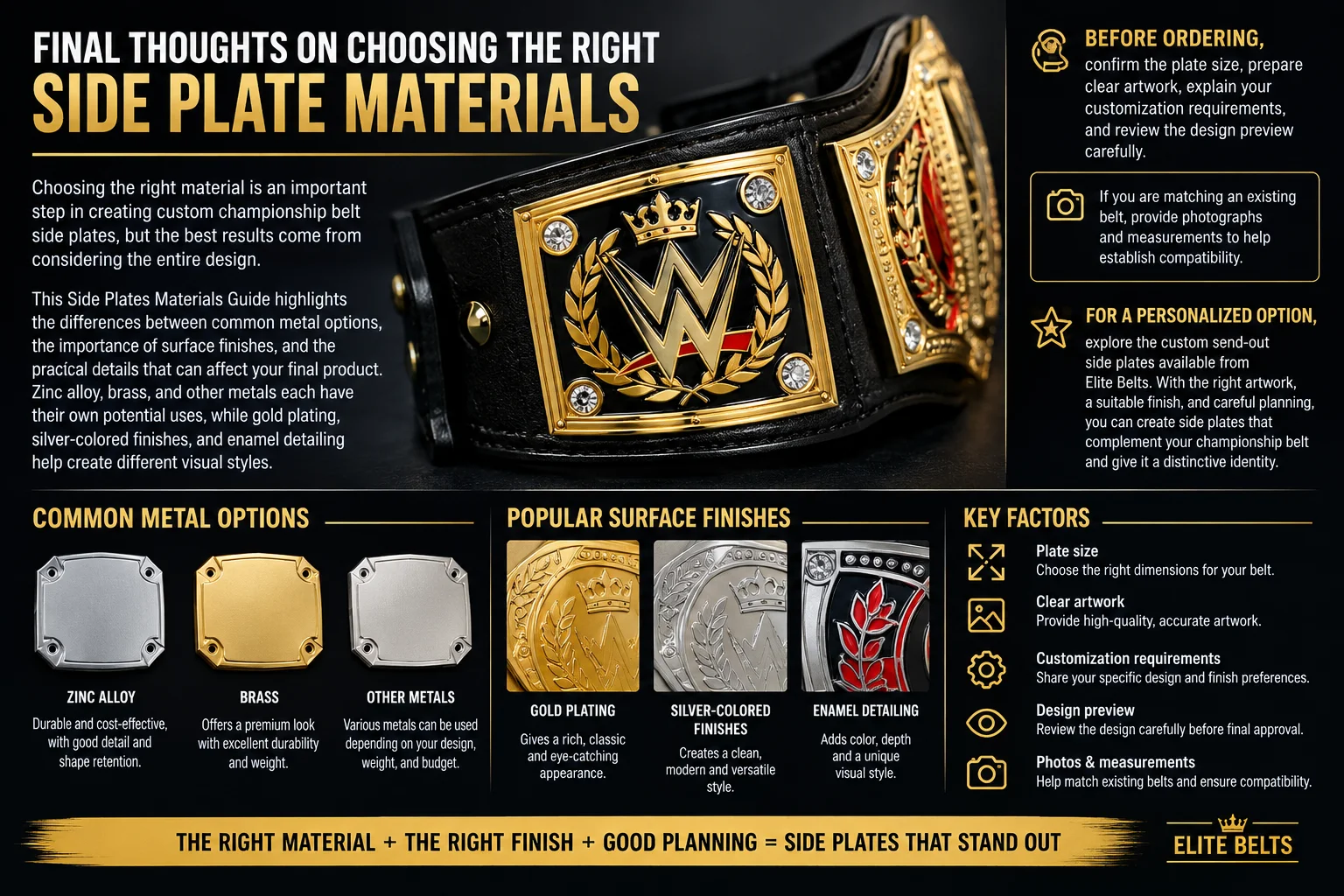
Choosing the right material is an important step in creating custom championship belt side plates, but the best results come from considering the entire design.
This Side Plates Materials Guide highlights the differences between common metal options, the importance of surface finishes, and the practical details that can affect your final product. Zinc alloy, brass, and other metals each have their own potential uses, while gold plating, silver-colored finishes, and enamel detailing help create different visual styles.
Before ordering, confirm the plate size, prepare clear artwork, explain your customization requirements, and review the design preview carefully. If you are matching an existing belt, provide photographs and measurements to help establish compatibility.
For a personalized option, explore the custom send-out side plates available from Elite Belts. With the right artwork, a suitable finish, and careful planning, you can create side plates that complement your championship belt and give it a distinctive identity.